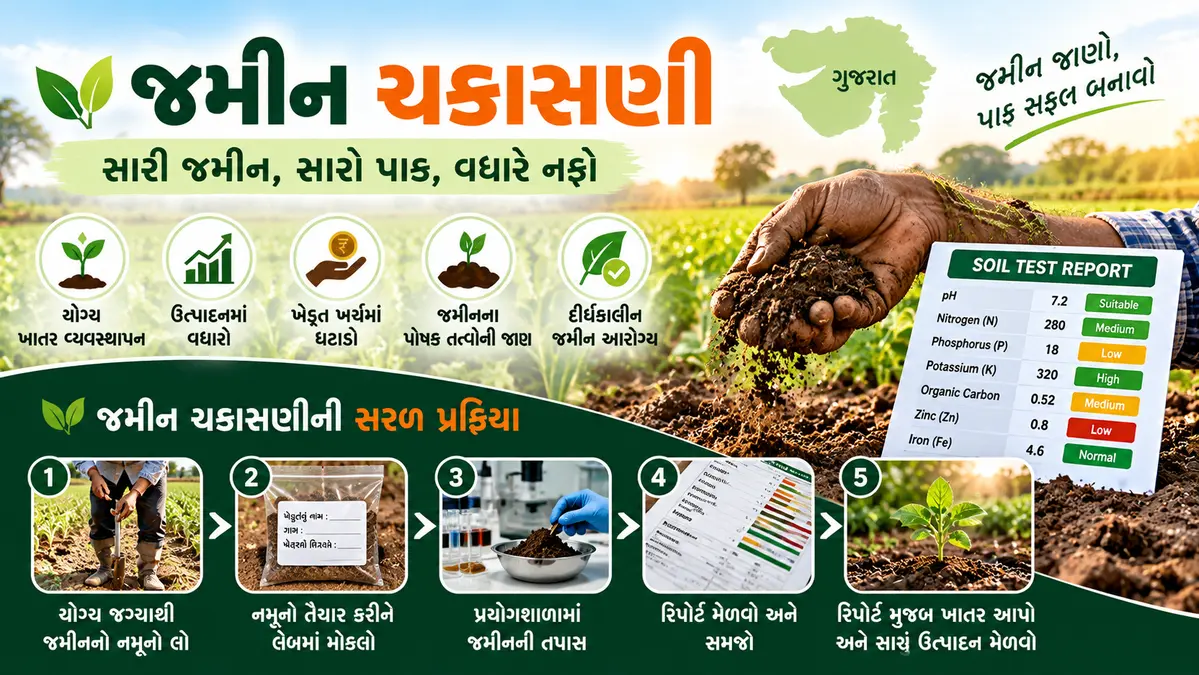
Soil testing provides information about available nutrients and certain soil-related constraints. The report can help guide fertilizer planning based on the crop and local recommendations.
Why test your soil?
- Understand the nutrient status of your soil.
- Choose inputs according to need and avoid unnecessary fertilizer expenditure.
- Identify issues such as pH or salinity when these are included in the test.
- Make better-informed crop selection and soil improvement decisions.
How to collect a soil sample
- Collect a separate sample from each uniform field area. Do not combine areas with different soil types or crop management.
- Avoid fertilizer heaps, waterlogged spots, field edges, roadsides, and unusual patches.
- Collect soil from multiple spots in a zigzag pattern. For many routine field tests, the topsoil is sampled at around 0–15 cm after removing surface debris; follow laboratory guidance for horticultural crops or specialized tests.
- Use clean tools and a clean bucket to mix the soil. Set aside the representative quantity specified by the laboratory.
- Pack and label the sample with field, crop, irrigation, and farmer details as requested by the lab.
Important
Sampling depth and quantity vary by crop and test. Before collecting a sample, confirm instructions with your local soil testing laboratory or Krishi Vigyan Kendra.
What should you do with the report?
Review pH, EC, and nutrient results with the laboratory's interpretation. Decide fertilizer rates according to the crop, soil, irrigation water, and local agricultural recommendations. Avoid applying fertilizers based only on guesswork.
Where can farmers get soil tested?
Contact a government soil testing laboratory, Krishi Vigyan Kendra (KVK), or agricultural university. Sample packaging, fees, and turnaround time vary by institution.
Frequently asked questions
1. When should soil testing be done?
Testing before crop planning and fertilizer purchases is useful. Follow the frequency recommended by your laboratory or agricultural adviser.
2. Should one sample represent the entire farm?
Only if the soil and management are uniform. Separate samples may be more appropriate for different field areas or crops.
3. Why follow the soil test report?
It helps match nutrient applications to crop needs and can reduce unnecessary fertilizer expenditure.
Also read the Kharif crop planning guide and check APMC market prices.