🌧️ When Rain Slows Down, Farmers Should Watch the Crop — Not Just the Calendar
The amount of rainfall alone does not tell the complete story. Farmers should also consider local rainfall distribution, soil moisture, crop stage and irrigation availability before making farm decisions.
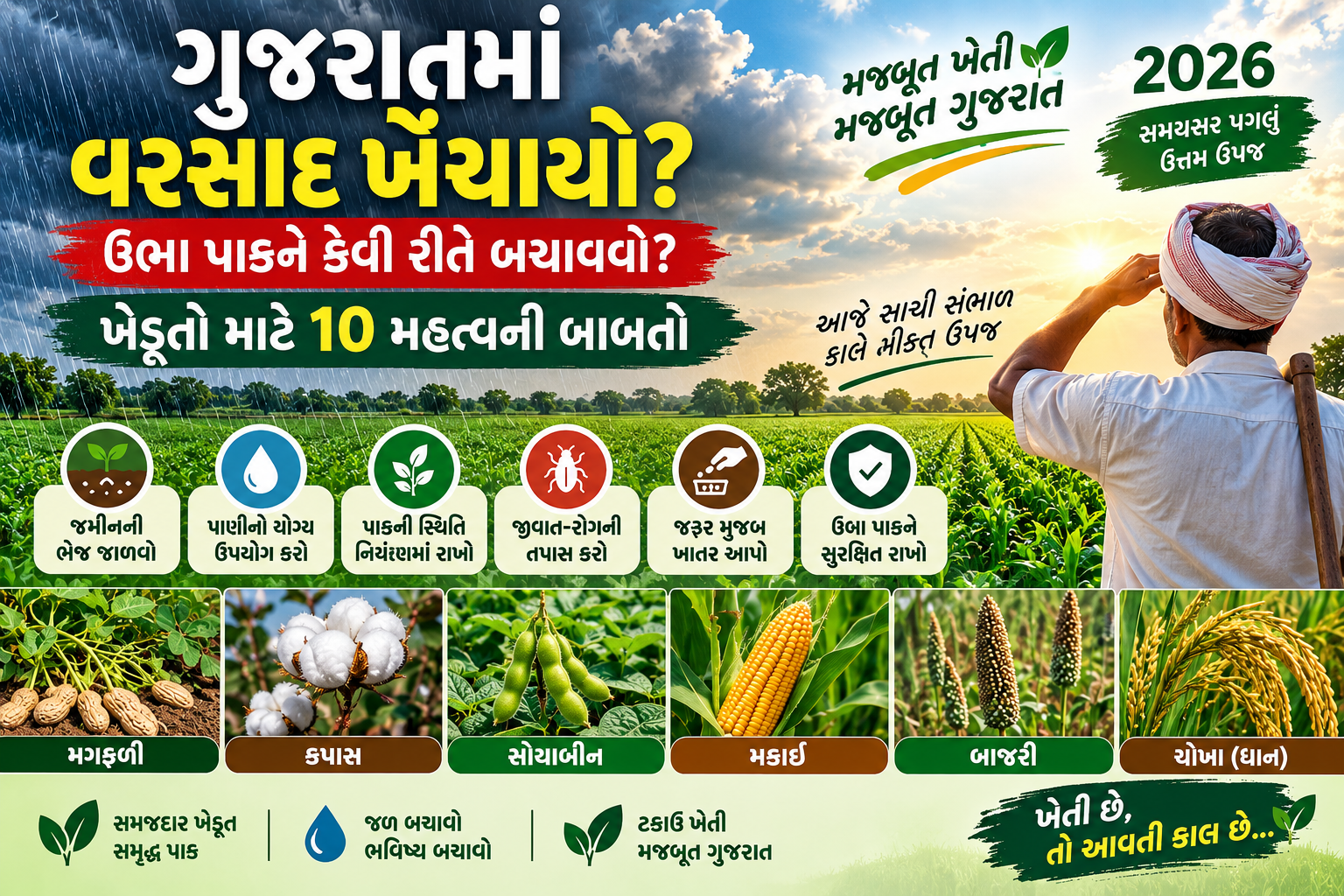
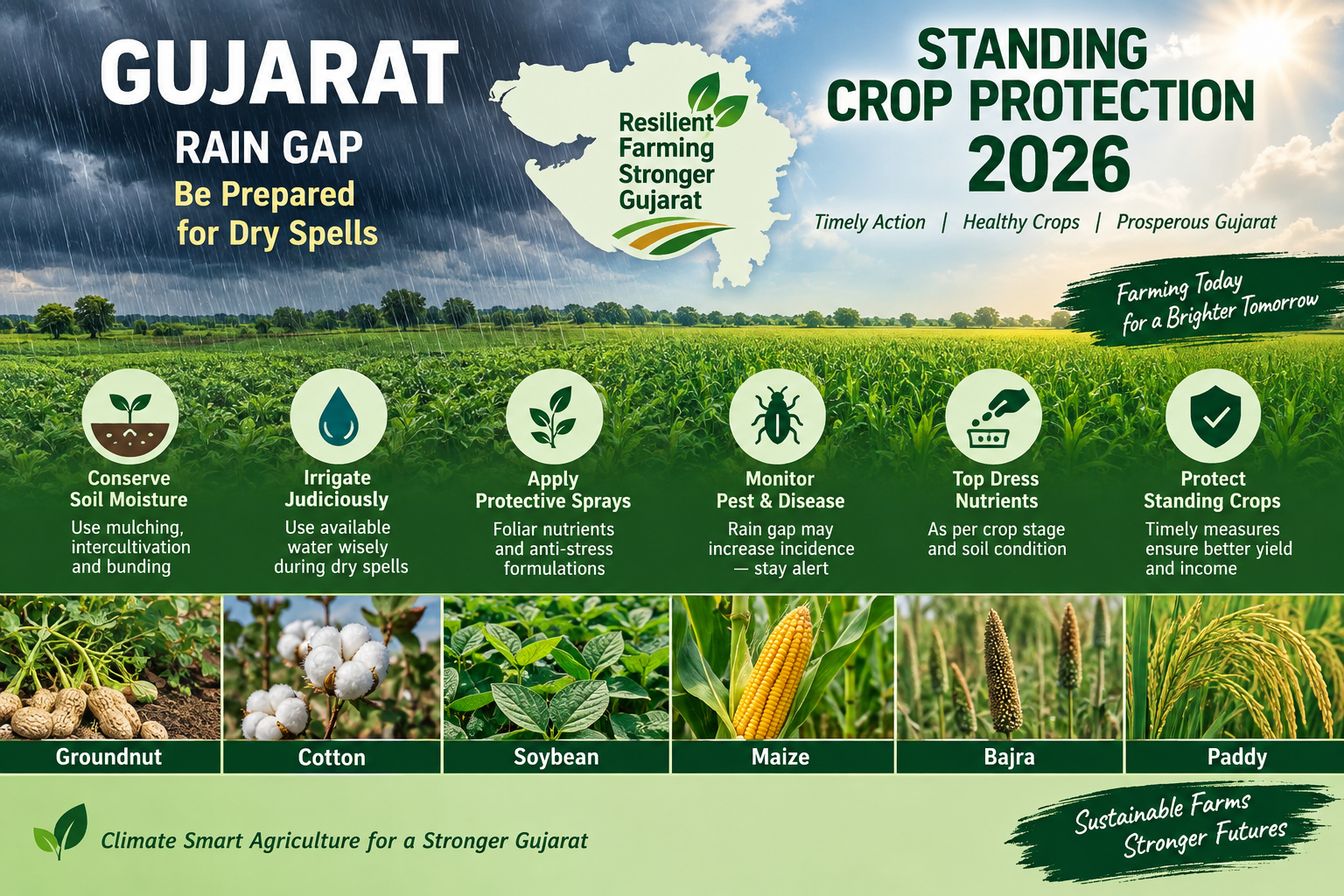
Gujarat has seen uneven rainfall conditions during the 2026 monsoon season. Some areas have received below-normal rainfall while other parts have received more rainfall. For farmers growing groundnut, cotton, soybean and other Kharif crops, soil moisture, irrigation planning and regular crop monitoring become particularly important when dry spells continue.
🌦️ Why Does a Rainfall Gap Matter for Farmers?
Timely moisture is important for many Kharif crops. A prolonged dry spell can become more important when a crop is entering flowering, pod formation, grain filling or boll development stages.
However, Gujarat does not experience the same rainfall conditions everywhere. Farmers should therefore look at their own district, village and field rather than relying only on a state-wide average.
📌 Check These 5 Things First
- How many days have passed since the last useful rainfall?
- How much moisture is still present in the soil?
- What growth stage is the crop in?
- What is the local weather outlook?
- Is irrigation water available?
🌾 10 Ways Farmers Can Protect Standing Kharif Crops
1. Check Soil Moisture
Do not irrigate only because several days have passed. Check the actual soil moisture first.
2. Consider Crop Stage
Flowering, pod formation, grain filling and boll development can make moisture management more important.
3. Check Local Weather
Use local weather information when planning irrigation.
4. Use Irrigation Carefully
When water is limited, plan irrigation according to crop and soil conditions.
5. Monitor Crops Regularly
Watch leaf colour, wilting, plant growth and unusual changes.
6. Scout for Pests and Diseases
Regular scouting can help identify problems before they become severe.
7. Keep Farm Records
Record rainfall, irrigation, expenses and crop condition.
8. Avoid Unnecessary Fertilizer
Low rainfall alone does not mean that extra fertilizer is required.
9. Avoid Unnecessary Field Operations
Avoid unnecessary heavy machinery use when soil conditions are unsuitable.
10. Seek Expert Advice When Needed
Consult a local agricultural expert when crop damage or an unknown problem appears.
🥜 What Should Groundnut Farmers Watch During a Dry Spell?
Groundnut farmers should monitor soil moisture, crop growth and the stage of pod development. Water availability can become particularly important during sensitive crop stages.
At the same time, excess irrigation is not automatically beneficial. Irrigation should be planned according to actual field conditions.
🌿 What About Cotton?
Cotton farmers should monitor soil moisture, plant growth and boll development. There is no single irrigation schedule that is suitable for every cotton field.
Soil type, rainfall received, crop age and local weather can all change the irrigation requirement.
🌱 What About Soybean and Other Crops?
Soybean, pulses and oilseed crops also depend on timely moisture. Farmers should monitor both water availability and pest or disease symptoms.
💧 5 Common Irrigation Mistakes to Avoid
- Irrigating immediately just because rainfall has stopped.
- Over-irrigating when soil already has enough moisture.
- Ignoring the crop growth stage.
- Using limited water without a plan.
- Ignoring the local weather outlook.
🌧️ What Should Farmers Check After Rain?
After a long dry spell, rainfall does not automatically mean that every crop is safe. Farmers should check waterlogging, soil moisture, plant damage and pest or disease symptoms.
🌧️ 24-48 Hour Post-Rain Checklist
- Check for standing water.
- Check how deeply moisture has entered the soil.
- Inspect broken or fallen plants.
- Look for new disease symptoms.
- Check whether pest activity has increased.
- Reassess the need for the next irrigation.
🌱 Should Farmers Apply More Fertilizer When Rainfall Is Low?
Not necessarily. Low rainfall by itself is not a reason to apply additional fertilizer. Fertilizer decisions should be based on the crop, soil and existing crop condition.
When soil moisture is inadequate, farmers should avoid making unnecessary input decisions without understanding the actual requirement.
📊 Why Should Farmers Keep Crop Records?
Simple record keeping can become very useful during difficult weather. Farmers can record rainfall dates, irrigation, expenses, pest observations and crop condition.
| What to Record | Why It Helps |
|---|---|
| Rainfall date | Understand dry spells |
| Irrigation date | Improve water planning |
| Input cost | Track farm expenses |
| Pest/disease observation | Improve crop monitoring |
📅 7-Day Crop Protection Plan for Farmers
- Day 1: Inspect the entire field.
- Day 2: Check soil moisture.
- Day 3: Scout for pests and diseases.
- Day 4: Check the local weather outlook.
- Day 5: Reassess irrigation requirements.
- Day 6: Update water and expense records.
- Day 7: Compare crop condition with the previous week.
⚠️ Mistakes to Avoid During a Rainfall Gap
- Do not spray pesticides based only on unverified social media advice.
- Do not irrigate repeatedly without checking soil moisture.
- Do not automatically increase fertilizer because rainfall is low.
- Do not apply pesticides without identifying the pest or disease.
- Do not delay expert advice when serious crop problems appear.
🌾 Does a Long Dry Spell Mean the Crop Will Fail?
Not necessarily. Crop performance depends on several factors including soil type, previous rainfall, irrigation availability, crop variety, sowing date, crop stage and future weather.
Farmers should therefore avoid making decisions based only on rumours or a single state-level rainfall number. Actual field conditions matter most.
📌 The Most Important Message for Farmers
👨🌾 Wait for Rain, But Do Not Stop Watching Your Crop
Farmers cannot control when the next rain will arrive. But they can monitor soil moisture, inspect crops, use available water carefully and identify pest or disease problems early.
🔗 More Farmer Information on Smart Khedut
❓ Frequently Asked Questions
What should Gujarat farmers do first when rainfall stops?
Check soil moisture, crop stage, crop condition and irrigation water availability.
Should farmers irrigate when rainfall is low?
Irrigation should be based on soil moisture and crop requirement. Every field does not need the same schedule.
What should groundnut farmers monitor during a dry spell?
Monitor soil moisture, crop stage, pod development and pest or disease symptoms.
Should farmers apply extra fertilizer when rainfall is low?
Not automatically. Fertilizer decisions should depend on crop and soil conditions.
What should farmers do if a serious crop problem appears?
Save photos and details of symptoms and consult a local agricultural expert or authorised advisory service.
🛡️ Sources & Editorial Note
Rainfall and crop conditions can vary significantly by district. Before making decisions about irrigation, fertilizer, pesticides or other farm inputs, farmers should consider their actual field conditions and local agricultural advice.