About this guide: This article helps farmers prepare fields, choose crops, plan sowing and manage water and nutrients before the Rabi season. Select varieties, dates and input quantities according to recommendations from your local agricultural university or agriculture officer.
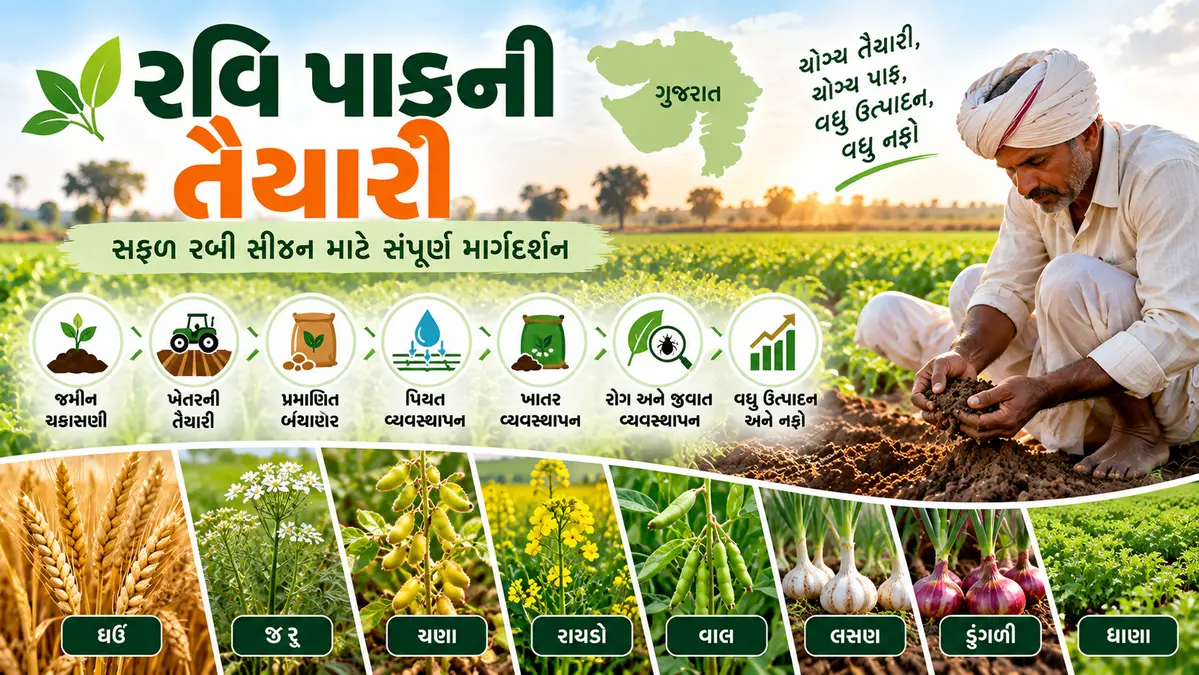
After the monsoon, farmers in many parts of Gujarat begin preparing for the Rabi season. Wheat, chickpea, cumin, mustard, coriander and other cool-season crops may be grown depending on the location, soil, temperature and irrigation availability. Good preparation involves more than buying seed: soil health, moisture, irrigation, sowing time and cost planning also matter.
Table of Contents
- What are Rabi crops?
- Choosing a crop in Gujarat
- Soil and field preparation
- Seed and sowing plan
- Irrigation planning
- Nutrient management
- Monitoring weeds, pests and diseases
- Cost and income planning
- Pre-sowing checklist
- Frequently asked questions
1. What are Rabi crops?
Rabi crops are generally sown after the monsoon during the cooler, relatively dry season and harvested around spring. Actual sowing and harvest dates vary by crop, location, weather and water availability.
Wheat, chickpea, cumin, mustard, coriander and other winter crops are grown in parts of Gujarat. Each crop has different requirements, so one sowing date or fertilizer rate should not be applied to every crop.
2. How to choose a crop in Gujarat
Evaluate these factors before selecting a crop:
- Soil type: Check soil depth, drainage, salinity and moisture-holding capacity.
- Water availability: Estimate how much water wells, borewells, canals or other sources can provide throughout the season.
- Local weather: Consider temperature, cold conditions, humidity and rainfall outlook.
- Market and costs: Compare seed, fertilizer, labour, irrigation and transport costs, and check nearby market demand.
- Previous crop history: If the previous crop had disease, pest or soil issues, seek advice on crop rotation.
Choosing a crop only because its price was high last year may be risky. Consider both crop suitability and likely costs and returns.
3. Soil and field preparation
Manage previous crop residues appropriately, assess the soil and repair or level the field where needed. Excessive tillage can harm soil structure and moisture, so choose a suitable method for the soil and crop.
- Get a soil test to understand pH and major nutrient status.
- Improve drainage if water tends to remain in the field.
- Use well-decomposed organic manure according to local recommendations, if appropriate.
- Check that the soil has suitable moisture before sowing.
Read the soil testing guide for more information.
4. Seed and sowing plan
Choose certified seed varieties recommended for your area. Check the label, variety name, lot number, packing date and required certification, and keep the purchase receipt.
- Use the recommended seed rate for the specific crop and variety.
- Follow crop-specific recommendations for sowing depth and row spacing.
- Check weather and soil moisture before sowing.
- If seed treatment is required, use a product approved for the crop and follow its label directions.
- Record the sowing date and seed variety.
Seed rates and sowing dates vary by crop and taluka. Give priority to crop-specific guidance from a nearby Krishi Vigyan Kendra (KVK) or state agricultural university.
5. Irrigation planning
Water needs depend on crop, soil, temperature and growth stage. Too little water may reduce yield, while excessive irrigation can waste water and increase waterlogging or some disease risks.
- Check irrigation sources and likely availability before the season starts.
- Plan to avoid water stress during important growth stages.
- Adjust irrigation timing to rainfall, soil moisture and the weather forecast.
- Where suitable, ask an agricultural expert about efficient systems such as drip or sprinklers.
A single irrigation schedule does not suit every crop. Local recommendations for cumin, wheat and chickpea can differ.
6. Nutrient management
Base fertilizer decisions on soil test results, crop variety and the intended yield. Applying more fertilizer than recommended can increase costs and negatively affect soil and water.
- Review recommendations in the soil test report.
- Plan balanced use of organic and chemical fertilizers.
- Choose fertilizer timing and placement according to crop guidance.
- Where recommended, apply nutrients in splits rather than all at once.
- Follow product instructions for safe handling and storage.
7. Monitoring weeds, pests and diseases
Inspect the field regularly from sowing to harvest. If you notice leaf spots, yellowing, stunted growth or pests, identify the problem before spraying a product.
- Control weeds according to the crop and growth stage.
- Use clean tools and good field management practices.
- Use integrated pest management (IPM) where practical.
- Before applying any crop-protection product, check its label, approved use, dosage and safety directions.
- Contact an agriculture officer or KVK if you cannot identify the problem.
8. Cost and income planning
A pre-sowing budget helps you estimate cash needs and potential income during the season. Yield and market prices are uncertain, so avoid relying only on optimistic estimates.
| Cost category | What to record |
|---|---|
| Field preparation | Tractor, tillage, levelling and labour |
| Seed | Variety, quantity, price and seed treatment |
| Fertilizer and crop protection | Fertilizers, necessary products and safety supplies |
| Irrigation and labour | Power/diesel, water, labour and maintenance |
| Harvest and sale | Harvesting, packing, transport and market costs |
Estimated net income = total sales income − total cultivation and selling costs. Record expenses and compare estimates with actual yield and sale prices after harvest.
Before selling, check APMC market prices and consult the weather page.
9. Pre-sowing checklist
- The crop matches soil and water availability.
- Soil testing and nutrient recommendations have been reviewed.
- Certified seed and necessary supplies are available.
- Local advice has been obtained for sowing date, spacing and seed rate.
- Irrigation and drainage arrangements have been checked.
- A cost record and initial selling plan are ready.
- Weather forecasts and market prices can be checked regularly.
- Receipts and farm input records will be retained.
10. Frequently asked questions
When should Rabi crop preparation begin in Gujarat?
Timing depends on the crop, location, monsoon conditions and soil moisture. In general, begin planning before sowing after assessing soil and water conditions following the monsoon.
Which Rabi crops can be grown in Gujarat?
Depending on the location and conditions, farmers grow wheat, chickpea, cumin, mustard, coriander and other winter crops. Choose based on soil, water and local recommendations.
Is soil testing necessary?
Soil testing supports better decisions about nutrient status and fertilizer planning. Contact a recognized soil testing laboratory or agricultural institution nearby.
How should seed rate and sowing date be decided?
Recommendations vary by crop, variety, location and sowing method. Follow crop-specific guidance from a state agricultural university or KVK.
How much irrigation does a Rabi crop need?
Water needs vary by crop, soil, weather and growth stage. Use local crop guidance and soil moisture to plan irrigation.
Editorial note and useful sources
This article provides general educational guidance. It does not prescribe exact crop-specific seed rates, fertilizer quantities or pesticide doses because these vary by location and conditions. Check local agricultural recommendations before applying them.