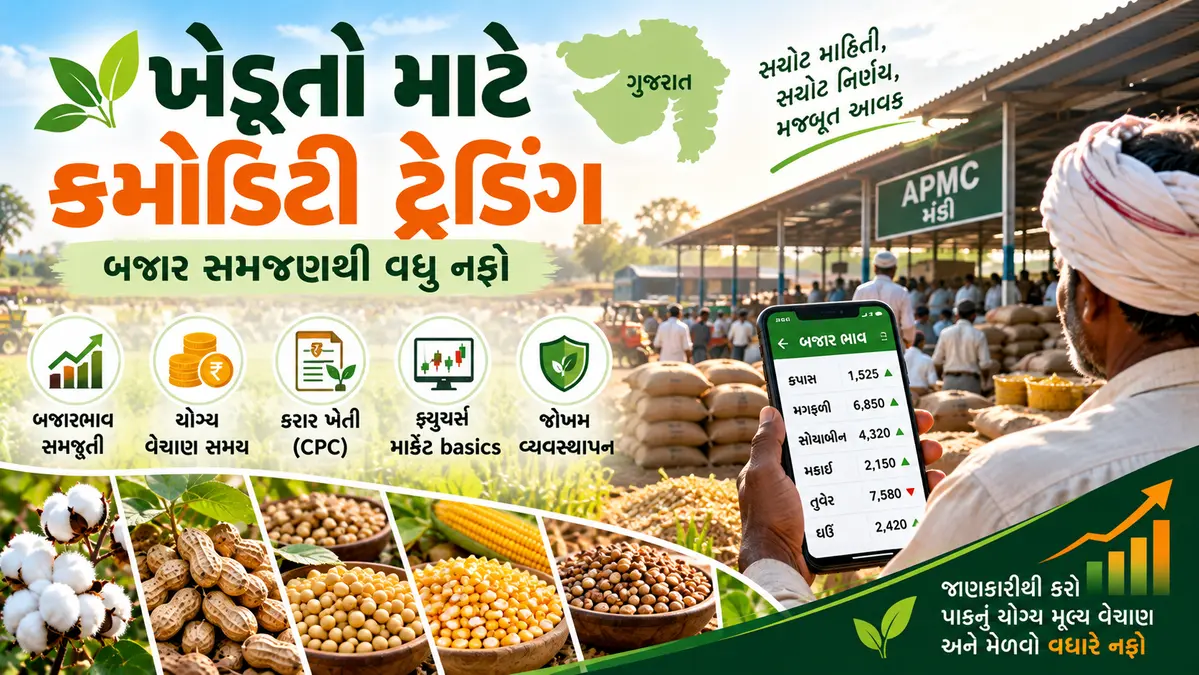
Who is this guide for? Farmers in Gujarat and agricultural readers who want to understand crop sales, mandi prices, electronic markets and commodity trading. This is educational content, not a recommendation to make a particular investment or trade.
Farm profitability depends on more than yield. When to sell, which market price to compare, how to maintain crop quality and how to account for selling costs can all affect net returns. The term commodity trading is sometimes used broadly for buying and selling crops, but selling physical produce through a mandi and trading exchange-listed futures contracts are different activities.
Table of Contents
- What is commodity trading?
- APMC, e-NAM and futures: the difference
- Checklist before selling a crop
- How to compare prices and selling costs
- Risks and fraud prevention
- A practical step-by-step plan
- Frequently asked questions
1. What is commodity trading?
Commodities can include wheat, rice, cotton, groundnut, cumin, soybean and other agricultural products. For a farmer, the most direct market activity is selling physical produce with clear quality requirements, transparent weighing and understood payment terms.
In financial markets, “commodity trading” can also refer to exchange-traded contracts linked to agricultural or other commodities. Prices can move quickly, and leverage can magnify losses. Do not confuse selling your harvested crop with speculative trading in financial contracts.
2. APMC, e-NAM and futures: the difference
| Channel | What happens? | What to check |
|---|---|---|
| Local APMC mandi | A farmer sells physical produce to buyers. | Understand weighing, grading, deductions and payment terms. |
| e-NAM / electronic trading | Digital trading or price discovery may be available through connected markets. | Check current availability and registration requirements for your market and commodity. |
| Commodity futures | An exchange contract is traded under specified terms for a future date. | Understand margin, leverage, expiry and the possibility of losses. |
e-NAM availability, mandi rules and exchange contract specifications can change. Verify current details with the relevant official platform and local market before transacting.
3. Checklist before selling a crop
- Quality: Dry and clean the produce appropriately and ask the buyer about moisture and grading requirements.
- Weighing and receipts: Keep weighment slips, grading details, deductions and sale receipts.
- Net price: Compare the quoted price after accounting for transport, labour, handling, packing and other applicable costs.
- Payment: Clarify the payment method, timeline and any outstanding amount.
- Alternative buyers: Where practical, compare terms from more than one reliable buyer or mandi.
4. How to compare prices and selling costs
When checking daily prices, compare the same commodity, variety or grade, market, unit (such as quintal or kilogram) and date. Comparing prices quoted in different units can lead to poor decisions.
Check APMC market prices and the weather forecast on Smart Khedut. Treat prices as one input to a decision, not as a guarantee of future price movements.
A simple net-return calculation
Estimated net return = total sale amount − transport − labour/handling − applicable fees or deductions − other selling costs. Costs differ by transaction, so use the actual receipts and terms.
5. Risks and fraud prevention
- Be cautious of offers promising “guaranteed profit,” fixed daily returns or risk-free trading.
- Never share an OTP, UPI PIN, password or confidential banking information with strangers.
- Verify a trading platform, intermediary and applicable regulatory registration through official sources before sending money.
- Futures trading can involve leverage, margin calls and sudden price movements that cause substantial losses. Avoid borrowing money to trade.
- Keep sale receipts, contracts, weighment slips, payment records and relevant communications.
No trading strategy guarantees profit. If your goal is simply to sell your harvested crop, first compare your local APMC, reliable buyers and available official marketing facilities.
6. A practical step-by-step plan for farmers
- Record the crop, quantity, quality and expected harvest date.
- Compare recent prices for the same crop and unit.
- Estimate net returns after transport and other selling costs.
- Verify the buyer, payment terms, weighing and grading process.
- Keep all transaction receipts and reconcile the payment received.
- Before considering futures or financial trading, understand the risks, rules and possible losses; consult a registered financial adviser if needed.
7. Frequently asked questions
Is commodity trading the same as selling crops in an APMC mandi?
No. In an APMC mandi, a farmer usually sells physical produce. Commodity futures involve exchange-traded contracts and different financial risks.
Where can farmers check daily mandi prices?
Check local APMC notices, relevant government market platforms and the available information in Smart Khedut’s market prices section. Compare the date, unit and quality before drawing conclusions.
Is profit guaranteed in futures trading?
No. Prices can move against a position, and leverage can increase losses. Do not rely on claims of guaranteed returns.
Which costs should be considered before selling a crop?
Include transport, labour/handling, packing, applicable fees or deductions and other relevant costs. Actual costs vary by market and transaction.
What should be checked before using an online trading platform?
Verify the platform and intermediary, applicable regulatory registration, fees, withdrawal process and risk disclosures through official sources.
Make farming decisions with better information
Review market prices, weather and farming guidance regularly. Compare like-for-like prices and keep written records for every sale.
View market pricesEditorial note and useful sources
This article provides general educational information and is not personal financial advice. Mandi rules, government services and exchange contract specifications may change; verify current details with official sources before acting.