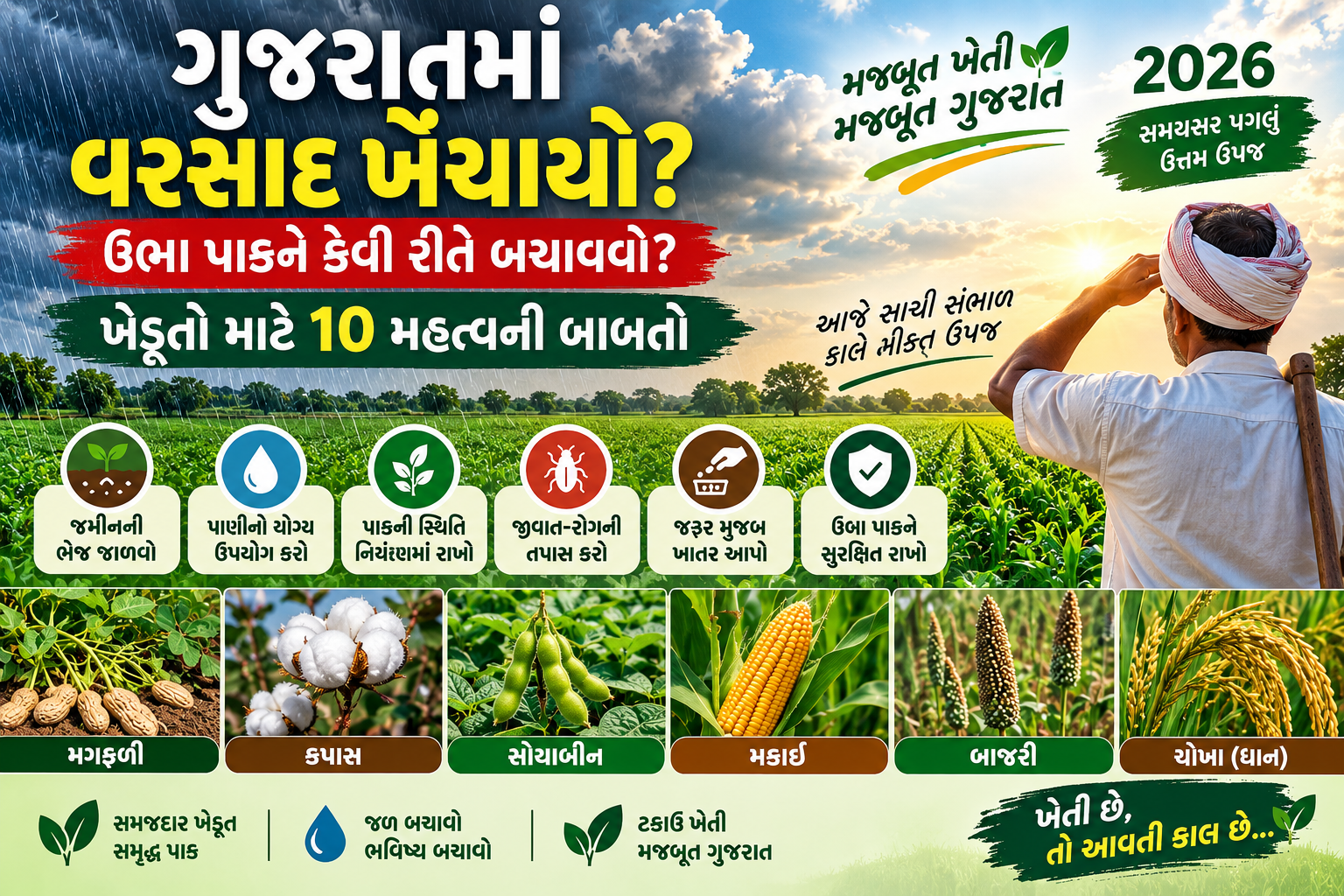
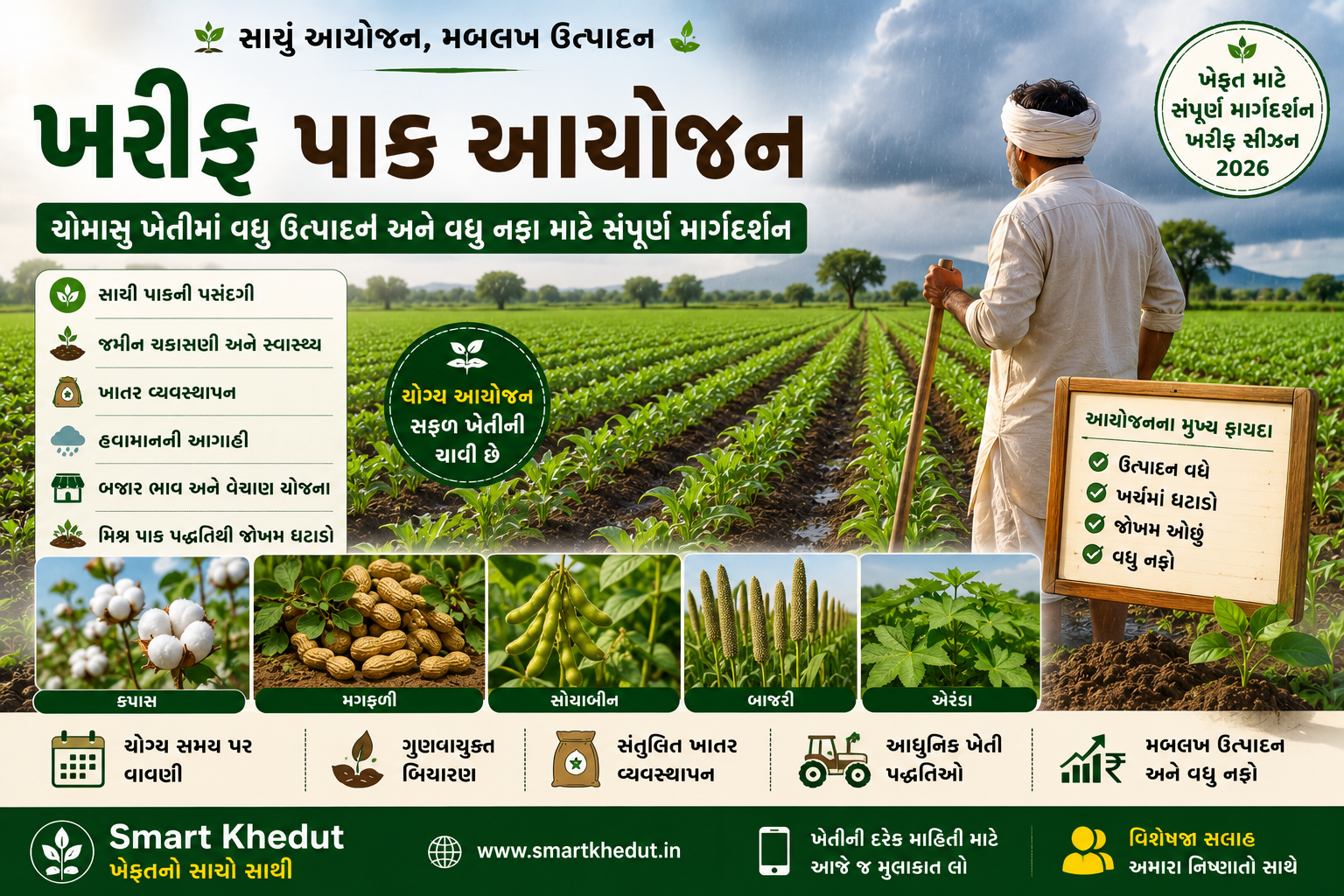
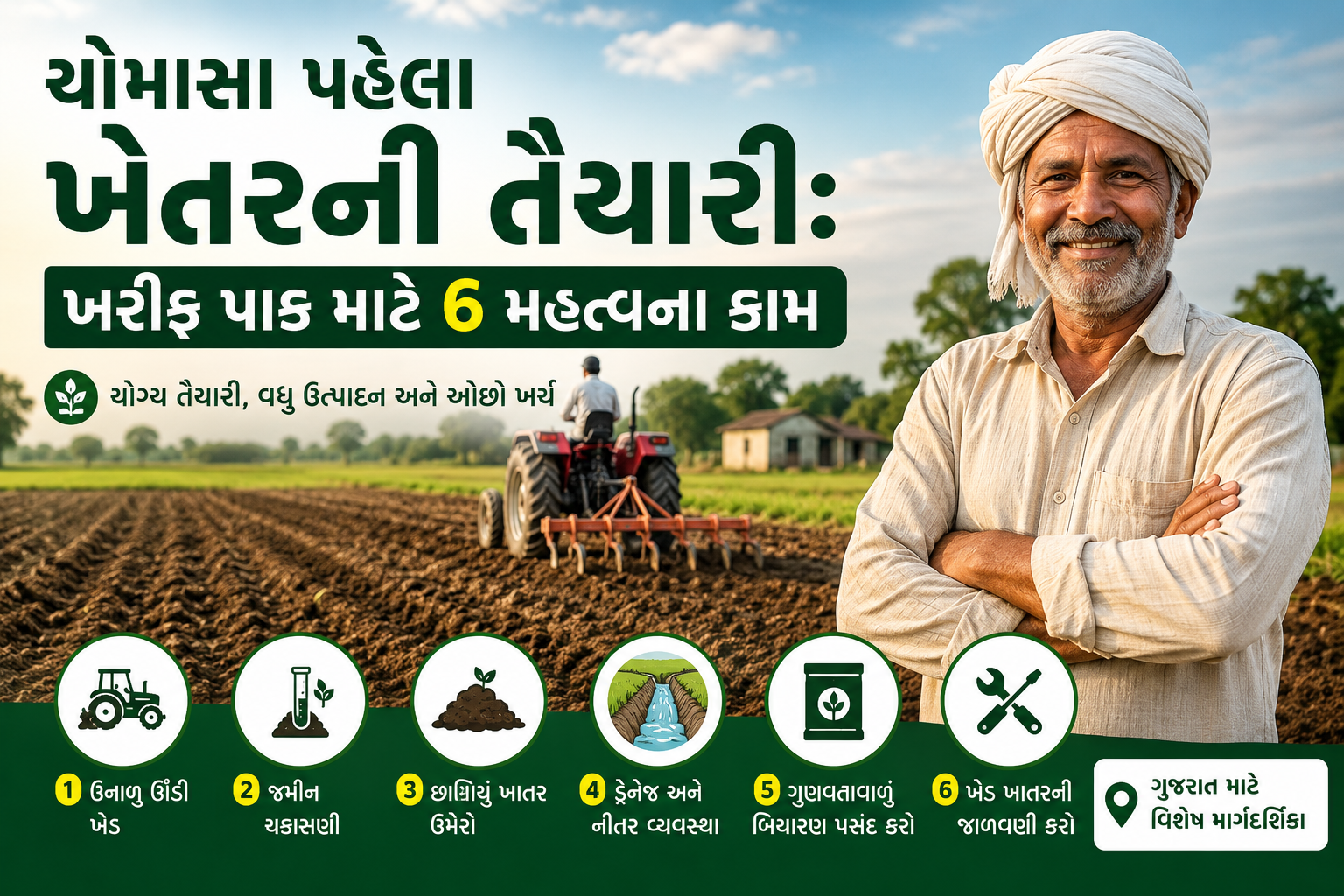
🥜 Why Is Crop Monitoring Important During Groundnut Pod Development?
During pod development, farmers should regularly observe soil moisture, plant condition, leaf colour, pest and disease symptoms, and irrigation availability. Farm decisions should be based on actual field conditions rather than a fixed calendar alone.
Groundnut is an important Kharif crop in Gujarat, and careful monitoring during the later crop stages can support better crop management. Soil moisture, crop stage, weather conditions and field-specific observations should be considered before irrigation or other input decisions.

🥜 Why Does Groundnut Pod Development Matter?
During pod development, soil moisture and overall crop condition should be monitored regularly. Requirements can vary according to soil type, previous rainfall, irrigation availability, crop age and field conditions.
📌 Check These 5 Things First
- Is enough moisture present in the soil?
- Are plant growth and leaf colour normal?
- How is pod development progressing?
- Are there any pest or disease symptoms?
- What is the local weather outlook?
🌾 12-Point Groundnut Crop Checklist
1. Check Soil Moisture
Do not irrigate only because a certain number of days have passed. Check actual soil moisture first.
2. Observe Plant Growth
Watch leaf colour, new growth and unusual changes in plant appearance.
3. Check Pod Development
Inspect representative plants when needed to understand pod development across the field.
4. Plan Irrigation
Plan irrigation according to soil and crop conditions and avoid unnecessary excess water.
5. Watch Leaf Colour
Look for yellowing, spots, curling, wilting or other unusual symptoms.
6. Scout for Pests
Inspect leaves, new growth and other plant parts regularly.
7. Record Disease Symptoms
Save photos and notes when unusual spots, rotting or growth symptoms appear.
8. Avoid Unnecessary Sprays
Do not use pesticides or fungicides without identifying the pest or disease problem.
9. Check Local Weather
Use local weather information before irrigation or other field operations.
10. Keep Farm Records
Record rainfall, irrigation, pest observations and farm expenses.
11. Prepare for Harvest
Start harvest planning according to crop condition and local agricultural guidance.
12. Seek Expert Advice
Consult a local agricultural expert when serious damage or an unknown problem appears.
💧 What Should Farmers Consider Before Irrigating Groundnut?
Irrigation requirements can vary with soil type, rainfall, crop age and field conditions. Therefore, one fixed irrigation schedule may not be suitable for every groundnut field.
💧 6 Questions Before Irrigation
- When was the last useful rainfall?
- How much soil moisture is currently available?
- What growth stage is the crop in?
- What is the local weather outlook?
- Is irrigation water sufficient or limited?
- Could additional water create waterlogging?
🐛 How Should Farmers Monitor Pests and Diseases?
Inspect different sections of the field rather than judging the entire crop from a single plant. Check both upper and lower leaf surfaces and observe new growth and other crop parts.
If unusual symptoms appear, save photographs and note where they occur in the field. Consult a local agricultural expert or authorised agricultural advisory service when required.
🌱 What If Groundnut Leaves Turn Yellow?
Yellow leaves can have several possible causes. Soil moisture, waterlogging, nutrient status, disease and other field conditions should be considered before deciding on fertilizer or crop protection inputs.
⚠️ Important
Do not automatically apply fertilizer or pesticides just because leaves appear yellow. Identify the likely cause first.
🚜 What Should Farmers Prepare Before Groundnut Harvest?
Before harvest, farmers can review crop maturity, field moisture, labour or machinery availability, and arrangements for drying and storage after harvest. Harvest timing should be based on actual crop condition and appropriate local agricultural guidance.
✅ Harvest Planning Checklist
- Check crop maturity.
- Check soil moisture and field condition.
- Arrange labour or machinery.
- Prepare drying and storage space.
- Record crop quality and losses.
🌤️ What Should Be Checked After Rain?
- Check whether water has accumulated in the field.
- Look for new disease symptoms on leaves.
- Observe changes in pest activity.
- Check fallen or damaged plants.
- Reassess the need for the next irrigation.
📅 7-Day Groundnut Monitoring Plan
- Day 1: Inspect overall field condition.
- Day 2: Check soil moisture and waterlogging.
- Day 3: Scout for pests and diseases.
- Day 4: Check local weather information.
- Day 5: Review pod development and crop stage.
- Day 6: Update irrigation and expense records.
- Day 7: Compare crop condition with the previous week.
❌ 7 Common Groundnut Management Mistakes
- Irrigating repeatedly without checking soil moisture.
- Spraying without identifying a pest or disease.
- Following unverified social media advice without checking the field.
- Using the same management method for every field.
- Ignoring the field after rainfall.
- Failing to assess crop condition before harvest.
- Delaying expert advice when a serious problem appears.
📌 More Farmer Information on Smart Khedut
❓ Frequently Asked Questions
What should farmers check first during groundnut pod development?
Check soil moisture, plant condition, pod development, pest and disease symptoms, and local weather information.
What should farmers do if soil moisture is low?
Plan irrigation according to crop and soil conditions and available water.
Should fertilizer be applied immediately if groundnut leaves turn yellow?
Not necessarily. Check possible causes before deciding on fertilizer or other inputs.
What should farmers do if pests appear in groundnut?
Identify the pest, assess the level of damage and seek local agricultural advice when required.
What should be prepared before groundnut harvest?
Review crop maturity, field condition, labour or machinery, and post-harvest drying and storage arrangements.
Should a groundnut field be checked after rainfall?
Yes. Check waterlogging, soil moisture, disease symptoms and changes in pest activity.
🛡️ Sources and Editorial Note
Groundnut crop conditions can vary with soil, weather, variety, sowing time and field conditions. Final decisions about fertilizer, pesticides, irrigation or other farm inputs should consider local field conditions and advice from an agricultural expert.