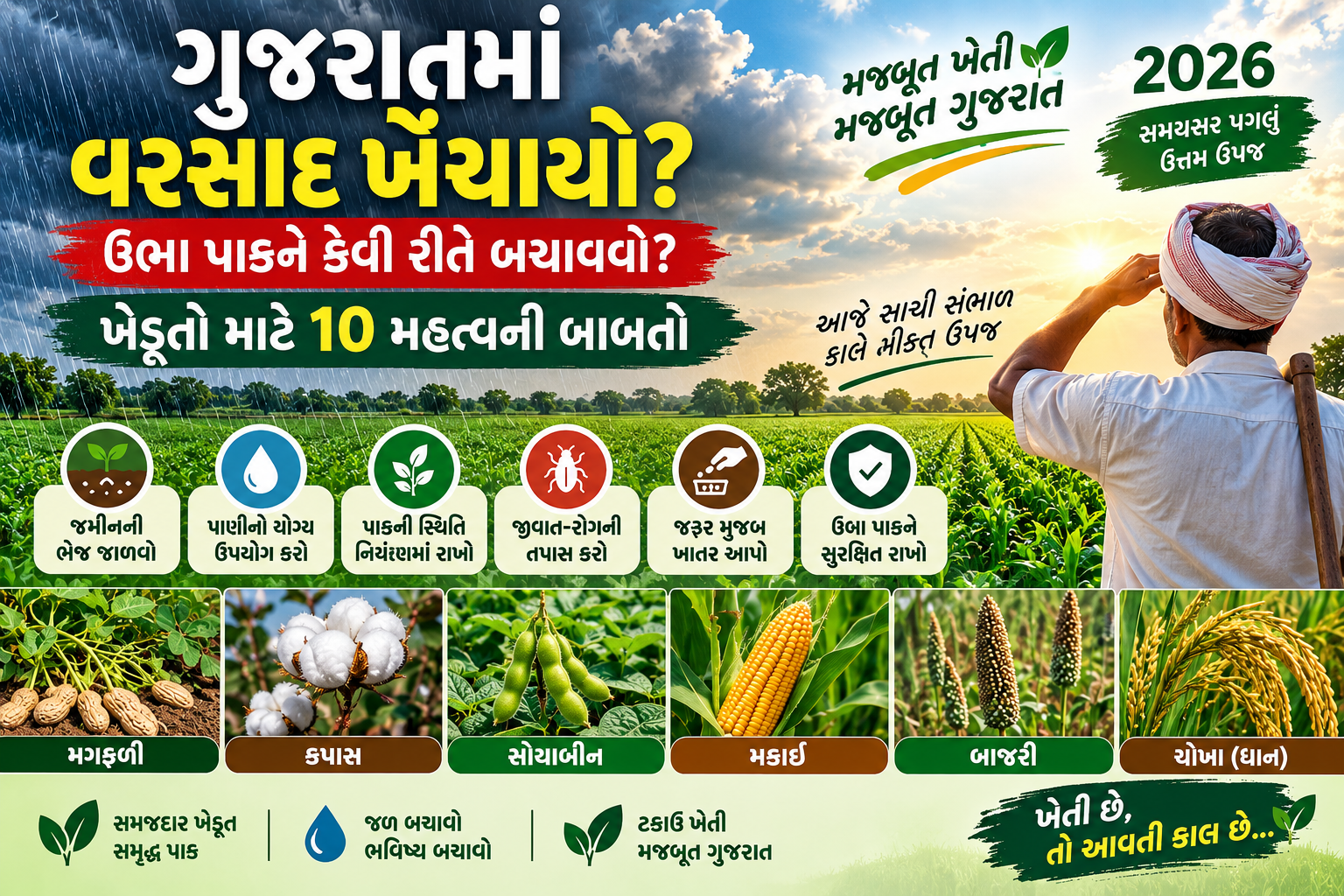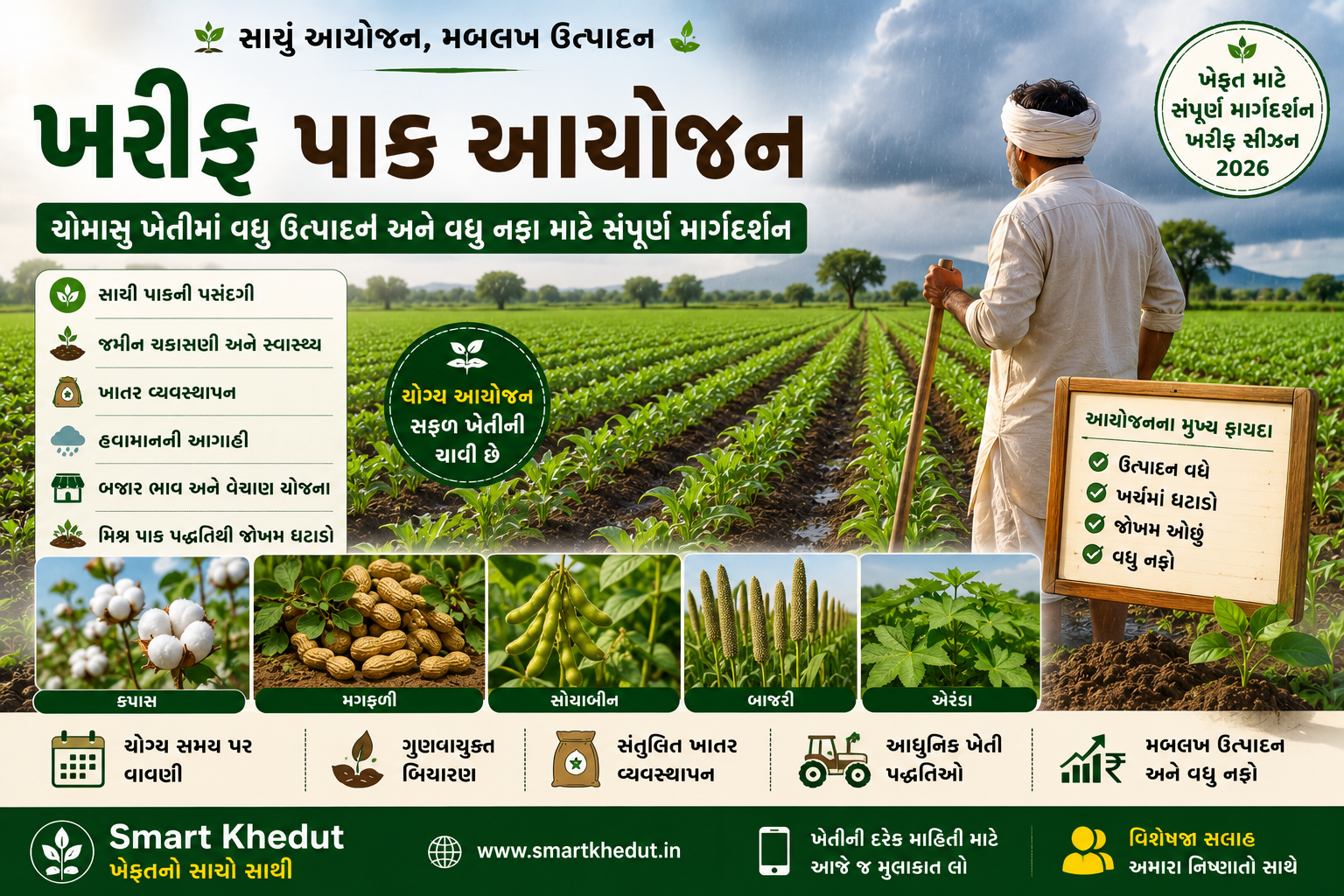
Agriculture in Gujarat is predominantly dependent on the monsoon (Kharif Season). For farmers, the pre-monsoon months of April and May represent the most critical window for agricultural operations. As the traditional adage goes, "As is the preparation, so is the harvest." Proper pre-monsoon field management dramatically reduces subsequent pest and disease pressure while yielding substantial cost savings throughout the crop lifecycle.
What Do the Agronomic Statistics Say?
In Gujarat, nearly 70% of agriculture is rainfed. Comprehensive trials conducted by Junagadh Agricultural University (JAU) demonstrate that executing deep summer ploughing paired with scientific soil testing increases overall farmer yield by 20% to 30%.
📌 Key Takeaways
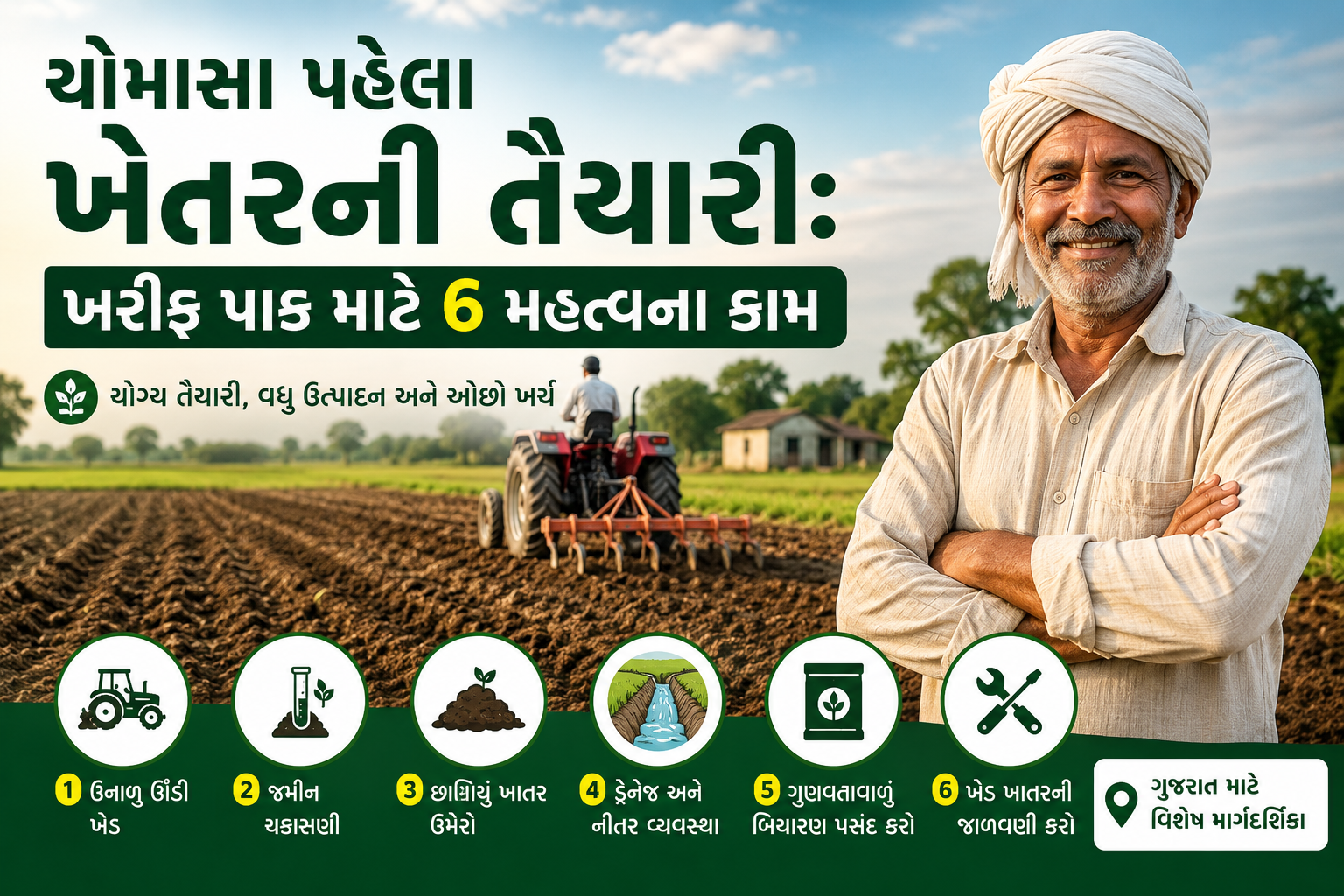
- Execute deep summer ploughing across your fields
- Conduct a mandatory Soil Test every 3 years
- Incorporate only fully decomposed Farmyard Manure (FYM)
- Construct field drainage channels for excess monsoon runoff
- Procure certified seeds with an official GST invoice
- Perform advance maintenance on sowing machinery
📋 Table of Contents
1. Deep Summer Ploughing: Solarizing Your Soil
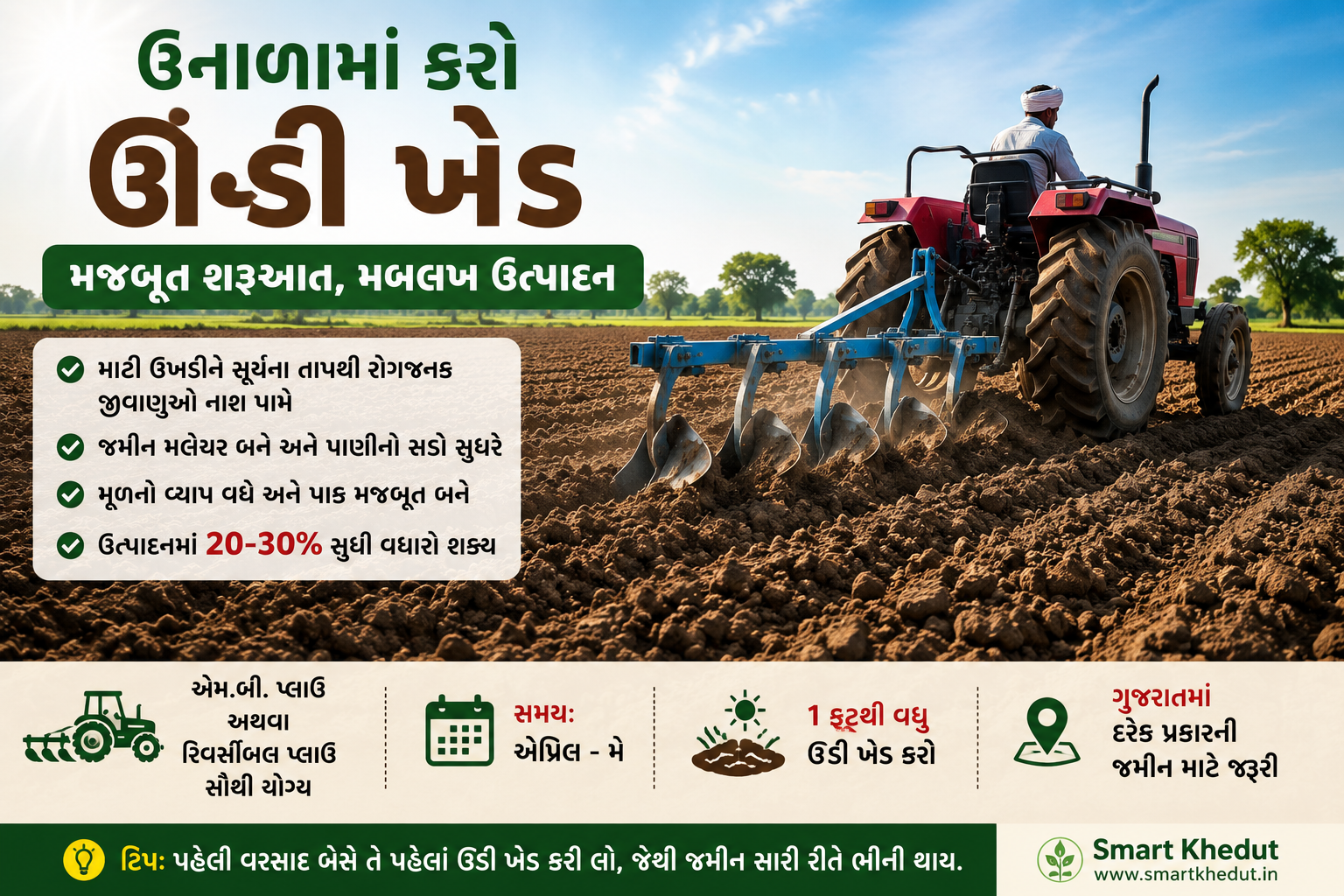
Immediately following the rabi harvest in April or May, undertaking deep field ploughing with a tractor is the first and most critical step. Turning over the soil and exposing it to scorching summer solar radiation naturally enhances soil fertility while destroying soil-borne pathogens.
👨🌾 Progressive Farmer Experience
"We utilize a Mould Board (M.B.) plough for summer cultivation every season. Inversion ploughing completely flips the soil strata, allowing our fields to capture and retain 100% of initial monsoon precipitation while supporting vigorous root penetration."
2. Soil Testing: Diagnostic Blood-Testing for Your Crop
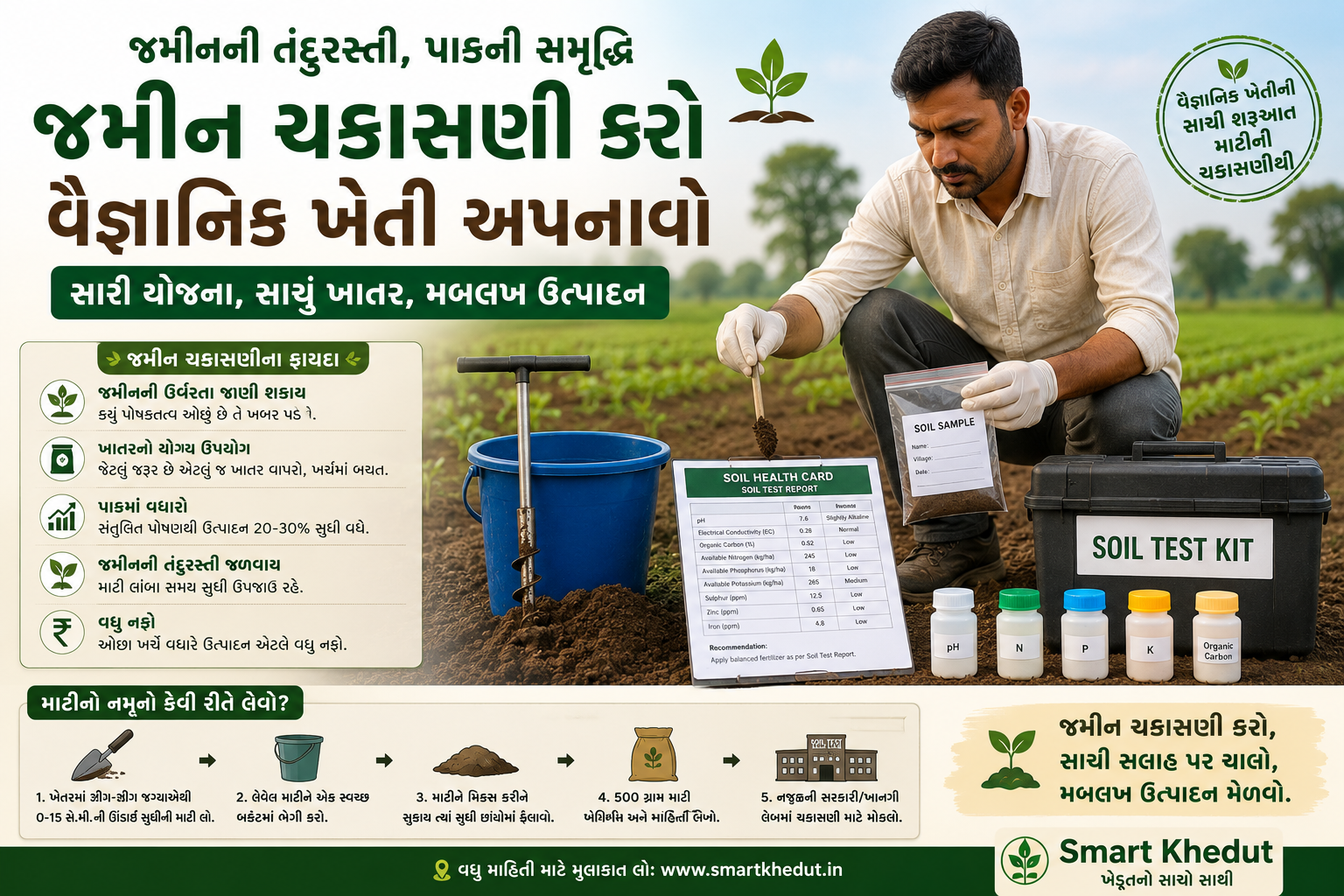
Conducting a mandatory Soil Test prior to sowing reveals precise soil nutrient deficiencies, allowing you to optimize fertilization and eliminate wasteful expenditure on synthetic chemicals. Diagnostic laboratory facilities are accessible at your local APMC market yard or Krishi Vigyan Kendra (KVK).
🏛️ Government Advisory (Soil Health Card)
Under the Gujarat Government's Soil Health Card initiative, farmers can test their soil at nominal rates. Apply fertilizers strictly in accordance with your diagnostic report recommendations.
3. Incorporating Organic Farmyard Manure (FYM)
While synthetic fertilizers supply specific chemical nutrients, organic manure breathes life into the soil ecosystem. Incorporating well-decomposed Farmyard Manure (FYM) prior to the monsoon is essential for long-term soil structure and moisture retention.
⚠️ Critical Farming Mistakes to Avoid!
- Never apply raw, undecomposed cattle dung directly from the barn to your fields.
- Undecomposed manure triggers severe outbreaks of termites and destructive white grubs.
- Do not leave manure exposed on the soil surface; plough and incorporate it immediately after application.
4. Bunding & Field Drainage Systems
During periods of intense monsoon rainfall, waterlogging rapidly asphyxiates and rots the root systems of sensitive crops like cotton and groundnut. Before the onset of the monsoon, construct proper drainage channels (waterways) aligned with your field's natural gradient to evacuate excess runoff.
5. Procuring Quality Seeds & Inputs
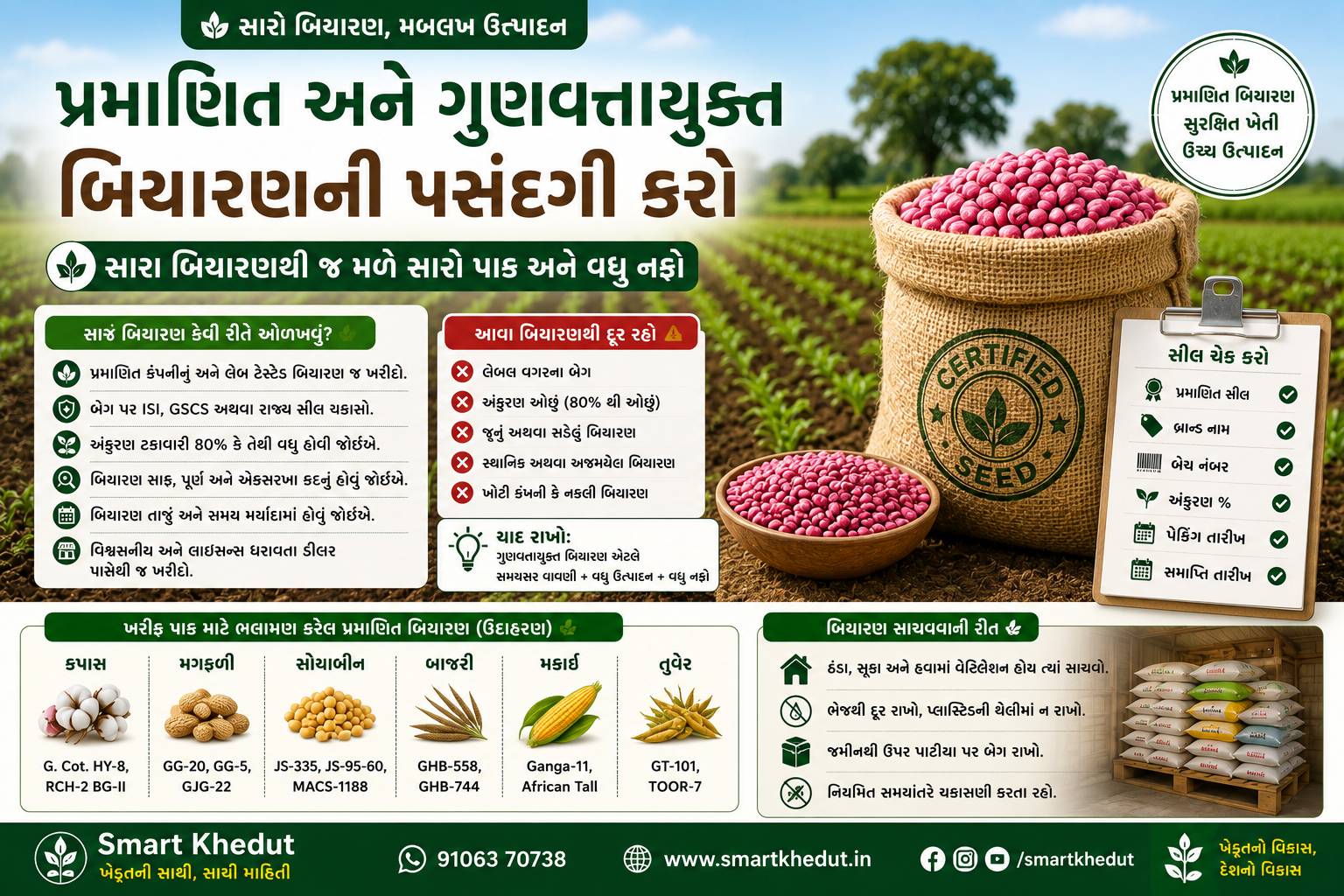
Select the most suitable kharif crops tailored to your soil profile and climatic zone. Always purchase certified seeds exclusively from authorized, government-approved dealers.
6. How to Prepare Your Farm? (Video Guide)
❓ Frequently Asked Questions (FAQ)
1. Which agricultural implement is best for deep summer ploughing?
A Mould Board (M.B.) plough or a hydraulic reversible plough is considered ideal for complete soil inversion.
2. What is the correct timing for collecting soil testing samples?
Collect soil samples immediately after harvesting your rabi crop and prior to applying any basal fertilizers (typically during April or May).
3. What is the best alternative if organic Farmyard Manure is unavailable?
If cattle manure is scarce, cultivate green manure crops (such as sunn hemp or cluster beans) or substitute with quality vermicompost.
4. Why is clearing weeds from field boundaries and bunds essential?
Weeds along field borders harbor overwintering eggs and pupae of destructive pests like thrips and bollworms; border hygiene significantly lowers early-season pest pressure.
5. Does intense solar heat during summer ploughing kill beneficial soil bacteria?
No. Solarization only sanitizes harmful pathogens in the top 5 to 6 inches of soil. Beneficial microbial populations remain protected in deeper soil strata and repopulate rapidly with the first monsoon rains.
🛡️ Expert Review & Scientific Sources (E-E-A-T)
Reviewed By
Smart Khedut Agri Expert Team
B.Sc Agriculture / Certified Agronomists
Scientific Sources
- Junagadh Agricultural University (JAU)
- Anand Agricultural University (AAU) Advisory
- Department of Agriculture, Govt of Gujarat
🌱 Useful Resources & Guides
Get Daily Agricultural Updates on Your Phone!
Join our WhatsApp community today for daily weather forecasts, live APMC mandi prices, and expert agronomy advice.
📱 Join WhatsApp Channel