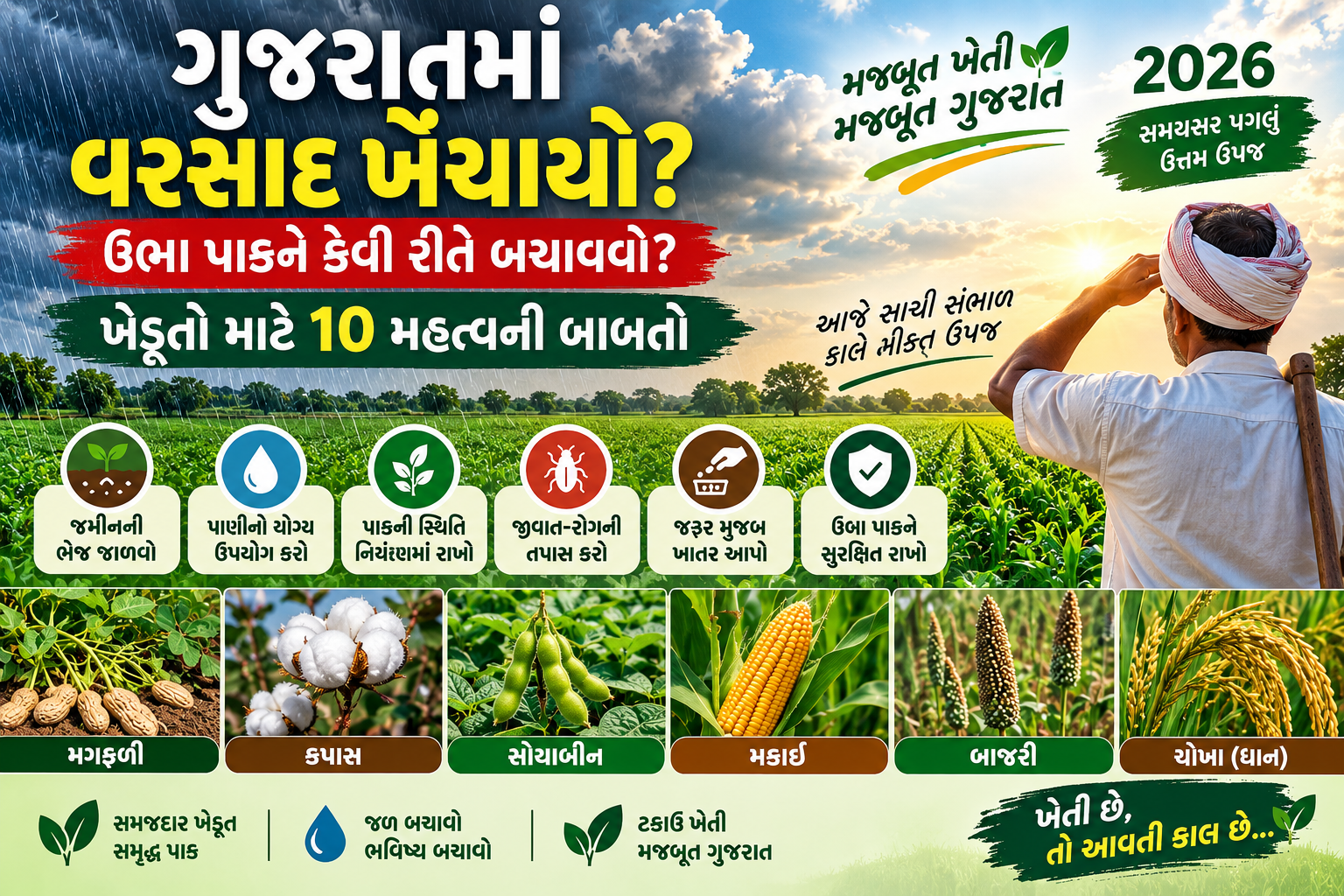
The monsoon (Kharif Season) is the primary backbone of agriculture in Gujarat and Western India. For farming success, comprehensive pre-sowing planning determines your final yield and profitability. As the traditional proverb goes, "Proper planning is half the battle won." Strategic forecasting—from crop selection to market alignment—significantly minimizes agricultural risks while boosting net returns.
What Do the Agronomic Statistics Say?
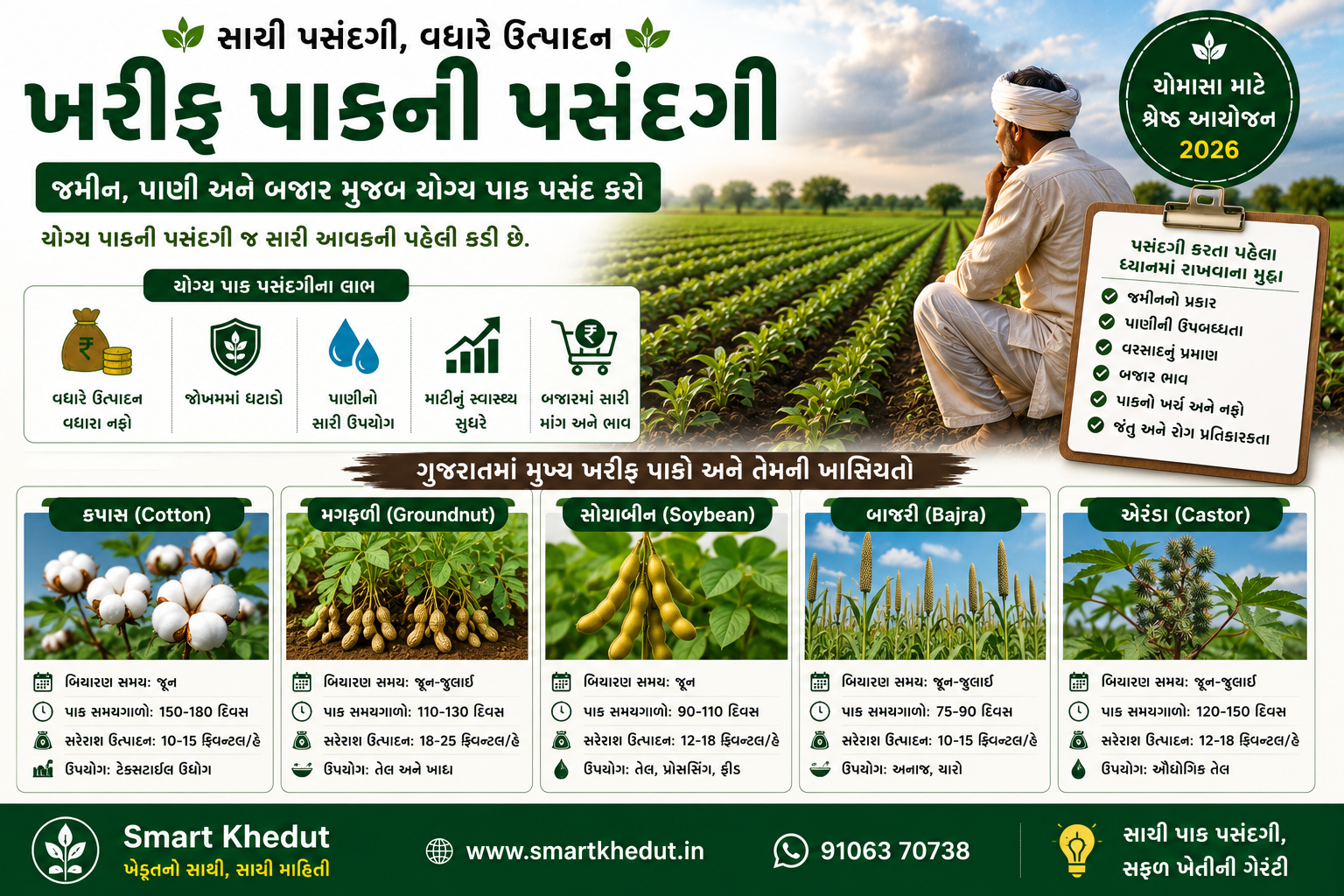
In Gujarat, cotton, groundnut, and soybean represent the primary kharif cash crops. Extensive research from leading State Agricultural Universities demonstrates that adopting scientific crop planning and intercropping models reduces seasonal crop failure risks and increases net farm profit by 15% to 25%.
📌 Key Takeaways
- Select crops strictly based on soil type and water availability
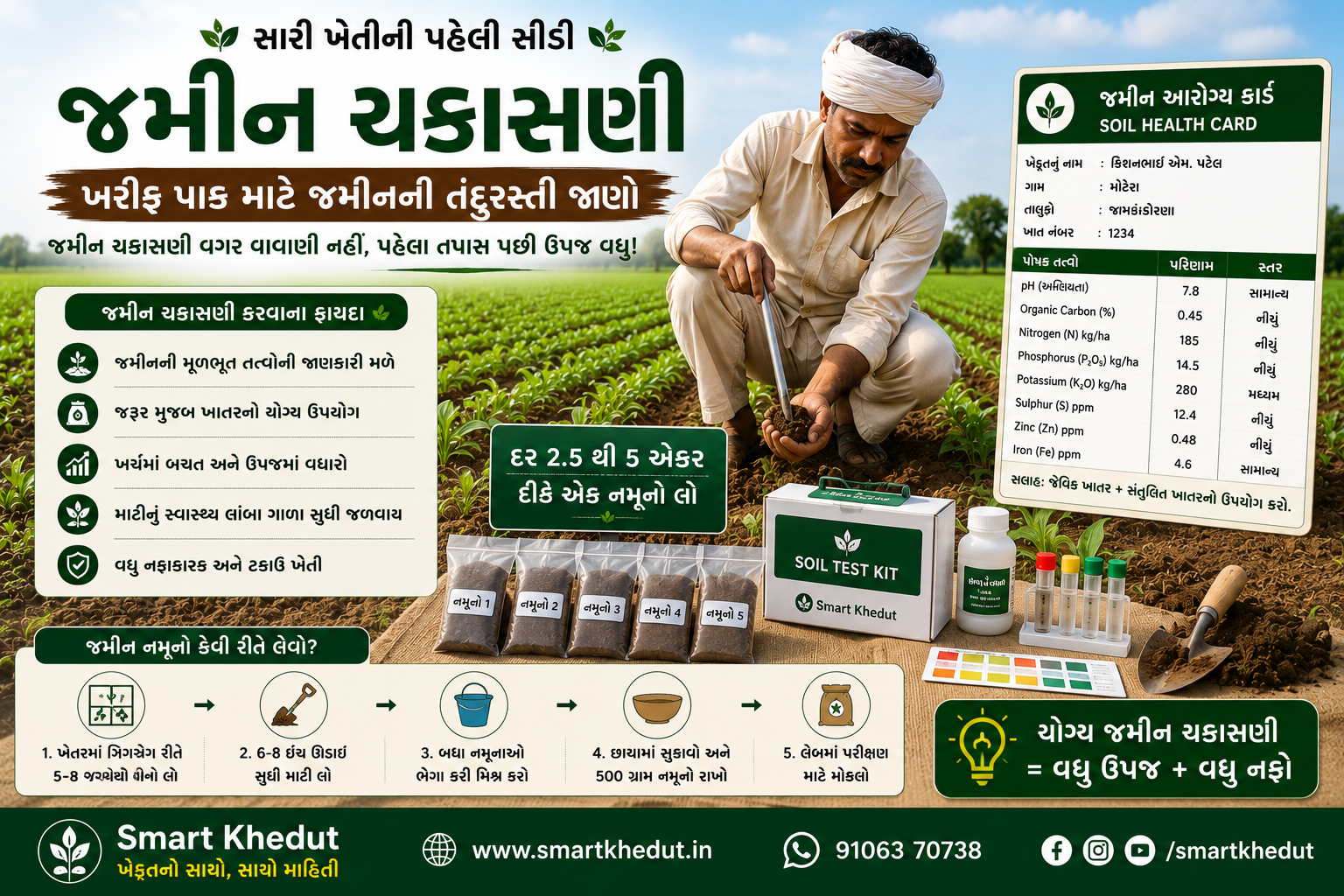
- Conduct a mandatory Soil Test prior to sowing
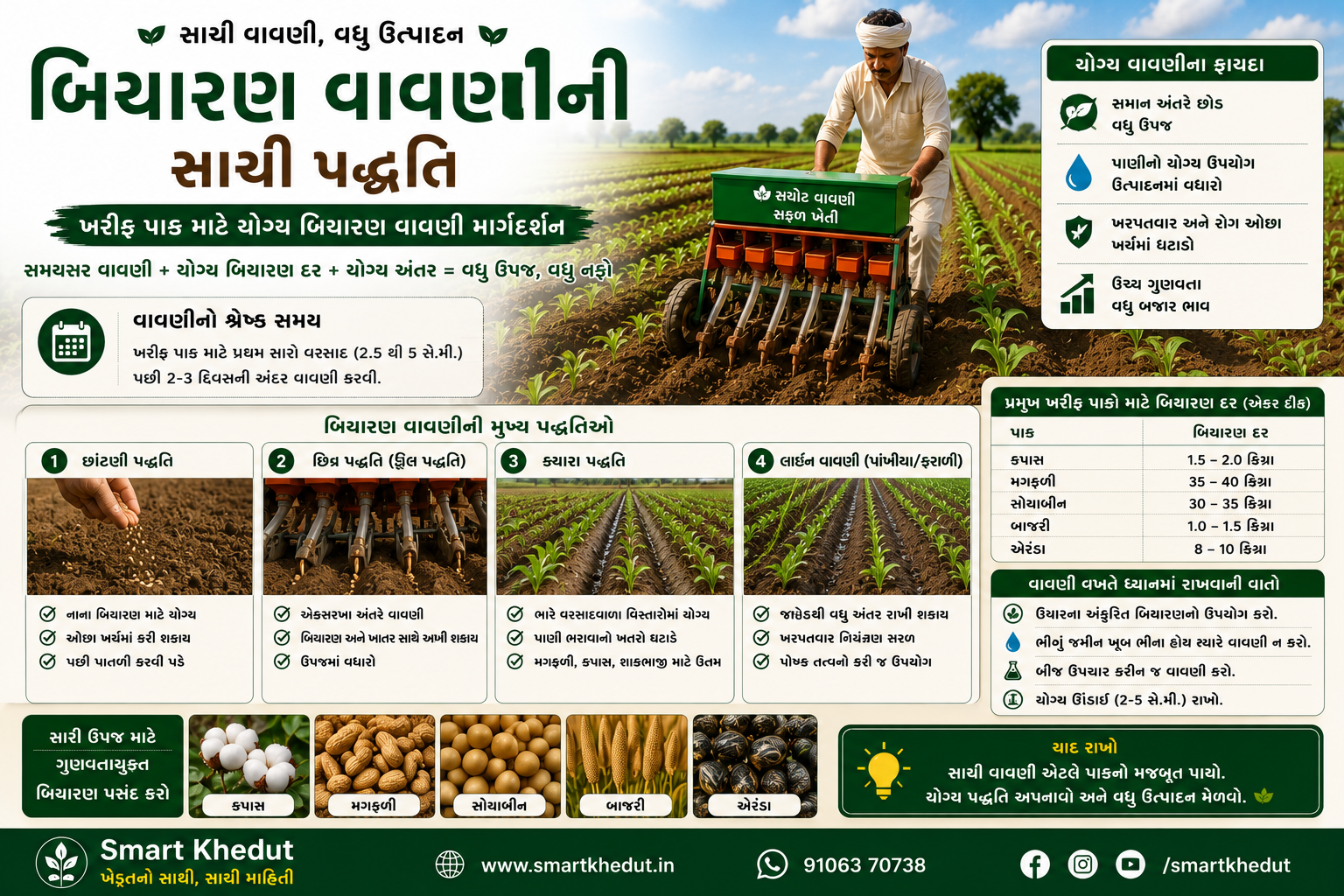
- Maintain recommended seed rates and plant-to-plant spacing
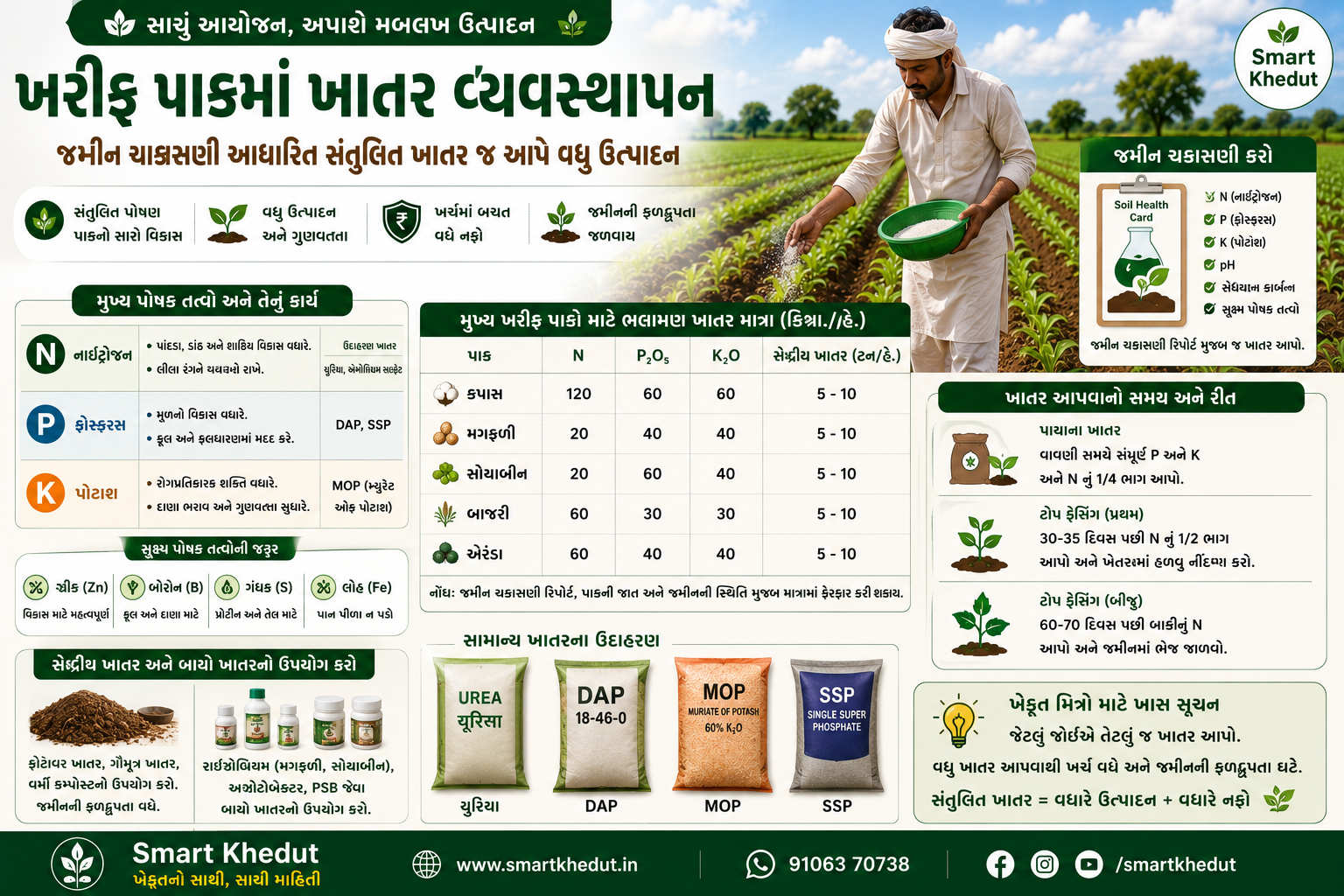
- Apply balanced fertilizers strictly per your soil test report
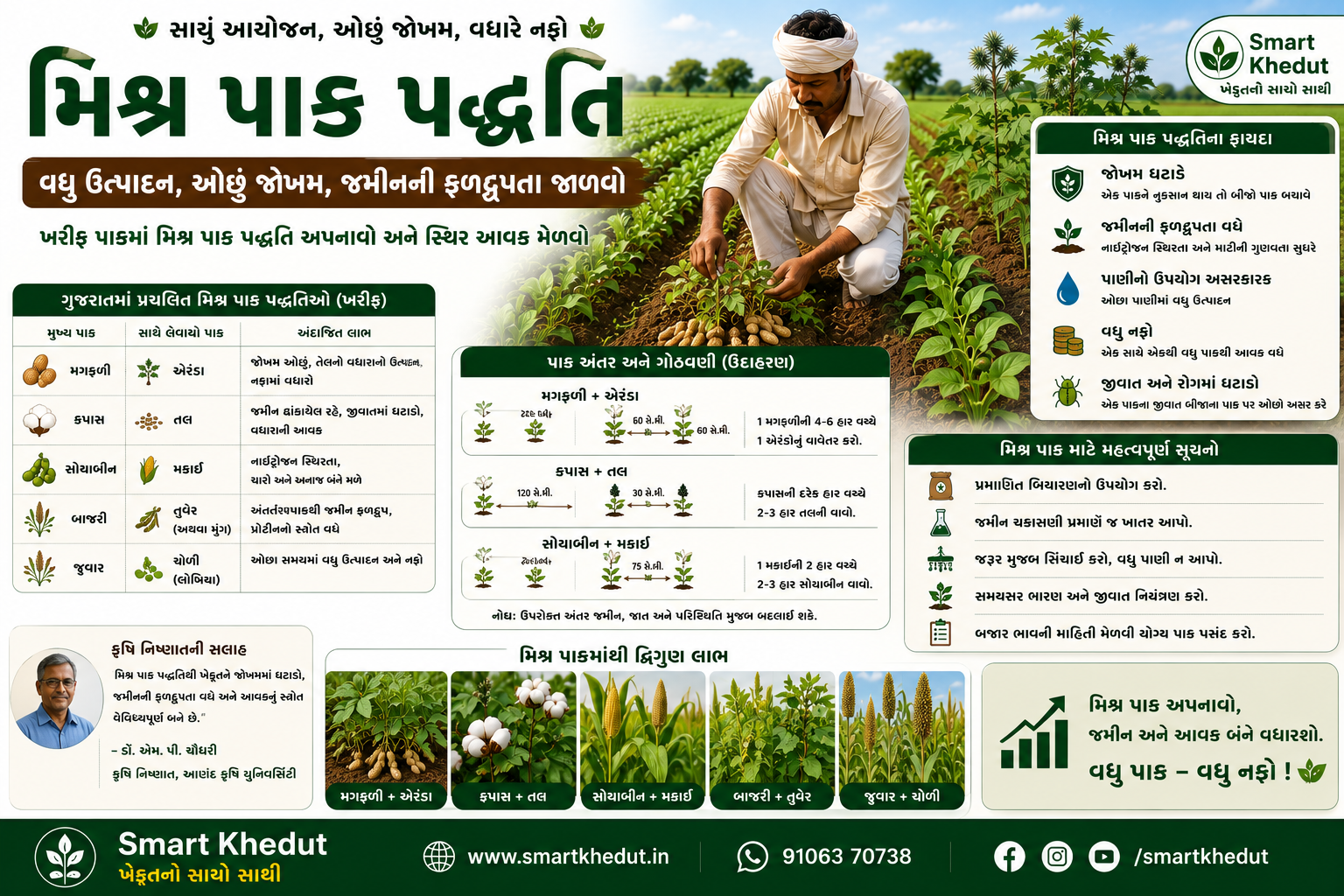
- Adopt intercropping systems to mitigate climate risks
- Monitor weather forecasts and market trends before sowing
📋 Table of Contents
1. Crop Selection Strategies
Select your crops by evaluating your local soil profile, irrigation capacity, and historical market prices. Whether you choose groundnut, cotton, soybean, or pigeon pea (tur), prioritize crops tailored to your land's specific agro-climatic conditions that offer high profit margins.
👨🌾 Progressive Farmer Experience
"We never cultivate a single monoculture across our entire acreage. Instead, we allocate different plots to cotton and groundnut based on soil texture. This diversification shields us from sudden market price crashes and ensures consistent seasonal returns."
2. Soil Health & Testing
Performing a comprehensive Soil Test before sowing is mandatory. A scientific soil analysis identifies exact nutrient deficiencies, helping you avoid unnecessary chemical fertilizer expenditures while optimizing crop nutrition.
⚠️ Critical Farming Mistakes to Avoid!
- Never apply chemical fertilizers blindly without a valid soil test report.
- Never use raw, undecomposed farmyard manure (FYM); it attracts termites and white grubs.
- Avoid continuous monocropping; practice crop rotation to prevent soil degradation.
3. Seed Rate & Sowing Methods
Always procure certified seeds from government-authorized dealers. Adhering to crop-specific seed rates and maintaining exact row-to-row and plant-to-plant spacing promotes robust vegetative growth and minimizes disease transmission.
4. Fertilizer & Financial Planning
To curb input costs and maximize profitability, balance your application of organic composts and chemical fertilizers strictly according to your soil test recommendations.
| Input Category | Estimated Cost (Per Acre) |
|---|---|
| Seeds | ₹ 1,500 - ₹ 2,500 |
| Fertilizers (Organic + Chemical) | ₹ 3,000 - ₹ 5,500 |
| Plant Protection & Spraying | ₹ 2,000 - ₹ 4,000 |
| Labor & Miscellaneous | ₹ 2,500 - ₹ 4,000 |
* Estimated costs vary depending on the region, crop type, and prevailing market rates.
5. Intercropping Models
Instead of relying exclusively on a single crop, implementing intercropping models cushions your farming enterprise against adverse weather and volatile market prices. Highly effective combinations in Gujarat include groundnut intercropped with castor, or cotton intercropped with sesame.
6. Weather & Market Advisory
Before finalizing your sowing schedule, consistently monitor reliable weather forecasts and daily APMC market mandi rates to time your planting and harvesting operations effectively.
❓ Frequently Asked Questions (FAQ)
1. What is the ideal time for sowing kharif crops?
Sowing is generally best initiated in June immediately following a good rainfall accumulation of 75 to 100 mm.
2. Is intercropping beneficial for smallholders?
Yes, intercropping groundnut with castor or cotton with sesame substantially reduces financial vulnerability to weather and market fluctuations.
3. Where can farmers get their soil tested?
Soil testing can be conducted at nominal rates at your nearest Krishi Vigyan Kendra (KVK), government soil testing labs, or agricultural university research stations.
4. What precautions should be taken when purchasing seeds?
Always purchase certified seeds from authorized dealers and insist on a computer-generated GST invoice to safeguard against counterfeit seeds.
5. How can farmers prevent termite and white grub infestations?
Utilize exclusively well-decomposed farmyard manure in your fields and practice systematic crop rotation every season.
🛡️ Expert Review & Scientific Sources (E-E-A-T)
Reviewed By
Smart Khedut Agri Expert Team
B.Sc Agriculture / Certified Agronomists
Scientific Sources
- Junagadh Agricultural University (JAU)
- Anand Agricultural University (AAU) Advisory
- Department of Agriculture, Govt of Gujarat
🌱 Useful Resources & Guides
Get Daily Agricultural Updates on Your Phone!
Join our WhatsApp community today for daily weather forecasts, live APMC mandi prices, and expert agronomy advice.
📱 Join WhatsApp Channel