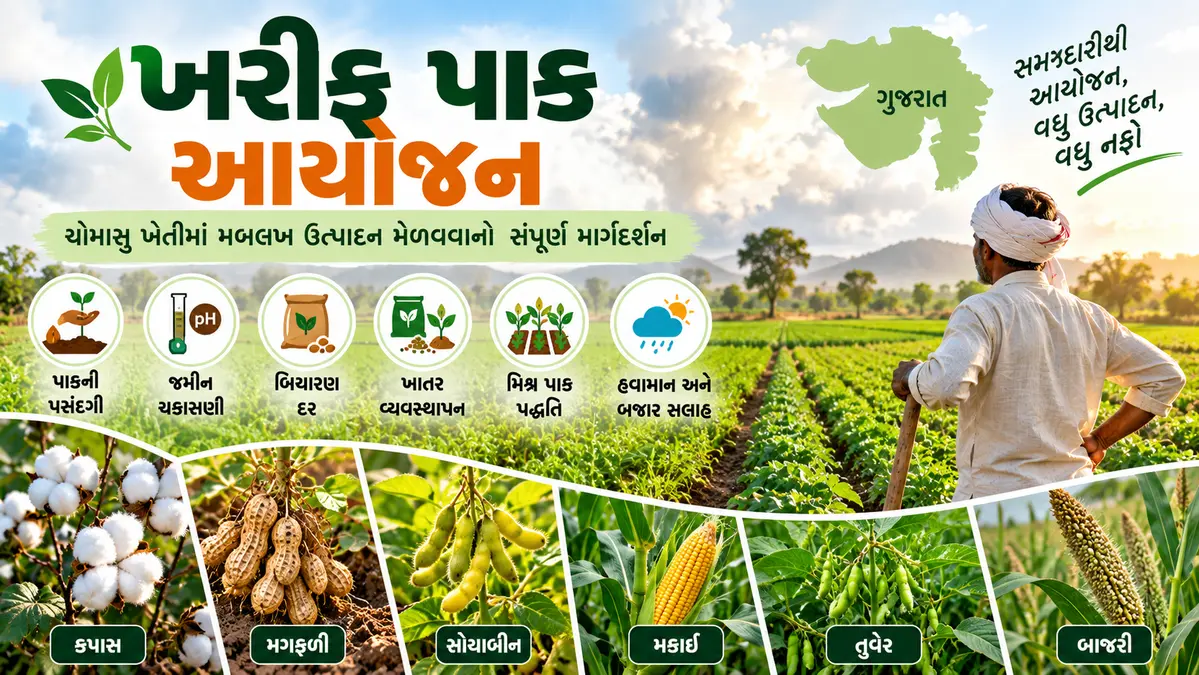
Successful Kharif planning considers soil, water availability, rainfall, crop duration, and market demand. Planning before sowing can help farmers manage input costs and weather-related risks.
1. Choose crops based on soil and water
Consider soil type, drainage, irrigation access, and crops recommended for your area. Depending on the region, Gujarat farmers grow groundnut, cotton, pearl millet, maize, pigeon pea, and other crops. No single crop is suitable for every field.
2. Test soil before sowing
A soil test helps assess nutrient status. Decide fertilizer type and rate using the test results, crop recommendations, and local agricultural advice. Read the soil testing guide for sample collection tips.
3. Use quality seed and follow sowing recommendations
- Select a variety recommended for your crop and region.
- Buy certified seed from a reliable seller and keep the invoice.
- Follow recommended seed rates, spacing, and sowing time.
- Check soil moisture before sowing.
4. Plan fertilizer use and costs
Apply fertilizers according to soil test results and crop recommendations. Estimate expenses for seed, fertilizer, labour, irrigation, and crop protection. Since costs vary by crop and location, build your budget using local prices.
5. Manage rainfall and water
Base sowing decisions on local rainfall, soil moisture, and reliable weather forecasts. If heavy rain is expected, check drainage arrangements. Where irrigation is available, apply water according to crop needs and avoid waste.
6. Consider crop rotation and diversification
Relying entirely on one crop can increase exposure to market and weather risks. Seek local agricultural advice on crop rotation or intercropping suitable for your soil and water conditions.
7. Plan for the market
Before selecting a crop, consider production costs, storage, transport, and local market conditions. Check APMC market prices before making selling decisions.
Frequently asked questions
1. When should Kharif crops be sown?
Timing varies by crop and region. Follow local agriculture department recommendations and consider soil moisture and rainfall conditions.
2. Is soil testing useful before Kharif sowing?
Yes. It helps farmers understand soil nutrient status and plan fertilizer use.
3. Which Kharif crop is the most profitable?
Profit depends on soil, water, weather, production costs, and market prices. Review local conditions before choosing a crop.
Check the weather forecast and contact a local agricultural adviser for crop-specific recommendations.