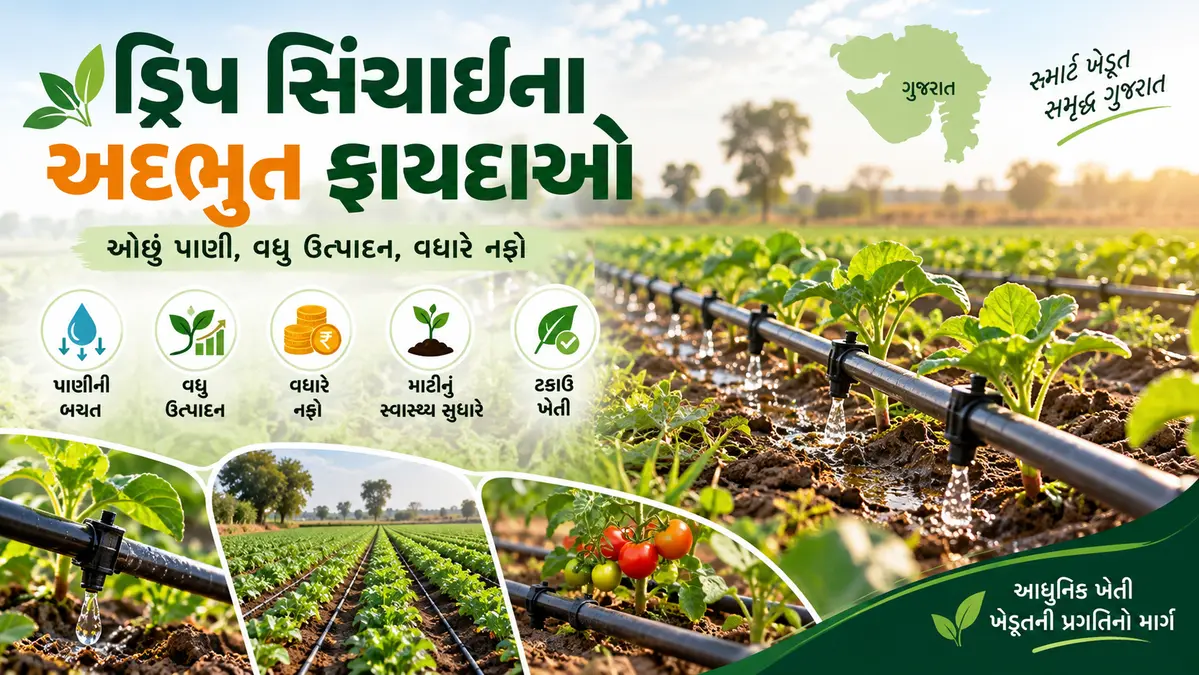
Drip irrigation delivers water slowly near the plant root zone through pipes and emitters. With suitable design, filtration, and maintenance, it can help farmers use irrigation water more efficiently.
Key benefits of drip irrigation
- Efficient water application: Water is delivered near the root zone, helping reduce unnecessary wetting.
- Fertilizer management: Compatible systems can apply soluble fertilizers through irrigation, a practice known as fertigation.
- Weed management: Wetting only part of the soil may reduce weed growth in some conditions.
- Operational convenience: Suitable automation can make repeated irrigation easier to manage.
- Crop management: Irrigation can be adjusted to crop needs, soil conditions, and weather.
Which crops can use drip irrigation?
Drip systems may be used for horticultural crops, vegetables, cotton, and other row crops. Suitability depends on soil type, water quality, crop spacing, and installation and maintenance costs.
What to check before installation
- Measure the field, slope, and crop-row spacing.
- Check the water source, pressure, and water quality.
- Select appropriate filters, main pipes, laterals, and emitters.
- Before applying for a subsidy, verify the current conditions with the relevant state agriculture department.
- Clean filters regularly and inspect for leaks or clogged emitters.
Important consideration
Drip irrigation does not automatically reduce costs on every farm. Results depend on installation costs, water quality, system design, and maintenance. Consult a local agricultural specialist before purchasing a system.
Frequently asked questions
1. Does drip irrigation save water?
A well-designed and properly managed system can improve water-use efficiency. Actual savings depend on field conditions and the irrigation method previously used.
2. Can fertilizer be applied through drip irrigation?
Yes. Fertigation is possible with compatible equipment and soluble fertilizers. Determine application rates using crop recommendations and soil or water test results.
3. How can clogged emitters be prevented?
Use appropriate filtration, clean the system regularly, and seek expert advice if sediment or salts are present in the water.
For more farming information, check the weather forecast and APMC market prices.