Overview of India’s Kharif Sowing Trends
According to data reported by Dharmakshethra - India Unabridged, the total kharif sowing area in India has reached 1,056.7 lakh hectares. The kharif season, which typically aligns with the monsoon period in India, remains a critical period for agricultural production across the country. While the overall figures reflect the scale of national cultivation, the data highlights significant shifts in the distribution of major crops, most notably a contraction in the acreage dedicated to rice.
Shifts in Rice Cultivation Acreage
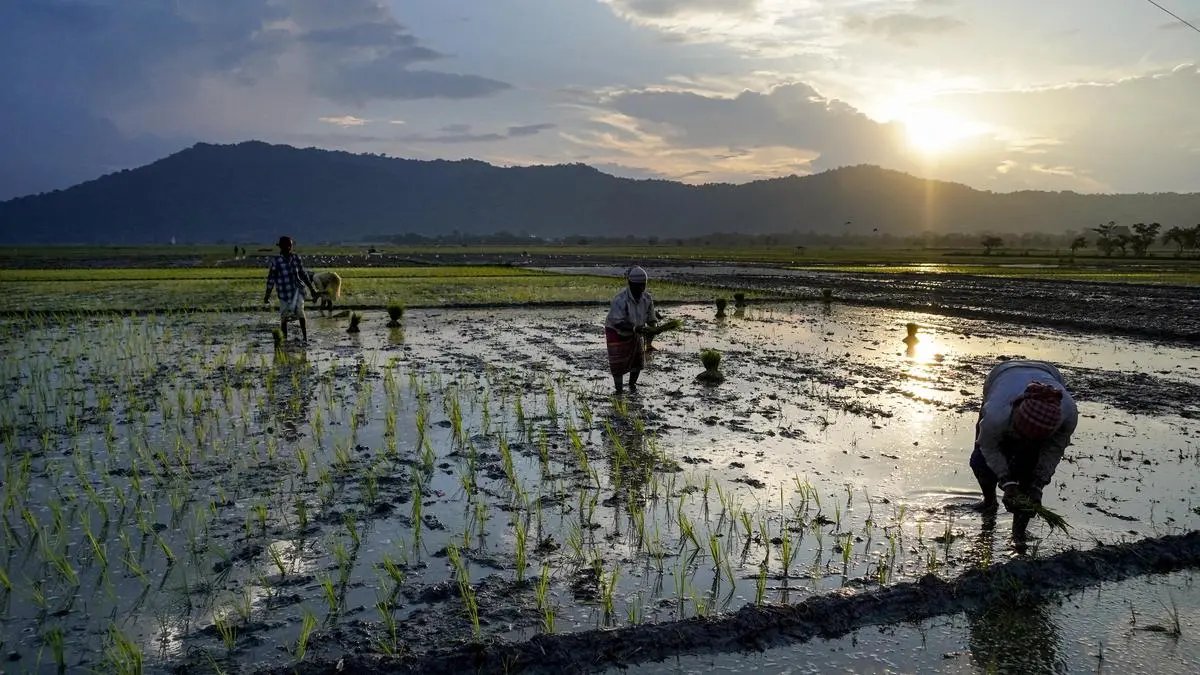
Rice continues to hold the position of the country’s largest kharif crop by total area. However, the latest figures indicate a notable decline in land usage for the crop compared to the previous year. Current reports show that rice has been sown across 405.10 lakh hectares, a decrease from the 418.29 lakh hectares recorded during the same period last year.
This represents a total reduction of 13.19 lakh hectares in rice cultivation area. The decline is not uniform across the nation, with several states reporting varying levels of contraction in their respective rice-growing regions.
State-Wise Reductions in Rice Coverage
The data highlights that multiple states have experienced a downturn in the area utilized for rice production. The following states recorded the most significant reductions:
- Karnataka: Experienced the largest reduction, with a decrease of 3.09 lakh hectares.
- Telangana: Reported a decline of 2.45 lakh hectares.
- Jharkhand: Saw a reduction of 1.88 lakh hectares.
- Madhya Pradesh: Recorded a decrease of 1.75 lakh hectares.
- Odisha: Reported a decline of 1.63 lakh hectares.
Regional Deviations in Trends
While the broader trend points toward a decline in rice acreage across many parts of the country, the report from Dharmakshethra notes that this trend is not universal. Specifically, Assam emerged as a notable exception to the national pattern. The state reported an increase of 2.80 lakh hectares in its rice coverage, demonstrating that local agricultural dynamics can differ significantly from the national aggregate.
Understanding the Kharif Season
The kharif season is defined by crops that are sown at the beginning of the rainy season and harvested towards the end of the monsoon. As the primary source of food security and agricultural output for many regions, fluctuations in the sowing area of staple crops like rice are closely monitored. The current data provided by the source offers a snapshot of how land allocation is evolving for the current kharif cycle, contrasting the total national footprint of 1,056.7 lakh hectares against the specific movements within the rice sector and the gains observed in other categories such as pulses.