Urban Infrastructure Under Pressure: Viral Video Highlights Critical Drainage Failures in Gujarat
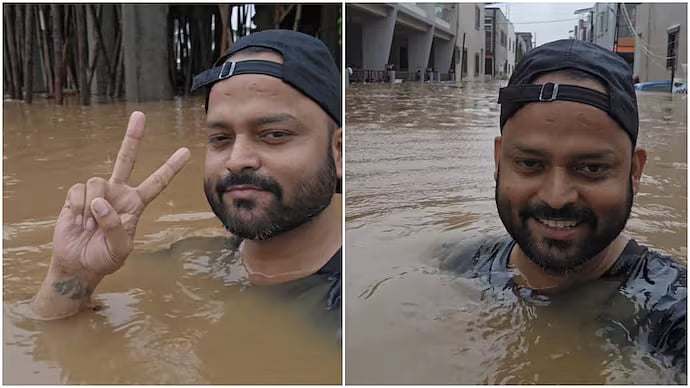
The intensifying impact of the monsoon season has once again thrust the issue of urban flood management into the national spotlight. A video circulating widely across social media platforms has captured the harrowing reality of extreme waterlogging in Gujarat, where a resident, identified as Shivam Singh, was filmed standing neck-deep in floodwater outside his residential complex. The footage, which shows vehicles partially submerged and ground-floor properties inundated, serves as a stark visual representation of the failure of municipal drainage systems to cope with high-intensity rainfall events.
While the video has gained significant traction for its shock value, agricultural experts and urban planners are treating the incident as a diagnostic indicator of broader systemic vulnerabilities. As extreme weather patterns become more frequent, the inability of residential developments to manage excess surface runoff has become a point of contention between citizens and local authorities. The scene, characterized by murky, stagnant water and floating debris, highlights not only the immediate threat to human safety but also the long-term degradation of infrastructure and sanitation in rapidly urbanizing regions.
The Agronomic and Environmental Cost of Urban Waterlogging
While the immediate focus of such incidents is often on property damage and public safety, the phenomenon of severe waterlogging in peri-urban and residential areas has significant environmental implications. In regions like Gujarat, where the landscape is a delicate balance of agricultural land and expanding urban sprawl, the lack of permeable surfaces—often referred to as “soil sealing”—prevents natural groundwater recharge. When urban drainage systems are overwhelmed, the resulting runoff carries pollutants, oil, and untreated waste into surrounding ecosystems, potentially contaminating irrigation channels and soil health in the agricultural periphery.
Furthermore, the saturation of the ground for extended periods poses a threat to the structural integrity of foundations. In areas where residential societies have been built on former agricultural floodplains or low-lying zones, the soil's inability to drain leads to prolonged water retention. This not only causes damage to the immediate built environment but also fosters the breeding of water-borne pathogens, which can rapidly spread across both urban and nearby rural communities. The failure to integrate robust hydrological planning into residential development is increasingly viewed as a critical oversight in sustainable land management.
The Infrastructure Gap: A Failure of Drainage Design
The root cause of the flooding depicted in the viral footage points toward a disconnect between urban expansion and civil engineering standards. Many residential societies are designed with drainage capacities that are no longer sufficient to handle the current intensity of monsoon downpours. Experts suggest that as climate change alters regional precipitation patterns, the historic data used to design storm-water drains is becoming obsolete. Without upgrades to municipal pumping stations, desilting of drainage networks, and the integration of rainwater harvesting or sponge-city concepts, these flooding events are likely to become the new baseline.
Public discourse surrounding the video has also touched upon the accountability of developers and municipal corporations. Residents are calling for stricter enforcement of building codes that mandate adequate drainage infrastructure before occupancy certificates are issued. As the monsoon progresses, the recurring nature of these floods suggests that temporary fixes—such as mobile pumps—are insufficient. A comprehensive, long-term overhaul of the drainage topography is required to prevent urban centers from becoming literal basins for monsoon runoff.
What This Means for Farmers
While the viral video depicts an urban crisis, the implications for the agricultural community are significant and multifaceted. Farmers should consider the following impacts and strategic adjustments:
- Water Runoff and Soil Erosion: Unchecked urban runoff often flows into agricultural fields located downstream. Farmers should invest in perimeter drainage and bunding to prevent contaminated urban water from entering their plots, which could carry urban pollutants or invasive weed seeds.
- Monitoring Groundwater Quality: Following severe urban flooding, the risk of groundwater contamination increases. It is advisable for farmers to test irrigation water sources if they are located near rapidly expanding urban zones that have experienced recent inundation.
- Infrastructure Advocacy: The failure of urban drainage often leads to the redirection of floodwaters toward rural areas. Farmers’ unions and local cooperatives should engage with municipal authorities to ensure that urban drainage projects do not simply shift the flooding burden onto agricultural lands.
- Strategic Crop Selection: In regions prone to recurring flash floods, farmers are increasingly looking toward flood-tolerant crop varieties and shorter-duration cycles that allow for better management of the planting and harvesting windows around the unpredictable monsoon peaks.
- Collaborative Land Use: Urban expansion often disrupts natural water bodies and drainage lines. Farmers should be aware of local land-use planning and advocate for the preservation of natural wetlands and drainage paths that act as essential buffers during extreme weather events.