Union Home Minister Spearheads Major Afforestation Drive at Sabarmati Ashram Gaushala
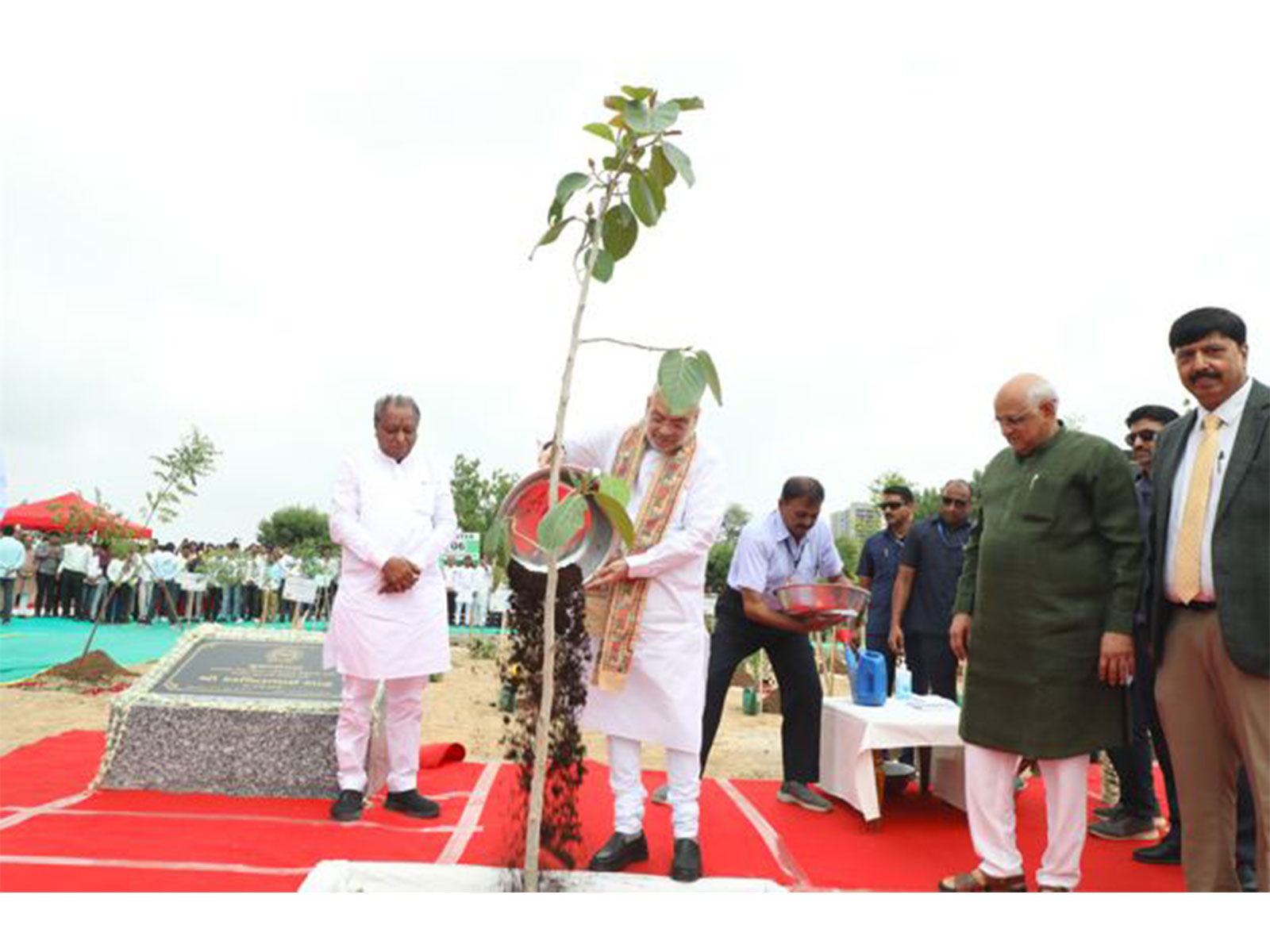
In a significant move toward urban ecological restoration and climate resilience, Union Home Minister Amit Shah presided over a large-scale tree plantation initiative at the Sabarmati Ashram Gaushala in Gandhinagar, Gujarat, this past Sunday. The event served as a cornerstone for the broader "Five Million Trees Campaign," an ambitious environmental project designed to substantially increase the green cover across the Ahmedabad metropolitan region.
The plantation drive witnessed the participation of local officials, environmental volunteers, and community members, all converging to plant thousands of saplings in a coordinated effort. By choosing the historic Sabarmati Ashram Gaushala as the focal point, the initiative underscores the intersection of cultural heritage and environmental stewardship, framing the preservation of natural landscapes as a vital component of modern national development.
Aligning with National Ecological Objectives
The initiative at the Gaushala plot is not an isolated effort but a strategic contribution to Prime Minister Narendra Modi’s “Ek Ped Maa Ke Naam” (A Tree in the Name of Mother) campaign. This national movement encourages citizens to plant trees as a tribute to their mothers, effectively gamifying environmental conservation and fostering a personal connection between the public and ecological sustainability.
From an agricultural and environmental perspective, the selection of indigenous, drought-resistant tree species is central to the success of this campaign. Experts note that urban afforestation projects in regions like Gujarat must account for local soil salinity, water scarcity, and the need for biodiversity. By focusing on mass plantation drives, the campaign aims to mitigate the "urban heat island" effect, improve local air quality, and enhance the micro-climate surrounding the Sabarmati riverfront. Such efforts are essential to sequestering carbon and creating natural buffers against the fluctuating weather patterns that have increasingly impacted the region.
The Role of Gaushalas in Biodiversity and Sustainability
The use of Gaushala land—traditionally managed for the care of cattle—for large-scale plantation highlights the multifunctional utility of agricultural land. Gaushalas often possess large tracts of land that can be optimized through agroforestry practices. Integrating tree plantation with existing livestock management systems can provide natural shade for animals, improve soil fertility through organic nitrogen fixation, and create a circular ecosystem where the waste from livestock supports the growth of healthy trees.
This initiative sets a precedent for how institutional landholdings can be utilized to meet national green targets. By transforming underutilized or semi-arid patches into thriving green corridors, the project demonstrates how organized community action can effectively combat land degradation. The emphasis on sustained maintenance—ensuring that the thousands of saplings planted during the drive survive to maturity—is the next critical phase for regional agricultural departments and local environmental bodies.
What This Means for Farmers
The "Five Million Trees Campaign" and similar large-scale afforestation efforts carry significant implications for the farming community, particularly those managing land in peri-urban and rural Gujarat:
- Access to Agroforestry Models: Farmers are encouraged to look at these government-led campaigns as models for their own land. Integrating high-value, fast-growing, or fruit-bearing trees into field borders or fallow plots can provide secondary income streams and enhance soil health.
- Improved Water Retention: Increased tree cover at the regional level aids in groundwater recharge. As the water table stabilizes, farmers in surrounding areas may see long-term benefits in the form of more reliable irrigation supplies and reduced soil erosion during monsoon seasons.
- Policy Alignment and Subsidies: With the government placing a high priority on national greening initiatives, farmers should actively seek out local agricultural extension services to learn about available subsidies for plantation drives, sapling distribution programs, and technical training on agroforestry management.
- Climate Adaptation: As weather patterns become less predictable, investing in farm-level biodiversity is a form of risk management. Trees act as windbreaks, protecting standing crops from high-velocity winds and reducing the impact of extreme heat on livestock and delicate plant varieties.
Ultimately, the success of the Sabarmati Ashram Gaushala initiative serves as a blueprint for grassroots environmental action. For the agricultural sector, it reinforces the necessity of viewing trees not just as an aesthetic addition to the landscape, but as an essential asset in the long-term productivity and sustainability of the land.