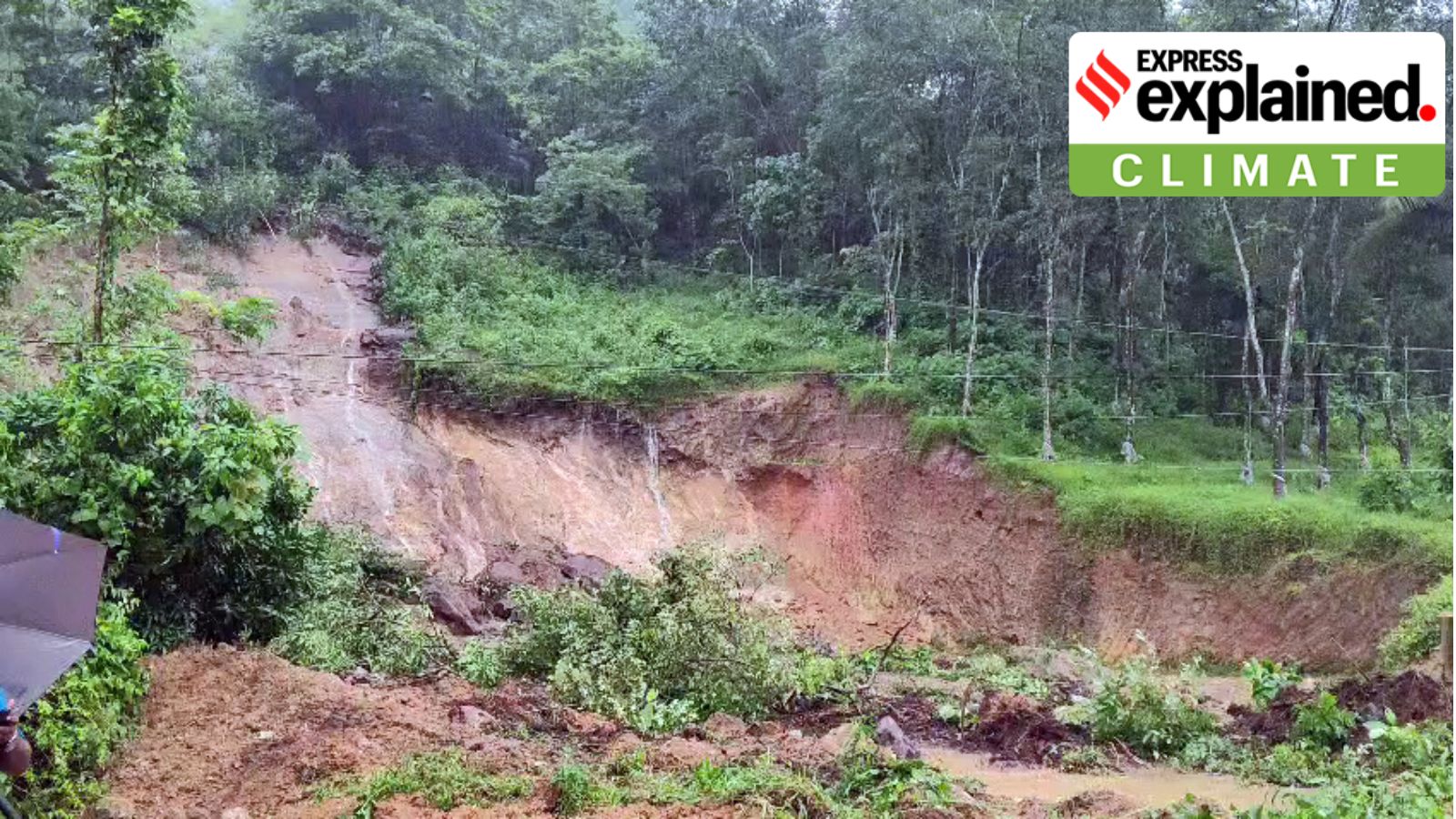
The Fragile Equilibrium of the Western Ghats: Unpacking Kerala’s Landslide Crisis
The Western Ghats, a UNESCO World Heritage site and one of the world’s most significant biodiversity hotspots, are currently facing an unprecedented environmental challenge. As the monsoon season intensifies, the state of Kerala has witnessed a recurring pattern of catastrophic landslides that threaten both human life and the stability of the region’s delicate agricultural landscape. While the monsoon is a vital component of the region’s hydrological cycle, the increasing frequency and intensity of slope failures suggest that the natural equilibrium of these mountain ranges is being pushed to a critical breaking point.
Geologically, the Western Ghats are characterized by steep, rugged terrain and a complex composition of weathered rock and soil profiles. During the monsoon, these slopes are subjected to extreme hydraulic pressure. As the soil reaches its saturation point, the internal friction that holds the earth in place diminishes, leading to mass wasting events. While these phenomena have occurred throughout geological history, recent years have seen an alarming surge in both their scale and their destructive potential, forcing agricultural experts, climatologists, and policymakers to re-evaluate the intersection of climate change and human development in the highlands.
The Convergence of Climatic Shifts and Human Intervention
The vulnerability of the Western Ghats is primarily a result of the interplay between meteorology and land-use changes. In recent decades, the monsoon patterns over Kerala have shifted, marked by shorter, high-intensity bursts of rainfall. When several hundred millimeters of rain fall within a 24-hour period, the soil—which may already be porous due to weathering—becomes heavy and unstable. This rapid saturation acts as a lubricant for deep-seated landslides, particularly in areas where the natural vegetation has been altered.
Human intervention has significantly exacerbated these natural risks. The expansion of plantation agriculture, infrastructure development, and the carving of roads into steep hillsides have disrupted the natural drainage patterns of the mountains. The removal of deep-rooted, indigenous vegetation—which traditionally served to anchor the soil—in favor of monoculture cash crops has weakened the structural integrity of the slopes. Furthermore, the practice of terracing without adequate drainage systems often leads to water logging, which acts as a catalyst for slope failure during peak monsoon months. The combination of heavy structural weight from construction and the removal of protective forest cover has effectively stripped the landscape of its natural defense mechanisms against gravitational erosion.
Geotechnical Realities and the Loss of Soil Stability
At the agronomic level, the loss of soil stability is not merely a disaster for local infrastructure; it represents a permanent loss of high-value topsoil. In the Western Ghats, soil development is a slow process, and the removal of these layers through landslides creates a cycle of degradation that can take decades to remediate. When a landslide occurs, it often strips away the nutrient-rich humus, leaving behind barren substrates that are difficult to cultivate.
The issue is further complicated by the "toe-cutting" of hillsides. To accommodate expanding agriculture or housing, the base of slopes is often excavated, removing the physical support that holds the higher ground in place. When combined with the saturation of the upper soil horizons, this leads to rotational slides that can devastate entire plantations. Agrologists have long warned that the traditional "cut-and-fill" methods used in mountainous terrain are fundamentally incompatible with the extreme rainfall events now characterizing the Kerala monsoon. The lack of standardized slope management practices means that even minor agricultural expansions can have cascading effects on the stability of the entire hillside.
What This Means for Farmers
For the farming community in the Western Ghats, these environmental shifts necessitate a fundamental change in land management strategy. The era of treating highland slopes as static, invincible assets is over; farmers must now adopt a proactive, risk-averse approach to land stewardship.
Prioritize Soil Bio-Engineering: Farmers should shift away from hard-engineered retaining walls, which can fail under extreme pressure, and instead invest in bio-engineering. Planting deep-rooted, native grasses and shrubs along the contour lines of slopes can significantly increase soil cohesion. These root systems act as a biological net, preventing the topsoil from sliding during heavy saturation.
Implement Managed Drainage: It is critical to ensure that water is diverted away from the vulnerable face of a slope. Farmers must invest in well-designed drainage channels that prevent water from pooling at the base of crops or near the edges of steep embankments. Stagnant water is the primary trigger for most minor slope failures that eventually lead to larger disasters.
Diversification of Crop Cover: Moving away from monoculture plantations on steep inclines is essential. Integrating multi-layered agroforestry, which mimics the natural structure of the Western Ghats forest, provides better soil protection. A mix of canopy trees, shrubs, and ground cover offers a more robust defense against erosion than a single-crop system.
Risk Mapping and Vigilance: Farmers are encouraged to work with local agricultural extensions to identify high-risk zones on their property. During the peak monsoon, monitoring for signs of soil movement—such as tension cracks, tilting trees, or sudden changes in water runoff clarity—is vital. Early detection of these warning signs can be the difference between losing a small portion of a crop and the total loss of a farmstead.