Legislative Overhaul Targets Integrity in Public Examinations
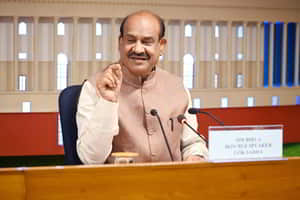
In a move aimed at fortifying the credibility of national recruitment and academic testing, Union Minister Dr. Jitendra Singh has introduced the Public Examinations (Prevention of Unfair Means) Amendment Bill, 2026, in the Lok Sabha. As the Minister of State (Independent Charge) for Science and Technology and Earth Sciences, and holding key portfolios in the Prime Minister’s Office and the Ministry of Personnel, Public Grievances and Pensions, Dr. Singh has positioned this legislative push as a critical step toward ensuring transparency for the nation’s youth.
The introduction of this bill signals a government-wide commitment to eliminating systemic irregularities that have historically plagued large-scale public examinations. By proposing stricter regulatory frameworks and enhanced punitive measures, the administration seeks to restore public trust in the merit-based selection processes that govern entry into premier government services and specialized scientific institutions.
Addressing Systemic Vulnerabilities in Testing Infrastructure
The 2026 Amendment Bill is designed to address the evolving nature of examination malpractice, which has become increasingly sophisticated with the integration of digital technology. Historically, public examinations—ranging from civil service recruitment to specialized scientific aptitude tests—have faced challenges related to paper leaks, impersonation, and unauthorized access to digital data servers.
The proposed legislation introduces a more robust definition of "unfair means," encompassing not only traditional methods of cheating but also modern cyber-based interventions. By empowering oversight bodies with greater authority, the bill aims to create a technological and legal barrier against organized syndicates that seek to undermine the competitive landscape. This is particularly vital for the Ministries of Science, Technology, and Earth Sciences, where the selection of qualified personnel relies heavily on high-stakes, rigorous testing to ensure that the brightest minds are placed in roles essential to India’s scientific and meteorological advancement.
Strengthening Accountability and Legal Deterrence
Central to the new bill is the establishment of a clear legal hierarchy for investigating and prosecuting instances of fraud. Dr. Jitendra Singh emphasized that the legislation is not merely about punishment, but about creating a deterrent environment that discourages the involvement of external agencies, intermediaries, and internal personnel who may facilitate malpractice.
The amendment mandates more stringent reporting requirements for exam-conducting bodies and establishes a standardized protocol for handling suspected breaches. By streamlining the legal process, the government intends to reduce the time taken to hold offenders accountable, thereby providing a sense of justice to the millions of candidates who invest years of preparation into these examinations. This legislative framework is expected to harmonize the operations of various recruitment agencies, creating a unified standard of security that protects the sanctity of the examination process from the local to the national level.
What This Means for Farmers
While the Public Examinations (Prevention of Unfair Means) Amendment Bill, 2026, primarily targets the administrative and educational sectors, its implications for the agricultural community are significant. For families in rural India, public examinations represent a primary pathway for social mobility and economic stability for their children.
1. Access to Scientific Careers: As the agricultural sector increasingly relies on specialized knowledge in soil health, climate-resilient crop production, and precision farming, the demand for well-trained experts in agricultural sciences is rising. Ensuring that recruitment processes for these roles are transparent guarantees that the most capable candidates are selected to serve in government research institutions, which directly benefit the farming community.
2. Meritocracy in Rural Development: Transparent recruitment is essential for filling administrative posts in rural development agencies and agricultural extension services. When examination integrity is protected, the quality of extension officers—who are the primary link between laboratory research and field-level implementation—improves. Farmers can expect more competent, well-vetted professionals to manage government schemes and provide technical support.
3. Long-term Economic Stability: By curbing corruption in examinations, the government is fostering a culture of meritocracy. For farming families who invest limited financial resources into their children’s education, the assurance that their efforts will not be derailed by unfair competition provides the necessary confidence to continue pursuing higher education as a viable investment for the future of their households.
Ultimately, the 2026 Amendment Bill is a foundational step in ensuring that the nation’s growth, fueled by both its agrarian backbone and its scientific potential, is supported by a fair and efficient human resource pipeline.