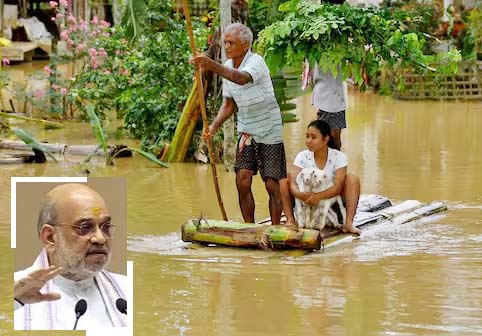
Centre Releases Rs 2,117.85 Crore in Advance Disaster Funding to Support Flood-Hit States
The Union Ministry of Home Affairs has announced a significant financial intervention to bolster disaster relief efforts across the country. Union Home Minister and Minister of Cooperation, Amit Shah, has approved the advance release of ₹2,117.85 crore from the Central share of the State Disaster Response Fund (SDRF). This strategic disbursement is intended to provide immediate liquidity to states grappling with the severe impact of floods during the 2026 southwest monsoon season.
Since the onset of the monsoon, the Government of India has maintained continuous monitoring of the meteorological situation, coordinating closely with state governments to manage the escalating crisis. The decision to release funds in advance underscores the government's commitment to ensuring that state-level disaster management authorities have the necessary resources to conduct search and rescue operations, provide essential relief to displaced populations, and initiate the preliminary stages of recovery for critical infrastructure.
Strategic Resource Allocation for Rapid Response
The State Disaster Response Fund serves as the primary window for states to access financial assistance for immediate relief measures following notified disasters. By authorizing the advance release of these funds, the Union government aims to bypass traditional bureaucratic delays, ensuring that frontline agencies—including local district administrations and disaster response teams—can sustain their operations without financial interruption.
The 2026 monsoon has presented complex challenges, characterized by erratic precipitation patterns and localized cloudbursts that have overwhelmed existing drainage and flood-control infrastructure. The released funds are earmarked for a variety of critical functions, including the operation of relief camps, the provision of food, clean water, and medical supplies to affected communities, and the emergency restoration of essential services such as power lines and rural connectivity. This proactive approach is designed to mitigate the secondary health and economic risks often associated with prolonged flooding in rural and semi-urban agricultural belts.
Strengthening Resilience Against Climate Variability
Beyond the immediate humanitarian response, the allocation reflects a broader strategy to strengthen the resilience of state-level disaster mitigation systems. As climate patterns become increasingly unpredictable, the pressure on the SDRF has intensified. The Centre's intervention is not merely a reactionary measure but part of a continuous cycle of monitoring and support that has been in effect since the early stages of the monsoon.
By ensuring that states remain financially solvent during the peak of the monsoon, the government is better positioned to conduct rapid damage assessments. These assessments are vital for determining the long-term requirements for infrastructure reconstruction and agricultural rehabilitation. The synergy between the Union Ministry of Home Affairs and state governments is critical in ensuring that the recovery process remains transparent and that the financial aid reaches the most vulnerable populations, particularly those in remote farming communities who often face the highest risk of crop loss and asset destruction during extreme weather events.
What This Means for Farmers
For the agricultural community, the advance release of SDRF funds signifies a crucial lifeline during a period of high uncertainty. The practical implications and economic consequences for farmers include:
- Mitigation of Post-Flood Economic Shock: The infusion of funds into state treasuries facilitates faster administrative processing for relief packages, which can help farmers cover immediate post-disaster household expenses and prevent the distress sale of assets.
- Support for Input Replacement: While the SDRF focuses primarily on immediate relief, the availability of these funds enables state governments to expedite the assessment of crop damage. This is a necessary precursor for the disbursement of input subsidies and other agricultural support schemes intended to help farmers prepare for the upcoming rabi sowing cycle.
- Restoration of Essential Infrastructure: Farmers rely heavily on rural roads and irrigation channels to transport produce and manage water resources. The advance funding ensures that local administrations can prioritize the repair of these vital assets, minimizing the risk of supply chain disruptions that often follow flood events.
- Actionable Advice: Farmers are advised to maintain meticulous documentation of crop damage, including photographs and area-wise assessments, to ensure they are fully prepared when state agencies begin the formal verification process for disaster compensation. Engaging with local agricultural extension offices and cooperative societies can provide farmers with the most up-to-date guidance on accessing these relief benefits.