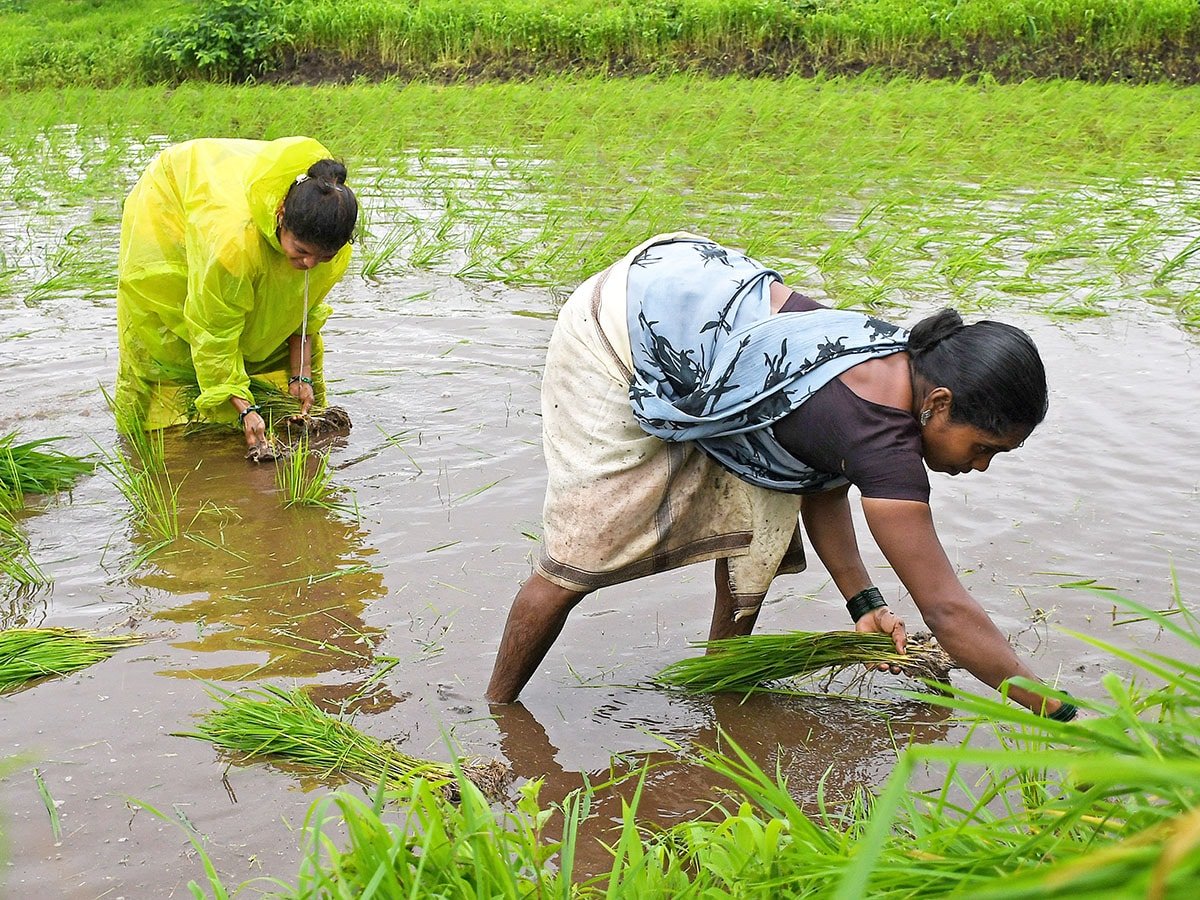
Official data released on August 9 regarding the government’s newly implemented Viksit Bharat—Guarantee for Rozgar and Ajeevika Mission (Gramin), or VB-G RAM G, shows a significant decline in beneficiary participation during its inaugural month of July 2026. Compared to the final month of the previous Mahatma Gandhi National Rural Employment Guarantee Scheme (MGNREGS) in July 2025, the new mission recorded a nearly 50 percent drop in generated person days.
Understanding the Shift in Employment Data
The transition from the long-standing MGNREGS to the VB-G RAM G scheme took effect on July 1, 2026. According to government figures, the impact on employment metrics was substantial:
- Person days generated: The new scheme recorded 7.67 crore person days in July 2026, marking a 49.94 percent decrease from the 15.33 crore person days reported under the previous scheme in July 2025.
- Household participation: The number of households utilizing the employment guarantee dropped by 51.45 percent, falling to 68.94 lakh from 1.42 crore in the same period last year.
While these figures represent a sharp decline, experts caution that it is premature to draw definitive conclusions about the long-term effectiveness or success of the new scheme based solely on the first month of implementation.
Expert Perspectives on the Decline
Economists and industry analysts have offered several potential explanations for the drop in participation, ranging from administrative transitions to seasonal agricultural cycles.
Renu Kohli, a senior fellow at the Centre for Social and Economic Progress, suggests that one month of data is insufficient for a comprehensive assessment. She highlights a specific feature of the new scheme that allows for a 60-day "pause period," which was utilized by seven states during July. These states include Bihar, Gujarat, Odisha, Arunachal Pradesh, Mizoram, Sikkim, and Nagaland.
"Bihar, Gujarat, Odisha, Arunachal Pradesh, Mizoram, Sikkim and Nagaland invoked the pause period in July. This may have led to fewer number of days," says Renu Kohli.
Ranen Banerjee, a partner at PwC India, points toward technical and administrative adjustments. He suggests that the decline may be linked to the implementation of a new digital platform requiring Aadhaar-based biometric verification, which likely resulted in the removal of duplicate entries. Furthermore, he noted that transitional challenges are common during the first month of such a large-scale policy shift.
Contextual Factors: Agriculture and Rural Economy
The decline in scheme participation coincides with the kharif sowing season, a period when many rural workers traditionally shift their labor toward agricultural activities. Data from the Ministry of Agriculture and Farmer’s Welfare indicates that by July 6, farmers had planted 350.85 lakh hectares (lh) of kharif crops, a figure 20.8 percent lower than the 442.80 lh recorded during the same period in 2025.
Despite the monsoon’s revival in July, the rural economy faces ongoing pressures. Hitesh Suvarna, a macro economist at JM Financial Institutional Securities, warns that if the downward trend in employment scheme participation persists, it could negatively impact rural demand and increase financial stress for vulnerable populations.
"If this continues, it might dent rural demand and aggravate the stress among vulnerable sections in rural India. Early signs should be evident in the moderation in rural demand and deterioration of cash flows from microfinance institutions," says Hitesh Suvarna.
Broader Economic Indicators
The broader economic environment in rural India appears to be under strain, as indicated by various reports:
- Inflation: Rural retail inflation reached 4.84 percent in July 2026, outpacing urban inflation, which stood at 3.96 percent.
- Consumer Confidence: The Reserve Bank of India’s Rural Consumer Confidence Surveys have shown a consistent decline in sentiment since January 2026, with the latest data reflecting lower current and future expectation indices.
- Resource Constraints: Reservoir levels across the country have fallen below the long period average (LPA), adding another layer of uncertainty to the rural economic outlook.
Madan Sabnavis, chief economist at the Bank of Baroda, notes that the combination of rising food inflation and general economic uncertainty could have a dampening effect on overall consumption levels in the second quarter. As the government continues the rollout of the VB-G RAM G, observers will likely monitor subsequent monthly data to determine whether the July figures represent a temporary transition dip or a more sustained trend in rural employment patterns.