Tharparkar Cattle: The Hardy Desert Dairy Breed of Rajasthan’s Arid Landscape
In the expansive, sun-scorched landscapes of western India, where survival is defined by the ability to thrive under extreme thermal stress and limited water availability, the Tharparkar cattle breed stands as a testament to evolutionary resilience. Renowned for its dual-purpose utility and exceptional hardiness, this iconic breed has long been the backbone of the pastoral economy in the arid tracts of Rajasthan and Gujarat. As climate change continues to alter regional precipitation patterns and increase temperatures, the genetic profile of the Tharparkar is gaining renewed attention from researchers and livestock managers globally.
Historical Roots and Geographical Significance
The nomenclature of the Tharparkar breed provides a window into the rich, shared history of the Indian subcontinent. The name is derived from the Tharparkar district in Sindh—a region that, prior to the partition of 1947, was an integral part of undivided India. Despite the shifting geopolitical borders that placed the breed's namesake district in modern-day Pakistan, the Tharparkar has maintained a stronghold within its traditional Indian breeding tract.
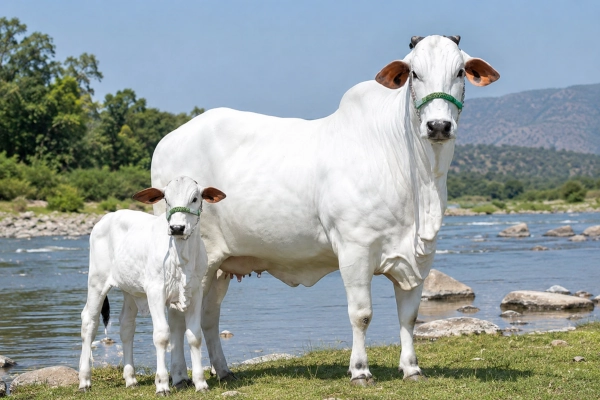
Today, the breed is primarily concentrated in the desert districts of Barmer, Jaisalmer, and Jodhpur in Rajasthan, as well as the arid regions of Kutch in Gujarat. These areas are characterized by sandy soils, sparse vegetation, and erratic rainfall—environments that would prove fatal for many high-yield exotic dairy breeds. The Tharparkar, however, has evolved over centuries to thrive in these conditions. Its physical constitution, including a well-developed hump and a loose, thick skin, provides the necessary physiological adaptations to dissipate heat efficiently and survive on the coarse, low-nutrient forage typical of desert ecosystems.
Agronomic and Economic Attributes
The Tharparkar is categorized as a dual-purpose breed, meaning it is valued for both its moderate milk production and the strength of its bullocks. In the context of smallholder farming, this duality is critical. While modern industrial dairy farming often prioritizes high-volume output, the Tharparkar offers a more sustainable model for arid-zone agriculture. The breed is capable of maintaining consistent milk yields even during periods of drought, a trait that provides farmers with a vital safety net when crop harvests fail.
Beyond milk production, the Tharparkar is highly prized for its draft capacity. The bullocks are known for their endurance and ability to work long hours in sandy terrain, making them indispensable for traditional agricultural tasks such as plowing, carting, and water-drawing. Furthermore, the breed exhibits remarkable disease resistance. Its robust immune system, developed through generations of natural selection in harsh environments, reduces the reliance on veterinary interventions and expensive pharmaceutical inputs, effectively lowering the cost of production for rural households.
What This Means for Farmers
For farmers operating in arid and semi-arid zones, the Tharparkar cattle represent a low-risk, high-resilience investment. As global agriculture faces the dual pressures of rising temperatures and water scarcity, the shift toward indigenous, heat-tolerant breeds is not merely a matter of heritage preservation, but a strategic economic necessity.
Practical Implications and Advice:
- Climate Adaptation: Farmers looking to future-proof their operations against heat stress should consider integrating Tharparkar genetics. The breed’s ability to maintain productivity in high-temperature environments can significantly stabilize income during heatwave events.
- Reduced Input Costs: Due to their inherent hardiness and ability to utilize poor-quality roughage, Tharparkar cattle require less intensive supplementation compared to high-input crossbred cattle. This improves the overall profit margin for the farmer.
- Sustainable Grazing: The breed is well-adapted to extensive grazing systems. By utilizing native pastures, farmers can reduce the expenditure on concentrated feed, aligning their operations with more sustainable, low-input agricultural practices.
- Economic Stability: By serving as a dual-purpose asset, the Tharparkar provides a diversified income stream. Even in years where milk demand fluctuates or feed becomes scarce, the value of the animal as a work bullock or for breeding purposes ensures the farmer maintains a tangible asset.
Ultimately, the Tharparkar serves as a living example of how traditional knowledge and natural selection offer sophisticated solutions to modern agricultural challenges. For the desert farmer, this breed is not just livestock; it is a reliable partner in a landscape that demands nothing less than absolute endurance.