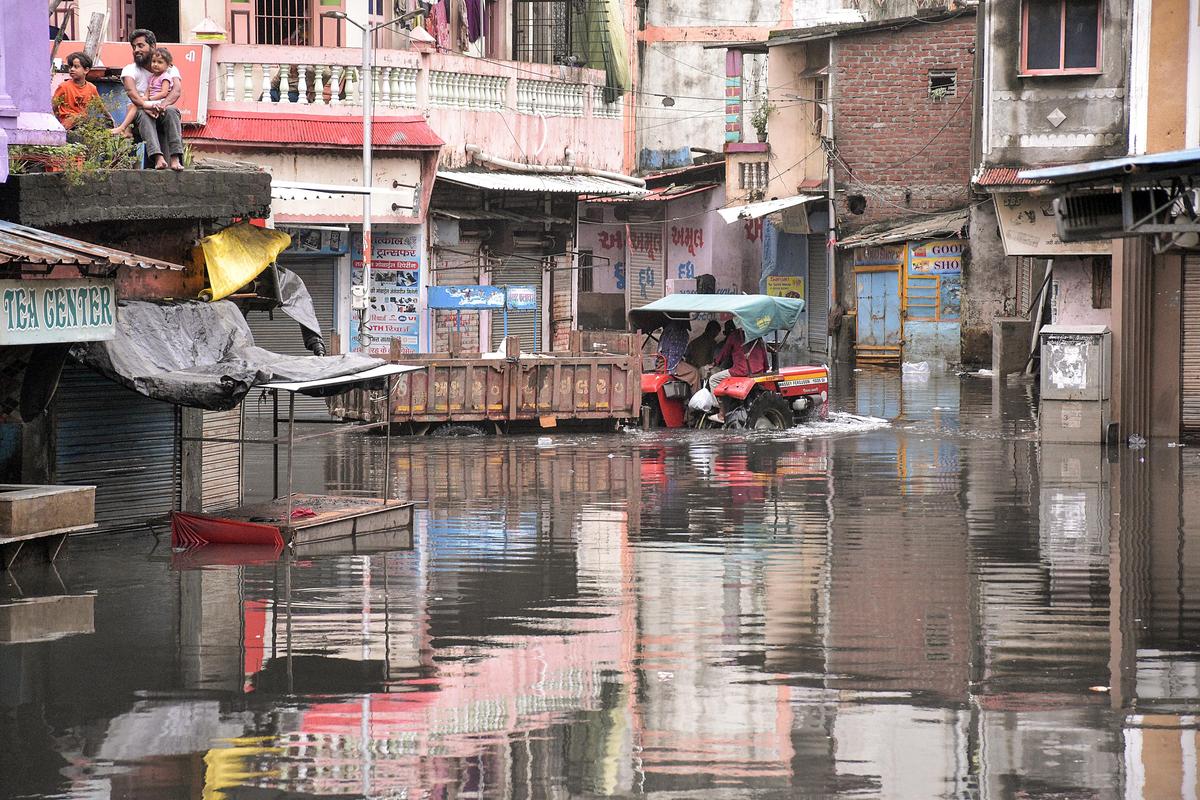
Surat Faces Prolonged Inundation as Infrastructure and Legal Tensions Mount
The city of Surat remains in a state of high alert this August, as persistent floodwaters continue to disrupt daily life and agricultural logistics across the region. While the immediate threat to human safety remains the primary focus for local authorities, the confluence of extreme weather events and ongoing legal scrutiny regarding urban planning has placed the city under significant strain. As floodwaters recede at a frustratingly slow pace, the recovery process is being complicated by a High Court-mandated investigation into recent demolition activities, which critics argue may have exacerbated the current drainage failures.
The Intersection of Urban Planning and Flood Resilience
The Surat High Court has officially intervened, demanding comprehensive answers from municipal authorities regarding a series of controversial demolitions that took place in the weeks leading up to the current deluge. Legal experts and urban planners are closely examining whether these structural removals—intended to clear land for development—inadvertently compromised the city’s natural drainage corridors and storm-water management systems. By altering the landscape’s topography, the demolitions may have hindered the efficient discharge of overflow, trapping floodwaters in low-lying residential and industrial zones longer than would be typical under normal seasonal conditions.
This investigation has sparked a broader debate regarding the necessity of integrating rigorous environmental impact assessments into urban expansion projects. As the court seeks clarity on the decision-making process behind these demolitions, the agricultural and commercial sectors are left to grapple with the consequences. The inability of the current infrastructure to handle the volume of water has prompted calls for a massive overhaul of the city’s water-table management and flood mitigation strategies, which have historically relied on outdated models of rainfall intensity.
Heroism Amidst the Crisis
Amidst the logistical chaos and the somber atmosphere of the floods, stories of individual bravery have provided a glimmer of hope. On August 3rd, a dramatic rescue unfolded when a local traffic police officer performed an act of extraordinary heroism to save a citizen from being swept away by rising currents near a critical junction. The incident, which was captured by onlookers, serves as a stark reminder of the unpredictable nature of the current flooding and the immense physical danger posed to those navigating the inundated streets.
The officer’s actions have been lauded by the local administration, but the event has also served as a catalyst for renewed safety warnings. Authorities are advising residents to avoid all unnecessary travel, noting that moving water can be far more powerful and deceptive than it appears. The rescue has underscored the strain placed on emergency services, who are currently managing a dual mandate of flood relief operations and maintaining basic public safety in an environment where standard infrastructure is failing.
What This Means for Farmers
For the farming community surrounding the Surat periphery, the current situation carries significant economic and agronomic implications that extend well beyond the city limits:
- Crop Vulnerability: Prolonged waterlogging is a death knell for many standing crops. Farmers must prioritize field drainage as soon as the water levels permit to prevent root rot, fungal infections, and the total loss of soil oxygenation.
- Supply Chain Disruptions: With floodwaters obstructing major transportation arteries, the movement of perishable produce is severely compromised. Producers are advised to explore alternative, higher-ground storage facilities if immediate transport to urban markets is impossible.
- Soil Health Management: Once the water recedes, fields will likely be compacted and stripped of essential nutrients. Soil testing will be critical before the next planting cycle to determine the extent of nutrient leaching and to plan for necessary soil amendments.
- Insurance and Documentation: Farmers should maintain meticulous records of flood damage, including photographic evidence and logs of water levels. This documentation will be essential for filing insurance claims or accessing government relief packages that may be announced following the High Court’s current review of the municipal flood management failures.
- Long-term Planning: The ongoing legal investigation into urban planning highlights the need for farmers to stay engaged in regional land-use policy discussions. Decisions made in urban centers regarding drainage and construction directly impact the hydrological health of the surrounding agricultural landscape.