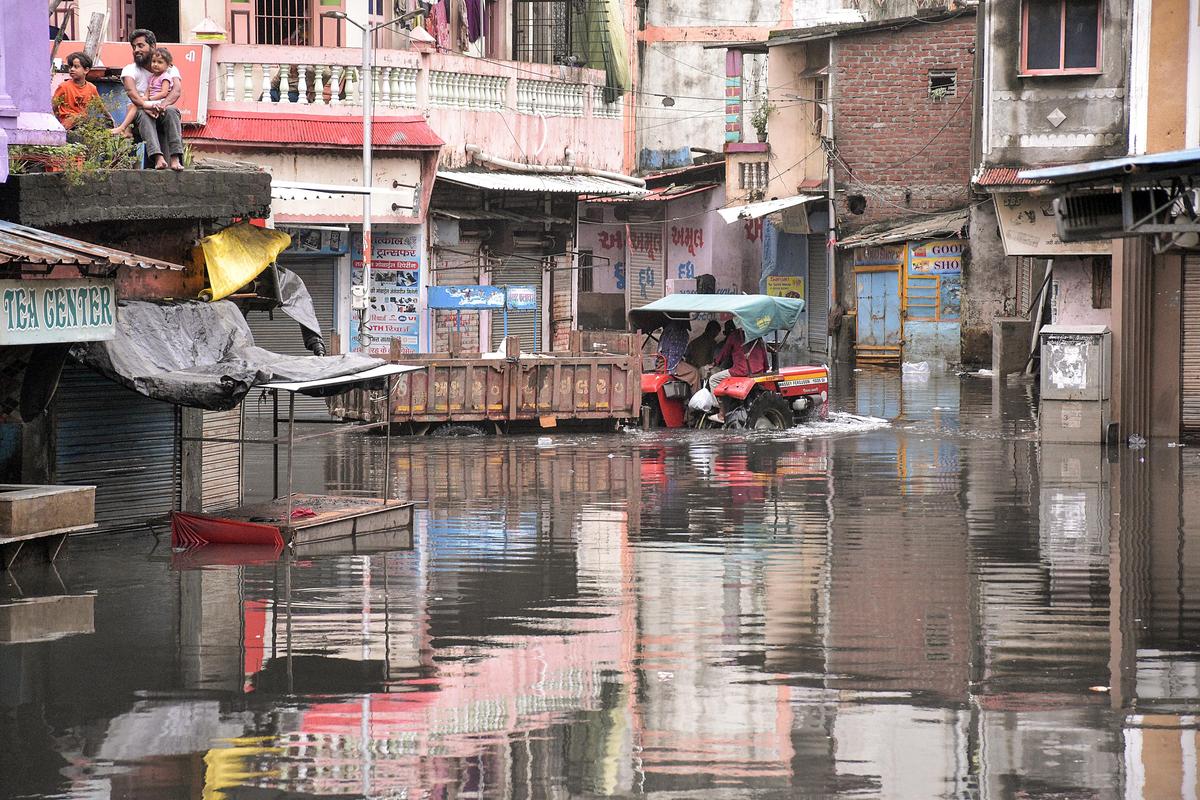
Statewide Health Initiative Launched in Gujarat Following Severe Flooding
In a massive undertaking to mitigate the public health risks associated with recent severe flooding, the Gujarat state government has mobilized an unprecedented emergency response. Following heavy rainfall that inundated vast swathes of agricultural land and residential areas, the health department has operationalized a network of 6,868 medical camps. These facilities are designed to provide immediate care to rural and urban populations, while a parallel force of 18,000 surveillance teams has been deployed to conduct active monitoring and prevent the spread of waterborne and vector-borne diseases.
The scale of this intervention underscores the severity of the post-flood challenges facing the state. As stagnant water begins to recede, the environment becomes highly conducive to the proliferation of pathogens. By establishing a decentralized network of camps, the state aims to bridge the gap between affected populations and essential healthcare services, ensuring that early symptoms of illness are addressed before they escalate into localized outbreaks.
Strategic Surveillance and Disease Prevention
The primary objective of the 18,000 surveillance teams is proactive disease identification. These teams are tasked with traversing affected districts to conduct house-to-house health assessments, focusing on identifying clusters of fever, skin infections, and gastrointestinal distress. The teams are equipped with diagnostic kits to monitor for common post-flood threats, such as malaria, dengue, leptospirosis, and cholera.
Beyond individual health assessments, these teams are playing a critical role in environmental management. This includes the distribution of chlorine tablets for water purification, the systematic spraying of insecticides to curb mosquito breeding in stagnant water, and the monitoring of sanitation conditions in temporary shelters. By maintaining a constant presence in the field, the health department intends to create a real-time data flow that allows authorities to pivot resources toward "hot zones" as soon as a spike in illness is detected.
Addressing the Agricultural and Rural Impact
For the agricultural heartlands of Gujarat, the health crisis is inextricably linked to the economic recovery of the sector. Flooding often damages essential infrastructure, including rural water supply systems and livestock sheds. When agricultural workers are incapacitated by illness, the recovery of flood-damaged crops and the management of livestock—which are highly susceptible to foot-and-mouth disease and other infections following water exposure—are severely hampered.
The integration of medical camps within rural communities serves as a vital safeguard for the workforce. By ensuring that farmers and agricultural laborers remain healthy, the state is effectively protecting the human capital necessary to resume planting, clear debris, and restore production cycles. The surveillance teams have been instructed to pay particular attention to livestock-heavy regions, as zoonotic diseases can quickly transition from waterlogged animal enclosures to the human population.
What This Means for Farmers
The current flood response serves as a stark reminder of the intersection between environmental disaster and farm-level operations. For farmers, the immediate weeks following a flood are a critical window for both property recovery and personal health maintenance.
- Prioritize Water Safety: Do not rely on traditional water sources immediately after a flood. Use the resources provided by local medical camps, including chlorine tablets or boiled water, to prevent gastrointestinal outbreaks.
- Monitor Livestock Health: Stagnant water is a breeding ground for bacteria that affect both humans and animals. Inspect livestock for signs of infection and contact local veterinary services if you notice unusual lethargy or sores.
- Engage with Surveillance Teams: When mobile health teams visit your area, provide accurate information regarding the health status of your family and workers. Early reporting of fever or skin conditions allows the state to allocate resources more efficiently, preventing a minor issue from becoming a farm-wide outbreak.
- Sanitation Protocols: If your fields or equipment were submerged, exercise caution when handling materials that have been in contact with floodwater. Use protective gear such as boots and gloves, and ensure that all equipment is thoroughly disinfected before re-entering production cycles.
- Economic Continuity: By prioritizing health during this recovery phase, you ensure that labor remains available for the critical tasks of soil remediation and replanting, which are essential to mitigating the long-term economic impact of the flood.
As the state continues its surveillance efforts, the cooperation of the farming community remains the most effective tool in containing the spread of disease. Farmers are encouraged to utilize the 6,868 medical camps as the first line of defense for themselves and their families during this difficult recovery period.