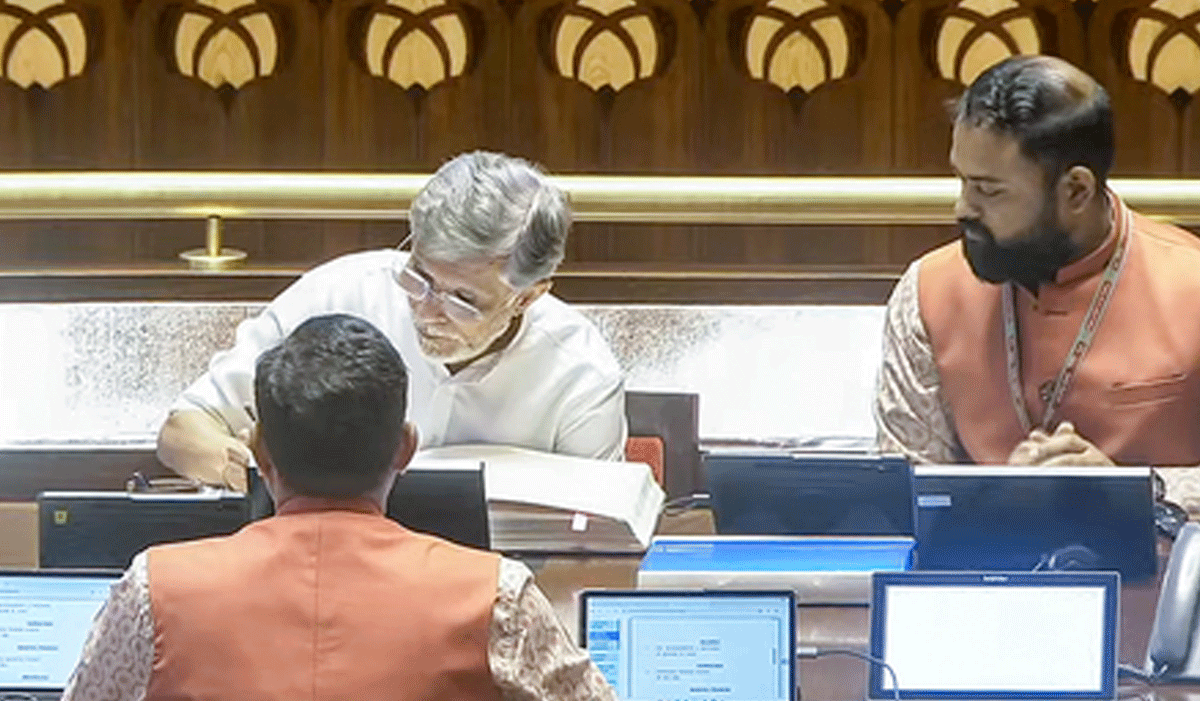
Parliamentary Transition: New Rajya Sabha Members Take Oath as Monsoon Session Commences
The upper house of India's Parliament, the Rajya Sabha, marked a significant procedural milestone this Monday as the Monsoon Session officially opened. Amidst a backdrop of high expectations for legislative discourse, Rajya Sabha Chairman C.P. Radhakrishnan presided over a formal ceremony to administer the oath of office and secrecy to a cohort of newly elected members. The arrival of these legislators signals a shift in the composition of the house, bringing new perspectives to the national policy-making table at a critical juncture for the country's legislative agenda.
Among the notable figures stepping into their roles were Pawan Khera and Sushmita Dev, both of whom have been prominent voices in the political landscape. Their induction into the Rajya Sabha is part of a broader rotation of membership that ensures the upper house remains a dynamic reflection of India’s evolving political mandate. The oath-taking ceremony, held in the chamber of the Rajya Sabha, followed established parliamentary protocols, underscoring the gravity and constitutional weight attached to the responsibilities of an elected representative.
Legislative Continuity and the Role of the Rajya Sabha
The Rajya Sabha serves as the Council of States, functioning as a vital chamber of review and deliberation. The addition of new members is not merely a personnel change; it is a fundamental aspect of the democratic process that allows for the infusion of fresh legislative priorities. As these members transition into their new roles, they are tasked with the scrutiny of bills, the oversight of executive actions, and the representation of their respective states' interests within the federal framework.
The Monsoon Session is historically characterized by intense debate and the potential for significant legislative movement. With the induction of new members, the house is expected to engage in robust discussions surrounding national development, economic policies, and social welfare programs. For the legislative process to function effectively, these new entrants must quickly acclimate to the complex procedural rules that govern the house, ensuring that they can effectively articulate the concerns of their constituents while balancing the broader requirements of national governance.
The Evolving Policy Landscape
The political composition of the Rajya Sabha often dictates the ease with which government-led legislation is passed. The inclusion of members from diverse political backgrounds necessitates a higher degree of consensus-building and negotiation. As the Monsoon Session progresses, observers will be watching closely to see how these new members influence committee assignments and the framing of policy discussions. The expertise and background of these individuals often influence the direction of parliamentary committees, which are the primary engines for detailed policy review.
Furthermore, the oath-taking ceremony serves as a reminder of the continuity of India’s parliamentary democracy. Despite the shifting political tides and the arrival of new faces, the institution remains committed to the principles of constitutional governance. The Monsoon Session provides a platform for these members to address pressing national issues, ranging from economic stability and infrastructure investment to the ongoing challenges faced by various sectors of the national economy.
What This Means for Farmers
For the agricultural community, the arrival of new members in the Rajya Sabha is a development of significant practical importance. The upper house frequently deliberates on critical issues that directly impact rural livelihoods, including minimum support prices (MSP), agricultural subsidies, trade policies, and climate resilience initiatives.
Actionable Impacts for the Agricultural Sector:
- Policy Advocacy: New members often bring fresh focus to regional agricultural grievances. Farmers and their representative organizations should monitor the committee appointments of these new MPs to identify potential champions for agricultural reforms.
- Legislative Scrutiny: The Rajya Sabha plays a decisive role in the passage of bills related to land use, water rights, and agro-chemical regulations. A change in the house composition can alter the trajectory of these bills, potentially leading to more favorable amendments during the committee stage.
- Economic Oversight: Given the current volatility in global commodity markets, the scrutiny of trade and export-import policies in the Rajya Sabha is vital for farmers. New members are likely to be lobbied by agricultural interest groups to push for policies that protect domestic producers from international price shocks.
- Infrastructure and Credit: Discussions regarding rural infrastructure, irrigation projects, and the expansion of institutional credit are perennial topics in the house. Farmers should engage with their local and state-level representatives to ensure that the concerns of the primary sector are effectively communicated to these newly sworn-in parliamentarians as they begin their tenure.
Ultimately, the effectiveness of these new Rajya Sabha members in addressing agricultural challenges will depend on their ability to translate ground-level realities into actionable policy. As the Monsoon Session unfolds, the agricultural sector must remain vigilant, leveraging the parliamentary process to ensure that rural development remains a top-tier priority on the national agenda.