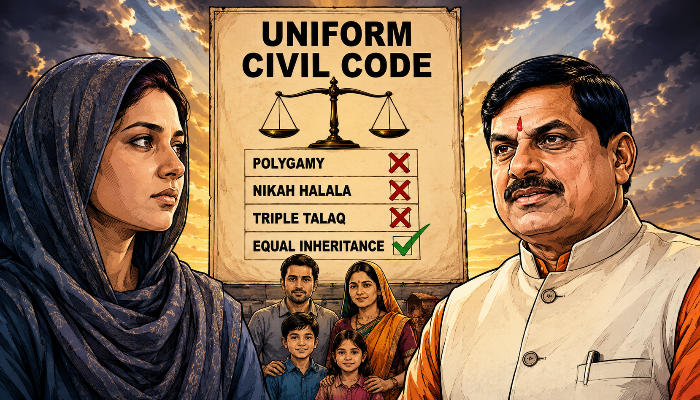
Legislative Transformation: Understanding the Uniform Civil Code Movement Across India
The landscape of personal law in India is undergoing a profound transformation as a growing number of states move toward the adoption of a Uniform Civil Code (UCC). While the discourse has historically remained centered on national policy, recent developments indicate a shift toward state-led legislative action. Following the lead of pioneering states, the current momentum suggests that legal frameworks governing marriage, divorce, and inheritance are being systematically overhauled to align with a standardized set of regulations. This transition represents one of the most significant shifts in civil jurisprudence since independence, with implications that extend far beyond the urban centers and into the heart of rural land-holding structures.
The State-Led Legislative Surge
The push for a Uniform Civil Code has moved from theoretical debate to tangible legislative reality. Uttarakhand, Gujarat, and Assam have already officially enacted their respective versions of the Uniform Civil Code, establishing a new legal baseline for civil conduct. These states have prioritized the codification of family laws, focusing on clear parameters for marriage registration, divorce proceedings, and, crucially, the distribution of assets.
The legislative momentum is not confined to these three states alone. Recognizing the complexity of reconciling diverse cultural and religious personal laws with a unified legal framework, several other states—including Maharashtra, West Bengal, and Rajasthan—have established expert committees. These bodies are tasked with the rigorous process of drafting regulations that respect regional nuances while ensuring that the central tenets of the UCC, such as the prohibition of polygamy and the establishment of equal inheritance rights, are upheld. The process involves extensive public consultation and legal drafting aimed at minimizing conflict during the eventual transition period.
Addressing Inheritance and Property Rights
At the core of the newly enacted and proposed UCC frameworks is the restructuring of inheritance rights. By standardizing these laws, states aim to remove ambiguity that has historically led to protracted civil litigation, particularly in the agricultural sector. The new provisions explicitly ensure equal inheritance rights, effectively dismantling gender-based disparities in property succession that have persisted under various traditional personal laws.
The prohibition of polygamy serves as another pillar of these new regulations. By mandating monogamy across all communities, the legislation seeks to provide legal clarity in matters of family dissolution and asset division. For the agricultural community, where land ownership is often fragmented, these changes are designed to provide a more predictable legal environment. When inheritance laws are standardized, the process of land title transfer, mutation, and legal succession becomes more transparent, theoretically reducing the scope for familial disputes over ancestral holdings.
What This Means for Farmers
For the farming community, the implementation of a Uniform Civil Code is not merely a legal or social shift; it is a fundamental change to the management of their most valuable asset: land. The practical implications are significant and require careful attention:
- Increased Legal Certainty in Land Succession: Standardized inheritance laws mean that the transfer of agricultural land will follow a clearer, uniform path. This reduces the risk of "clouded titles," where multiple claimants challenge ownership, often stalling land improvements or the ability to secure agricultural credit.
- Streamlined Documentation: With the formalization of marriage and inheritance records, farmers will likely find it easier to update land records (Jamabandi or ROR). Clearer documentation is essential for accessing government subsidies, crop insurance, and institutional loans that require proof of clear ownership.
- Protection of Property Rights: The guarantee of equal inheritance rights ensures that all legal heirs have a defined stake in family property. For rural families, this provides a safety net, ensuring that land assets are managed and distributed under a predictable legal framework rather than through arbitrary or disputed traditional practices.
- Long-term Financial Planning: Farmers are encouraged to consult with local legal experts or revenue officials to understand how these new state-specific codes affect their existing land holdings. Proactive estate planning, including the drafting of clear wills that align with the new, standardized inheritance laws, will become increasingly important to protect the integrity of family farms against future fragmentation.
As these regulations continue to be rolled out across various states, the agricultural sector should prepare for a transition period where record-keeping and legal compliance will take on heightened importance. Ensuring that land titles are updated to reflect the new legislative realities will be the most effective way for farmers to leverage these changes to secure their economic future.