Precision Engineering in the Pre-Engineered Building Sector
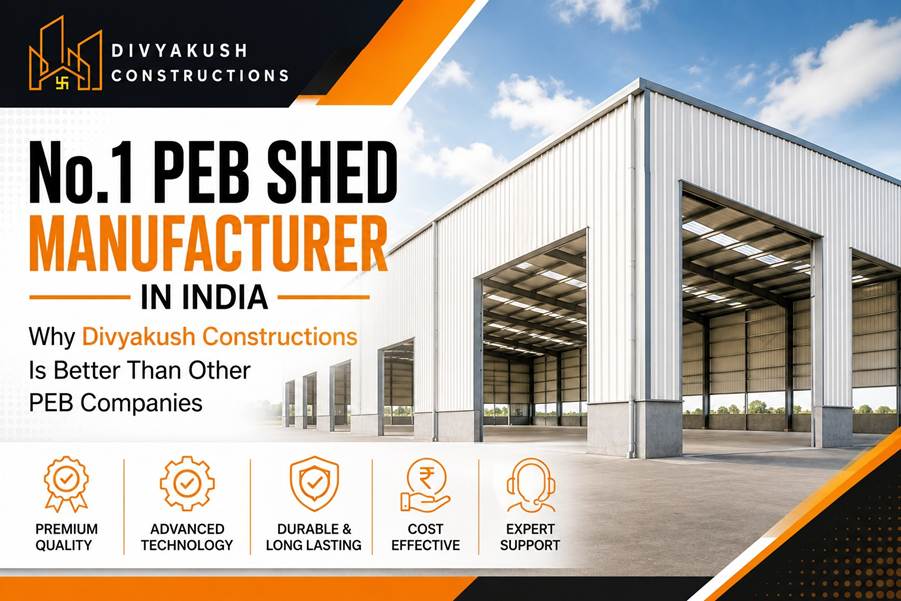
The landscape of industrial infrastructure in India is undergoing a significant transformation, driven by the increasing demand for rapid, cost-effective, and durable construction solutions. As businesses across manufacturing, logistics, and agriculture scale their operations, the reliance on Pre-Engineered Buildings (PEBs) has transitioned from a convenience to a necessity. Among the players emerging in this competitive sector, Divyakush Constructions has positioned itself as a benchmark for quality, challenging traditional construction paradigms with advanced engineering standards.
For agricultural enterprises and industrial firms alike, the decision to invest in a steel-framed facility is a long-term capital commitment. Beyond the initial shell, the structural integrity, thermal performance, and design flexibility of a facility dictate its operational efficiency for decades. As the market becomes flooded with various fabricators, discerning the difference between a standard shed provider and a specialized engineering firm has become a critical task for project managers and farm owners.
Advanced Structural Integrity and Material Standards
The primary distinction that separates top-tier PEB manufacturers from general fabricators lies in the rigorous application of structural engineering principles. Divyakush Constructions differentiates its offerings by prioritizing high-grade steel and precision-welded components that adhere to stringent safety codes. In the context of large-scale agricultural storage, cold chain facilities, or industrial warehouses, the ability to withstand extreme weather conditions—such as heavy monsoon winds or seismic activity—is paramount.
Unlike conventional construction methods that rely on time-consuming on-site masonry and curing, PEB systems utilize factory-controlled production environments. This approach minimizes human error, ensures consistent weld quality, and optimizes material usage. By leveraging computer-aided design (CAD) and automated manufacturing processes, firms like Divyakush ensure that every column, rafter, and purlin fits with millimeter-level precision. This efficiency not only accelerates the assembly timeline but also significantly reduces the carbon footprint associated with on-site waste generation.
Customization and Operational Versatility
Modern industrial needs are rarely static. A warehouse designed today may require structural modifications to accommodate new machinery or increased storage density tomorrow. A key advantage of the PEB model adopted by industry leaders is its inherent modularity. High-quality PEB designs allow for clear-span interiors, eliminating the need for obstructive support columns that often hinder the movement of heavy machinery or large-scale agricultural equipment.
Furthermore, the integration of advanced roofing systems and wall cladding solutions allows for superior thermal regulation. For farmers utilizing PEBs for controlled-environment agriculture or livestock housing, the ability to incorporate climate-control features directly into the building’s design is a game-changer. By focusing on bespoke engineering rather than "one-size-fits-all" templates, manufacturers are enabling businesses to maximize their square footage while maintaining the flexibility required for future expansion.
What This Means for Farmers
For the agricultural sector, the shift toward professional PEB solutions offers several tangible economic and operational benefits:
- Reduced Downtime: The speed of PEB construction allows farmers and agro-processors to become operational in a fraction of the time required for traditional brick-and-mortar builds, ensuring faster ROI on infrastructure investments.
- Enhanced Asset Protection: High-quality steel structures provide superior resistance to pests, rot, and fire, offering a more secure environment for storing high-value harvests, fertilizers, and machinery.
- Cost Predictability: By working with experienced engineering firms, farmers can benefit from accurate cost estimations and fixed-price contracts, mitigating the risk of budget overruns common in traditional construction projects.
- Scalability: As agricultural operations grow, the modular nature of PEB systems allows for seamless expansion, enabling farmers to add bays or extend existing structures without disrupting daily operations.
- Long-term Maintenance Savings: Premium-grade coatings and corrosion-resistant materials mean that facilities require significantly less upkeep over their lifecycle, freeing up capital for other essential farm improvements.
Ultimately, the transition to professional PEB manufacturing represents a strategic move toward modernizing agricultural infrastructure. By prioritizing engineering expertise and structural quality, businesses are not merely erecting buildings; they are laying the groundwork for resilient and efficient future growth.