Parliamentary Proceedings Stalled Amidst Heated Allegations Over Ayodhya Donations
The proceedings of the Lok Sabha faced significant disruptions this week as opposition members intensified their protests, demanding an immediate and comprehensive discussion regarding allegations of financial irregularities surrounding donations made to the Ayodhya temple trust. The legislative agenda was effectively sidelined as members from the Congress, Samajwadi Party (SP), and various Left-leaning factions engaged in persistent sloganeering, creating a volatile atmosphere within the lower house of Parliament.
The impasse centers on claims of potential mismanagement and misappropriation of funds collected for the temple project. Opposition leaders have argued that the scale of public contribution necessitates a high-level probe to ensure transparency and accountability. As the protests continued unabated, the Speaker faced recurring challenges in maintaining order, leading to multiple adjournments throughout the session. The standoff underscores a deepening polarization within the legislative body, with the debate shifting rapidly from procedural matters to intense ideological and political confrontation.
Government Response and the 'Anti-Ram' Label
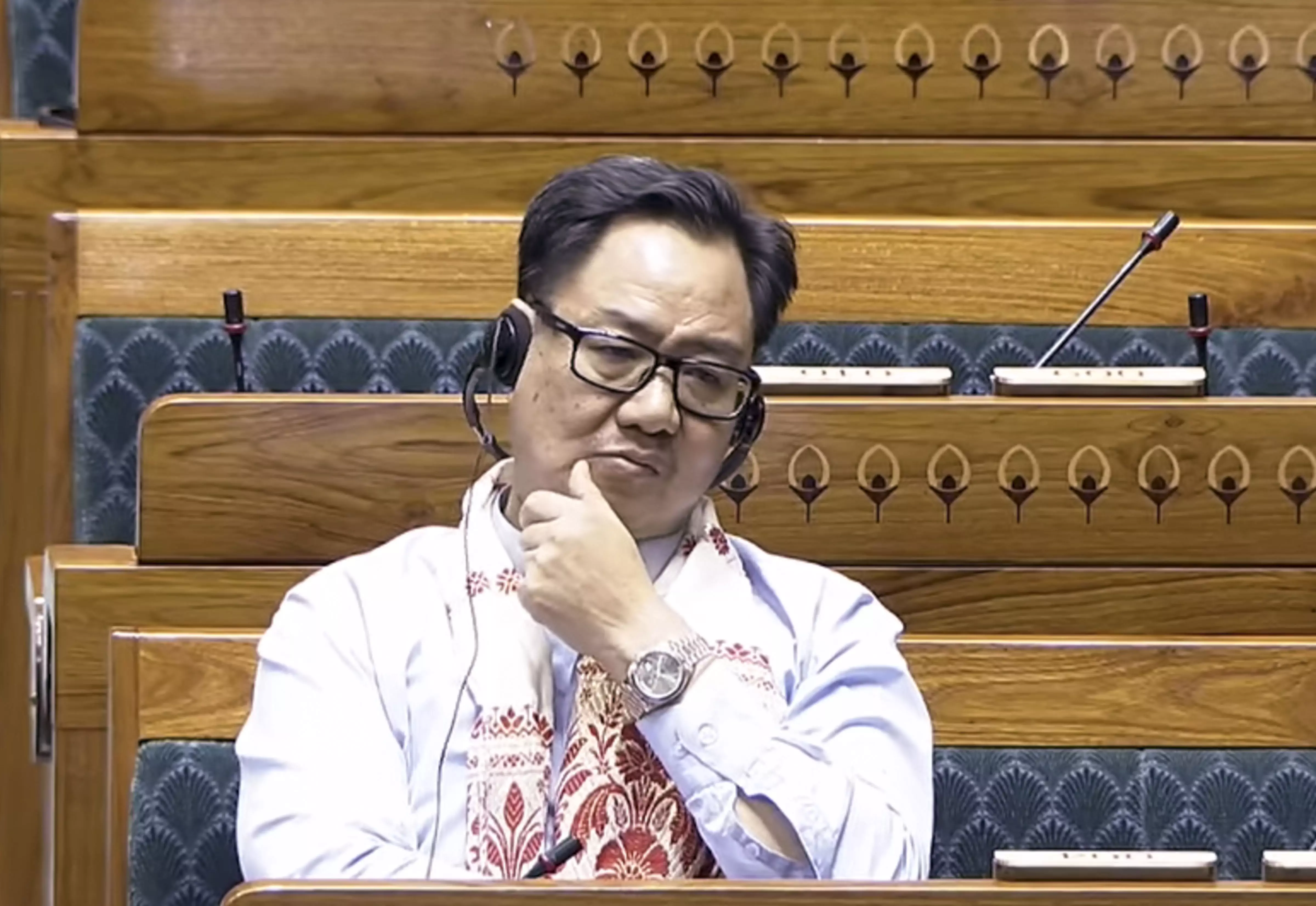
In a sharp retort to the opposition’s demands, Union Minister Kiren Rijiju addressed the media and the house, characterizing the protests as a politically motivated obstructionist tactic. Rijiju accused the Congress party, the Samajwadi Party, and the Left of being inherently "anti-Ram," suggesting that their focus on donation allegations is a veiled attempt to undermine the cultural and religious significance of the Ayodhya project.
The Minister’s remarks have further inflamed tensions, with the government maintaining that all financial protocols regarding the temple trust have been strictly followed. By framing the opposition’s inquiry as an attack on religious sentiment rather than a legitimate fiscal oversight request, the government has sought to consolidate its narrative. This rhetorical shift has effectively blocked any middle ground, leaving the legislative process at a standstill while both sides dig in for a protracted political battle.
The Impact of Legislative Deadlock on Policy Oversight
The continued disruption of the Lok Sabha serves as a stark reminder of how parliamentary gridlock can stifle the broader legislative agenda. When the floor is dominated by political maneuvering and sloganeering, critical discussions on economic policy, infrastructure development, and sector-specific reforms are often pushed to the periphery. For observers of national governance, the current situation highlights a growing trend where contentious social and religious issues override the deliberation of essential public interest legislation.
While the opposition maintains that transparency in public donations is a matter of fundamental public interest, the government’s insistence that these claims are frivolous has resulted in a complete breakdown of communication. The inability of the two sides to reach a consensus on how to handle the inquiry has meant that other time-sensitive matters—ranging from budgetary allocations to regional development initiatives—remain unaddressed, potentially impacting the efficiency of long-term policy implementation.
What This Means for Farmers
While the current parliamentary standoff is rooted in religious and political controversy, the implications for the agricultural sector are significant. Legislative paralysis in the Lok Sabha frequently delays the passage of crucial bills, including those related to agricultural credit, rural infrastructure funding, and climate-resilient farming initiatives.
- Policy Delays: When Parliament is adjourned repeatedly, the timeline for passing essential agricultural reforms or approving subsidy allocations is inevitably pushed back, creating uncertainty for farmers planning their seasonal investments.
- Budgetary Oversight: The focus on political grandstanding often obscures the necessary scrutiny of agricultural budgets. Farmers rely on the legislative process to ensure that funds allocated for irrigation, crop insurance, and market stabilization are distributed transparently and efficiently.
- Market Stability: Political instability and the perception of governance crises can lead to market volatility. As the focus shifts away from economic management, the agricultural commodity markets may experience indirect pressure, affecting the price realization for seasonal harvests.
- Actionable Advice: For the farming community, this period of legislative uncertainty highlights the importance of staying informed through local agricultural extension services and industry unions. In the absence of clear parliamentary progress, farmers are advised to focus on risk management, such as diversifying crop cycles and strengthening ties with local cooperative societies, to insulate their operations from wider economic and political fluctuations.