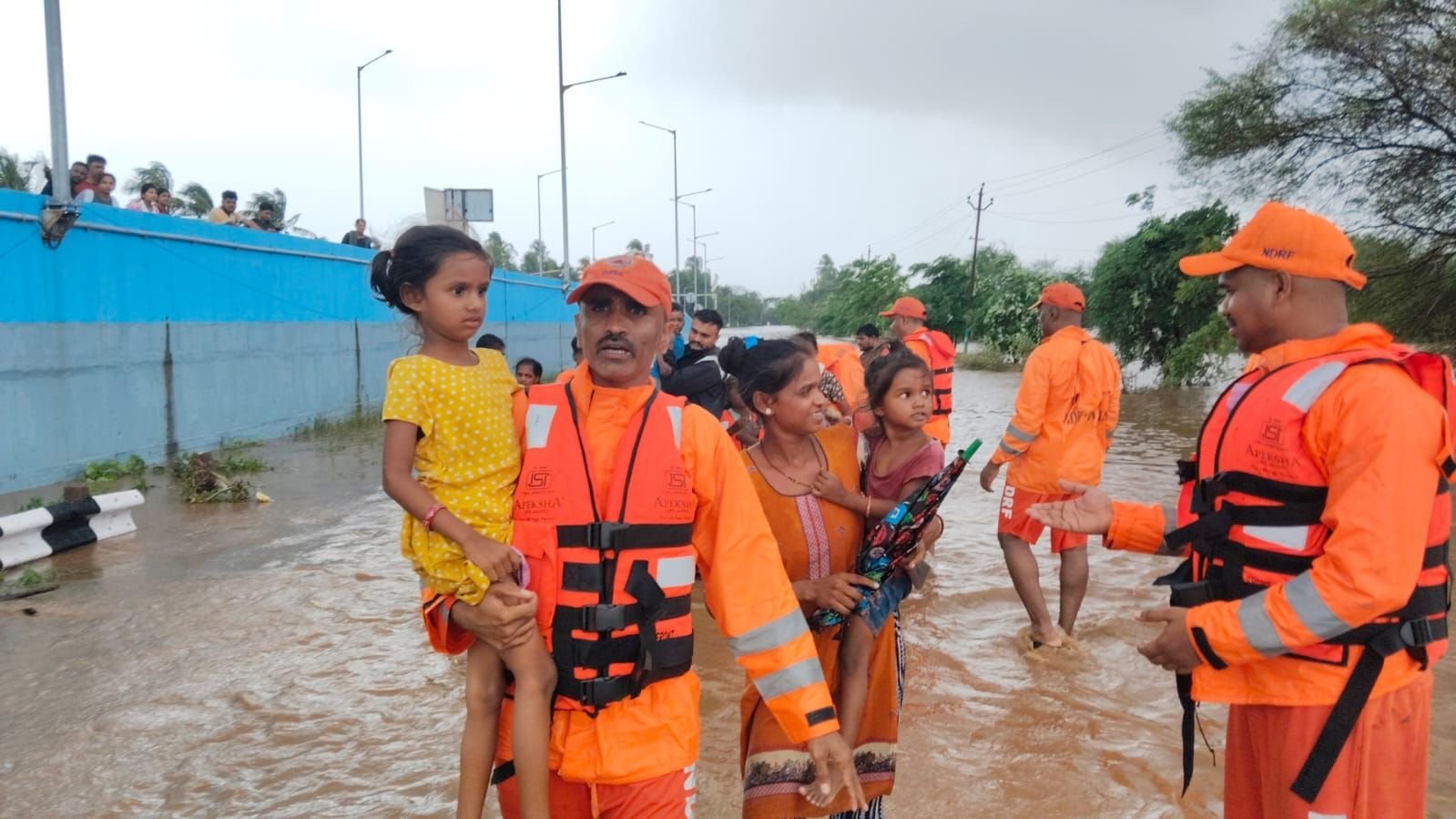
NDRF Intensifies Flood Response Efforts Across Gujarat and Union Territories
The National Disaster Response Force (NDRF) has mobilized significant assets to address escalating flood emergencies across Gujarat and two neighboring Union Territories. Following a period of intense, sustained rainfall that has overwhelmed local drainage systems and breached river banks, specialized teams have been deployed to the most vulnerable regions. In a coordinated multi-day operation, the NDRF successfully rescued 245 individuals trapped by rising floodwaters and facilitated the safe evacuation of 852 residents from inundated low-lying areas.
The operations, spanning 26 distinct missions, highlight the persistent challenges posed by erratic monsoon patterns in the region. As primary responders, NDRF personnel have utilized high-powered inflatable boats, life-saving equipment, and advanced communication systems to navigate submerged infrastructure and reach populations isolated by flash flooding. These efforts remain focused on mitigating the immediate threat to life, while state and local authorities work to stabilize critical infrastructure and manage the displacement of affected communities.
Infrastructure Vulnerability and Monsoon Challenges
The recent surge in flood-related incidents underscores the growing vulnerability of rural and semi-urban landscapes to extreme weather events. In many parts of Gujarat, the combination of high-intensity precipitation and saturated soil profiles has led to rapid surface runoff, causing local streams and rivers to exceed their carrying capacities. For agricultural communities, this presents a two-fold threat: the immediate danger to human safety and the destruction of rural infrastructure, including roads, irrigation canals, and storage facilities.
The logistical difficulty of these rescue operations is compounded by the geography of the affected zones. In low-lying agricultural basins, traditional transport routes are often rendered impassable within hours of heavy rainfall. The NDRF’s deployment of 26 separate teams reflects the geographical spread of the crisis, as teams must coordinate across vast distances to reach remote villages where floodwaters have created temporary islands. Beyond the immediate rescue phase, the focus must shift to assessing the integrity of embankments and drainage networks, which are often the first line of defense for protecting vast tracts of arable land.
Economic Disruptions and Long-Term Resilience
The impact of such widespread flooding extends well beyond the immediate emergency response. When floodwaters inundate agricultural lands, the resultant damage often includes the loss of standing crops, the destruction of essential inputs like fertilizers and seeds, and the potential contamination of irrigation sources. Furthermore, the disruption of supply chains—caused by washed-out bridges and flooded arterial roads—prevents farmers from transporting produce to local markets, leading to significant post-harvest losses and price volatility.
As the monsoon season continues, the resilience of the local agricultural sector will be tested. Authorities are currently monitoring water levels in major reservoirs and river systems to manage downstream discharge, a process that requires a delicate balance between preventing dam failure and minimizing flooding in agricultural plains. The integration of real-time weather monitoring and local disaster management planning is increasingly seen as the most effective path toward reducing the long-term economic burden of these recurring seasonal crises.
What This Means for Farmers
The recent NDRF operations serve as a stark reminder of the necessity for proactive farm-level disaster preparedness. Farmers in high-risk zones should consider the following practical steps to mitigate future losses:
- Emergency Contingency Planning: Establish a clear evacuation route and a pre-identified safe zone for livestock and essential machinery. Ensuring that heavy equipment is stored on elevated ground can prevent catastrophic loss of assets during flash floods.
- Livestock Safety: Move livestock to higher ground well in advance of forecasted heavy rainfall. Maintaining a reserve of emergency fodder and clean water is critical, as floodwaters often compromise local wells and feed storage areas.
- Crop Risk Management: Where possible, farmers should utilize crop insurance schemes to protect against total loss due to natural disasters. Documenting crop damage with photos and geo-tagged data immediately after the water recedes is vital for processing compensation claims.
- Infrastructure Maintenance: Regularly clear drainage channels surrounding agricultural plots. Preventing silting and debris buildup in local irrigation networks can help facilitate faster water drainage once the heavy rain subsides, potentially saving standing crops from prolonged waterlogging.
- Communication Networks: Stay connected with local agricultural extension offices and weather alert services. Utilizing mobile-based early warning systems can provide the lead time necessary to secure assets and protect family members before roads become impassable.