India’s Kharif Sowing Deficit Narrows as Monsoon Progress Boosts Crop Coverage
India’s agricultural landscape is witnessing a significant recovery in sowing momentum as the kharif season progresses. Recent data from the Ministry of Agriculture and Farmers Welfare indicates that the national sowing deficit has narrowed to less than 2%, with total acreage reaching approximately 88% of the normal area. This positive trend underscores the resilience of the agricultural sector amidst the variable rainfall patterns characteristic of the current monsoon season, providing a much-needed boost to food security projections for the upcoming harvest.
While the overall trajectory is encouraging, the progress remains uneven across different crop categories. The narrowing deficit is largely attributed to a robust uptick in the planting of oilseeds, pulses, and coarse cereals, which have compensated for the sluggish performance in certain primary staples. As soil moisture levels stabilize in key agrarian states, farmers are accelerating their operations to capitalize on the remaining window of the monsoon, aiming to bridge the gap before the sowing season officially concludes.
Shifting Acreage Trends: Paddy and Sugarcane Adjustments
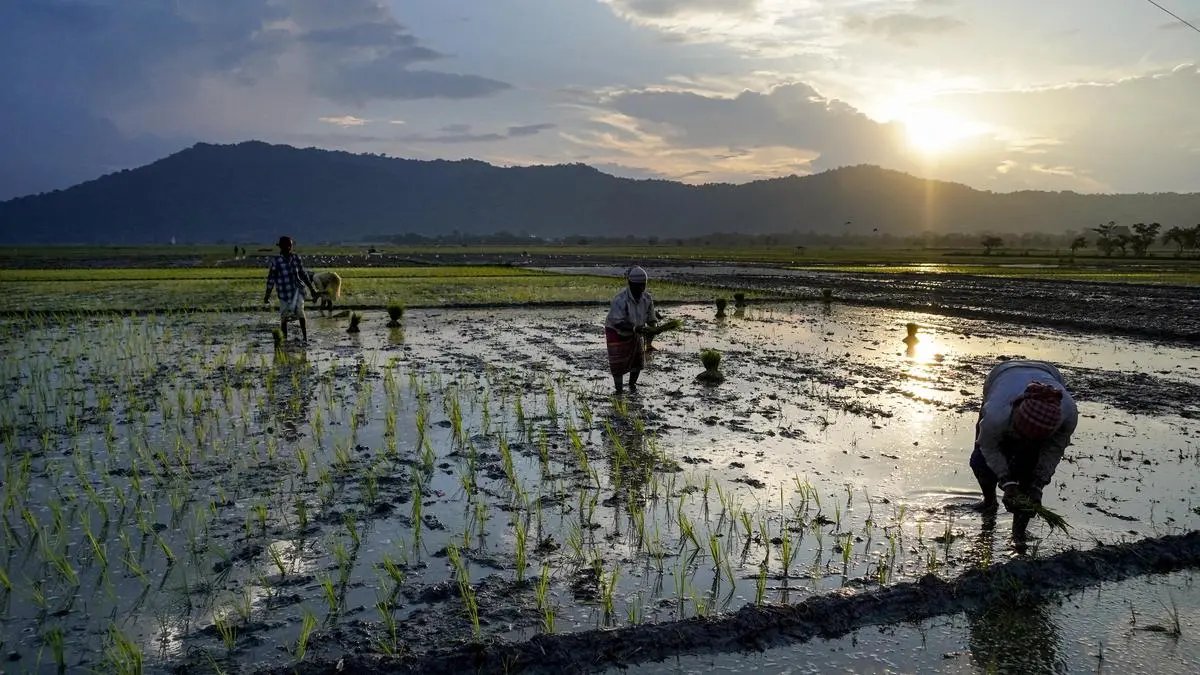
Despite the favorable aggregate numbers, specific segments of the kharif portfolio are reporting a contraction in land utilization. Most notably, the area under paddy—the cornerstone of India’s kharif production—has recorded a decline of 4.3% compared to historical averages. Agronomists attribute this shortfall primarily to localized delays in transplanting operations. While the monsoon has provided sufficient water in many regions, the timing of rainfall in critical paddy-growing belts has necessitated a slower, more cautious approach to transplanting to ensure optimal crop establishment and to mitigate the risks of early-season waterlogging.
Simultaneously, the acreage for sugarcane has seen a downward revision, with current estimates placing the total area at 58.31 lakh hectares. This adjustment reflects a combination of factors, including crop rotation strategies, farmers pivoting toward higher-margin alternatives, and localized water management decisions. Sugarcane, being a water-intensive, long-duration crop, requires consistent irrigation infrastructure; in regions where reservoir levels have fluctuated, producers have opted to diversify their fields, shifting focus toward crops that offer faster turnaround times and lower resource intensity.
Regional Variations and Monsoon Dynamics
The current state of kharif sowing is a direct reflection of the spatial distribution of the monsoon. While the national average suggests a near-normal season, the reality at the district level varies significantly. Regions that experienced early-season dry spells are now seeing a surge in activity as moisture levels reach ideal thresholds for germination. Conversely, areas that faced excessive rainfall have struggled with soil saturation, impacting the logistics of field preparation and sowing machinery movement.
Market analysts are closely monitoring these shifts, noting that the composition of the crop basket is evolving. The increased focus on pulses and oilseeds is viewed as a positive development for long-term soil health and agricultural sustainability, as these crops assist in nitrogen fixation and water efficiency. As the season enters its final phase, the focus will shift from acreage expansion to crop management, specifically targeting pest control and nutrient application to maximize yields despite the delayed start in certain pockets.
What This Means for Farmers
For the farming community, the current data offers several actionable insights and economic considerations:
- Prioritize Crop Management: With the sowing window closing, farmers who have experienced delays should consult local agricultural extension officers to select short-duration varieties. These varieties can help achieve maturity before the onset of the post-monsoon dry period, protecting potential yields.
- Market Diversification: The decline in paddy and sugarcane acreage suggests a tighter supply outlook for these commodities. Farmers should monitor local procurement trends and minimum support price (MSP) announcements, as these shifts may influence market prices during the harvest season.
- Resource Optimization: Given the variability in rainfall, investing in precision irrigation and soil moisture monitoring remains critical. Farmers are advised to focus on nutrient management programs, as late-sown crops require targeted fertilization to compensate for a shortened vegetative growth period.
- Risk Mitigation: With the overall sowing deficit nearing closure, the focus must shift to weather-proofing. Ensuring adequate drainage in fields remains a priority to protect crops from late-season weather volatility, which can frequently occur during the withdrawal phase of the monsoon.
In summary, while the agricultural sector faces localized challenges, the trend toward 88% coverage signifies a robust recovery. By staying attuned to regional meteorological updates and focusing on field-level efficiency, farmers can navigate the remaining weeks of the kharif season to ensure a productive and profitable harvest.