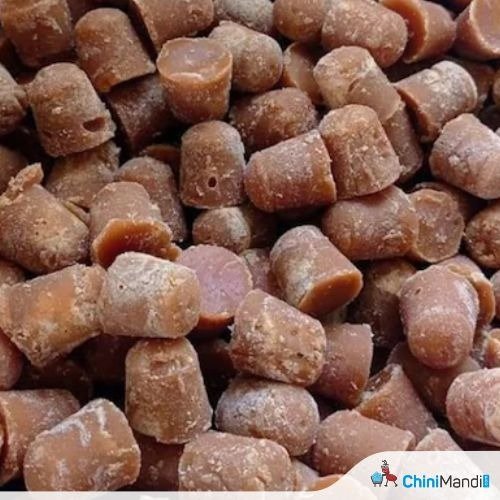
India’s Jaggery Export Market Faces Marginal Contraction in 2025-26
India’s traditional jaggery sector, a cornerstone of the rural agro-processing economy, has experienced a slight cooling in its international trade performance. According to the latest data released by the Directorate General of Commercial Intelligence and Statistics (DGCI&S), the total value of jaggery exports for the 2025-26 fiscal year stood at $46.67 million. This figure marks a marginal decline from the $49.39 million recorded during the previous fiscal period.
The information was formally presented to the Lok Sabha by the Union Minister of State for Agriculture and Farmers Welfare, Ramnath Thakur. While the dip is relatively minor in the context of the broader agricultural export basket, it has drawn attention from policymakers and industry stakeholders who are monitoring the health of the unorganized and semi-organized sugar sub-sectors. The data highlights a period of stabilization following years of fluctuating demand in global markets, where jaggery is increasingly marketed as a traditional, health-conscious alternative to refined white sugar.
Market Dynamics and Export Trends
The trade of jaggery, or non-centrifugal sugar, is heavily influenced by domestic production cycles and evolving consumer preferences in key importing nations. India remains one of the world's largest producers and consumers of jaggery, with a significant portion of its output traditionally focused on meeting local demand. However, the rise of the "superfood" movement globally has opened new avenues for exports, particularly in the Middle East, Southeast Asia, and among the Indian diaspora in Western markets.
Market analysts suggest that the marginal decline in export value may be attributed to a combination of factors, including price volatility in domestic markets, logistical constraints, and shifting regulatory requirements in destination countries. Furthermore, as jaggery is often produced in small-scale rural units, standardization remains a critical hurdle for exporters aiming to scale up operations. Maintaining consistent quality, moisture content, and chemical-free certification is essential for accessing high-value markets, and any disruption in the supply chain—whether due to weather-related production issues or trade policy adjustments—can lead to short-term fluctuations in export performance.
Quality Standards and Value Addition
To sustain long-term growth in the export of traditional sweeteners, there is a growing consensus on the need for modernization within the jaggery production ecosystem. The government has consistently emphasized the importance of value addition, which involves moving beyond basic block jaggery toward powdered variants, liquid jaggery, and flavored products that cater to modern culinary trends.
Investment in cleaner production technologies and improved packaging is viewed as the primary catalyst for reclaiming export momentum. By reducing the presence of impurities and enhancing the shelf life of the product, Indian exporters can better compete with synthetic or highly processed sweeteners in global retail aisles. Additionally, the push for organic certification and geographical indication (GI) tagging for specific regional varieties of jaggery could provide the necessary brand differentiation to command premium pricing in international trade, effectively insulating the sector from minor volume-based market contractions.
What This Means for Farmers
For the average sugarcane farmer, the modest decline in export value serves as a signal to prioritize efficiency and quality over sheer volume. While the international market remains a lucrative outlet, the domestic market continues to be the primary engine of demand. Farmers should consider the following practical implications:
- Focus on Quality Certification: Farmers and local processors who invest in food safety standards and organic certification are better positioned to weather price fluctuations. Buyers in international markets are increasingly prioritizing traceability and the absence of chemical additives.
- Diversification of Products: Relying solely on traditional block jaggery limits market reach. Exploring value-added products like jaggery powder or spice-infused variants can help producers tap into higher-margin retail segments rather than relying on bulk commodity sales.
- Market Intelligence: Producers should work closely with local farmer producer organizations (FPOs) to monitor global price trends. Understanding when to pivot between domestic wholesale markets and export-oriented aggregators can help maximize returns.
- Sustainable Production: As global environmental regulations tighten, adopting sustainable farming practices for sugarcane—such as water-efficient irrigation and reduced pesticide use—will likely become a prerequisite for entry into premium export markets in the near future.
Ultimately, while the 2025-26 figures reflect a slight cooling, the fundamentals of the jaggery industry remain robust. By aligning production with global quality standards and focusing on value-added processing, the sector can continue to leverage India’s heritage as a premier producer of traditional natural sweeteners.