Strategic Irrigation Initiative Launched in Devbhumi Dwarka to Boost Agricultural Resilience
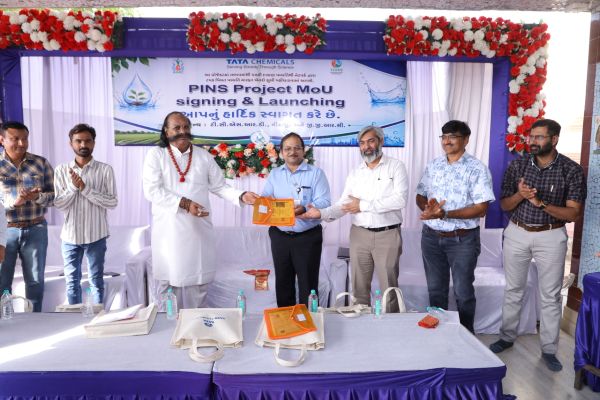
In a significant move to bolster agricultural productivity in the arid landscapes of Gujarat, the Gujarat Green Revolution Company (GGRC) and Tata Chemicals have officially launched a collaborative pressurised irrigation project in the Devbhumi Dwarka district. This infrastructure development is designed to provide 300 local farmers with the tools necessary to combat the region's historical challenges of water scarcity and soil degradation. By transitioning from traditional, inefficient flood irrigation methods to modern pressurised systems, the initiative seeks to modernize the district’s rural economy while securing the long-term viability of its agricultural output.
Devbhumi Dwarka has long struggled with erratic rainfall patterns and the over-extraction of groundwater, factors that have historically limited the potential of smallholder farmers. The partnership integrates GGRC’s expertise in micro-irrigation implementation with Tata Chemicals’ commitment to sustainable community development. Together, they aim to create a scalable model for resource management that addresses the urgent need for water conservation in one of the state's most drought-prone zones.
Advanced Irrigation Technology and Precision Farming
The core of this project lies in the deployment of advanced drip and sprinkler irrigation systems. Unlike conventional surface irrigation, which often leads to substantial water loss through evaporation and runoff, pressurised systems deliver water directly to the root zone of the crops. This method not only minimizes wastage but also ensures that the precise volume of water required for optimal plant health is provided, thereby preventing the common agricultural pitfalls of waterlogging and nutrient leaching.
Beyond simple water delivery, the project emphasizes the broader adoption of precision farming techniques. By equipping the participating farmers with controlled irrigation infrastructure, the initiative allows for "fertigation"—the process of applying water-soluble fertilizers directly through the irrigation system. This ensures a uniform and efficient distribution of nutrients, which is essential for maximizing crop yields in nutrient-poor soils. The technological upgrade is intended to shift the local agricultural paradigm from resource-intensive practices toward a data-driven, efficiency-focused methodology that aligns with contemporary global standards for sustainable farming.
Strengthening Natural Resource Management
The collaboration between GGRC and Tata Chemicals extends beyond the installation of hardware; it is deeply rooted in the philosophy of stewardship. By reducing the pressure on local aquifers, the project aims to stabilize water tables that have been under strain for decades. This sustainable management of natural resources is critical for the long-term environmental health of Devbhumi Dwarka, where the ecosystem is particularly sensitive to climatic shifts.
Furthermore, the project includes a comprehensive training component. Farmers are being educated on the maintenance of irrigation hardware, the scheduling of irrigation based on soil moisture levels, and the selection of climate-resilient crop varieties. This educational framework is designed to empower the agricultural community, transforming them from passive observers of environmental change into active managers of their own productive assets. By fostering local technical expertise, the initiative ensures that the infrastructure remains functional and effective well after the initial implementation phase.
What This Means for Farmers
For the 300 farmers involved, this initiative represents a fundamental shift in both operational efficiency and economic potential. The practical impacts of this project include:
- Increased Profitability: By optimizing water and fertilizer use, farmers can expect a reduction in input costs alongside a significant increase in crop quality and volume.
- Climate Resilience: The ability to maintain consistent crop production despite unpredictable monsoon cycles provides a crucial buffer against the economic shocks typically associated with drought.
- Resource Security: The transition to pressurised irrigation reduces reliance on deep-well pumping, helping to preserve groundwater levels for future generations.
- Economic Stability: With higher, more predictable yields, farmers are better positioned to participate in formal market chains, potentially increasing their household income and standard of living.
Ultimately, this project serves as a blueprint for how large-scale industrial partnerships and government entities can work together to solve localized agricultural challenges. For the farmers of Devbhumi Dwarka, the transition to pressurised irrigation is not merely a technological upgrade—it is a pathway toward a more stable, productive, and sustainable agricultural future.