Gujarat’s Fisheries Sector Sees Significant Growth in Inland Production
The fisheries landscape in Gujarat is experiencing a notable transformation as inland fish production gains momentum, becoming a key driver of the state's fisheries economy. According to a report by Vibes of India, while traditional marine fishing operations saw only modest growth during the 2025–26 period, the inland sector has experienced a sharp and significant rise.
This shift highlights a changing trend in how the state manages its aquatic resources. The move away from a reliance solely on marine catches toward a more diversified approach, utilizing freshwater bodies and managed farming techniques, is reshaping the regional industry.
Drivers of Inland Fisheries Growth
The report identifies several critical factors that have contributed to this surge in inland production. The expansion is not attributed to a single source but rather a combination of environmental utilization and strategic backing. Key contributors include:
- Freshwater Resources: The increased utilization of inland water bodies has provided a robust foundation for fish cultivation.
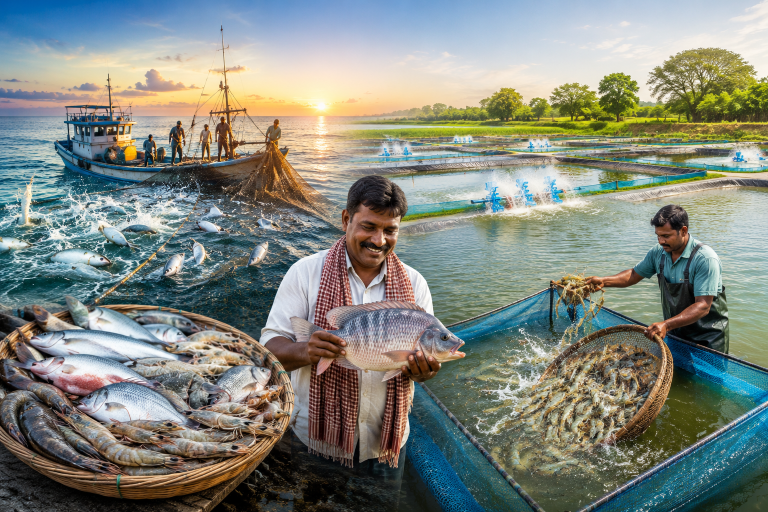
- Aquaculture: This practice, which involves the controlled breeding, rearing, and harvesting of fish and other aquatic organisms, has become a primary engine for the sector's growth.
- Shrimp Farming: A significant portion of the growth is linked to the development of shrimp farming, which has become a vital component of the inland economy.
- Government Support: Increasing administrative and policy support is cited as a fundamental pillar that has enabled producers to expand their operations.
Comparing Marine and Inland Performance
For decades, Gujarat’s fisheries sector was defined by its extensive coastline and marine output. However, the 2025–26 data presents a clear contrast between the two sectors. While the marine industry maintained its operations, it only recorded what the source describes as "modest growth."
In contrast, the inland sector has outperformed these traditional figures, showing a marked increase in productivity. This transition suggests that the state is successfully tapping into previously underutilized inland areas to bolster its total fish supply. According to the report, the state reached a production level of approximately 11.5 lakh units during this period, signaling a strong performance for the inland fisheries industry.
Understanding the Shift in Production
The term inland fish production refers to the cultivation of fish in non-oceanic environments, such as rivers, lakes, reservoirs, and purpose-built ponds. Unlike marine fishing, which is subject to the variables of the open sea and seasonal ocean cycles, inland aquaculture allows for greater control over the production environment.
By leveraging aquaculture, producers can better manage the growth cycles of various species, including shrimp. This control, combined with the aforementioned government support, allows for more predictable yields compared to the more volatile nature of marine fishing. The data provided by Vibes of India underscores that this strategic pivot is currently one of the fastest-growing segments within Gujarat’s broader fisheries economy.
Implications for the Future
The data from 2025–26 serves as a clear indicator of the changing priorities within Gujarat’s fisheries sector. By diversifying into inland and freshwater production, the state is creating a more resilient economic framework for its aquatic industries. As the industry continues to integrate modern aquaculture techniques and benefits from ongoing government initiatives, the inland sector is expected to remain a focal point for further development.
For readers interested in the state's economic development, this transition from sea-based dependency to a balanced model of marine and inland production represents a significant evolution in Gujarat's resource management and industrial output.