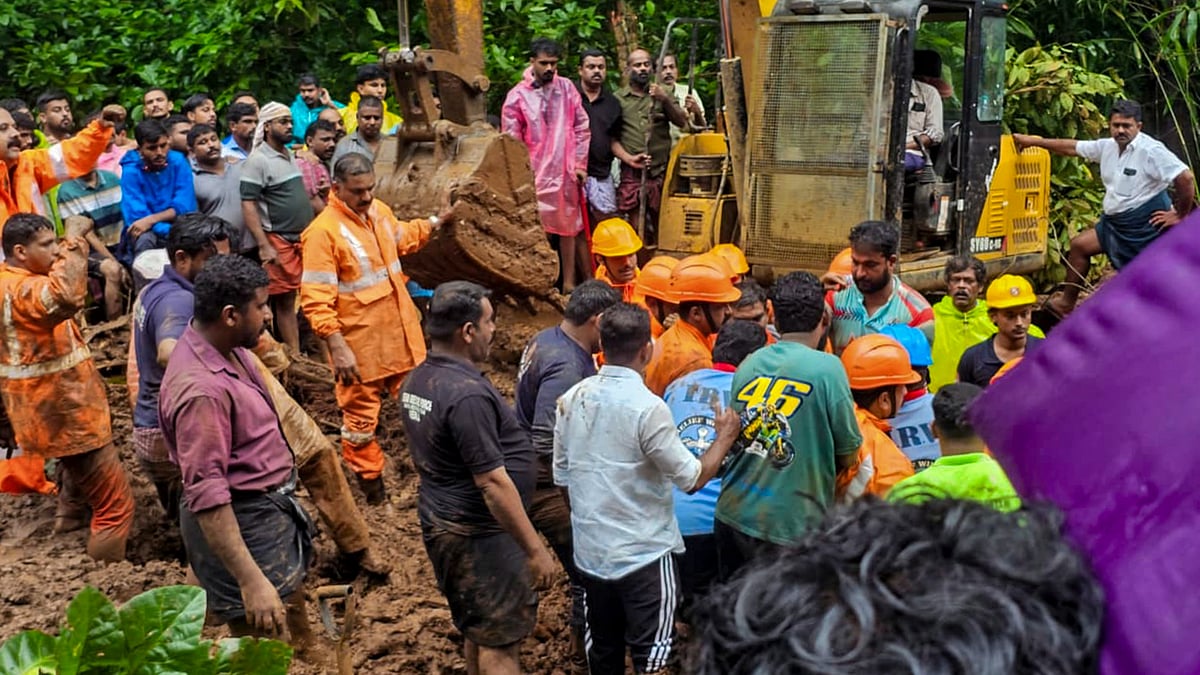
The Fragile Equilibrium: Understanding Kerala’s Escalating Landslide Crisis
The state of Kerala, renowned for its lush landscapes and tropical biodiversity, is increasingly becoming the epicenter of geological instability in Southern India. As the monsoon seasons grow more erratic and intense, the frequency of catastrophic landslides has shifted from rare occurrences to recurring seasonal disasters. While heavy rainfall is the immediate catalyst, experts emphasize that the crisis is the result of a complex interplay between the region's unique geological makeup, the evolving climate patterns, and decades of extensive human intervention within the Western Ghats.
The Geological and Climatic Nexus
At the heart of the issue lies the geological composition of the Western Ghats. The region is characterized by steep, rugged terrain and a soil profile that is often deep and weathered, sitting atop an ancient, crystalline bedrock. Under stable conditions, the dense forest cover and deep-rooted vegetation serve as a natural anchor, binding the soil and regulating water infiltration. However, the geology becomes inherently fragile when subjected to extreme hydrometeorological events.
When monsoon rains arrive with unprecedented intensity, the soil reaches a saturation point rapidly. As the pore water pressure increases within the soil layers, the frictional strength—which holds the earth to the slopes—diminishes significantly. Once this threshold is crossed, the gravity-driven mass movement of soil, rocks, and debris becomes inevitable. In Kerala, this risk is amplified by the state’s topography, where the transition from the high-altitude Western Ghats to the coastal plains creates a steep gradient that facilitates high-velocity water runoff, turning saturated slopes into dangerous debris flows.
Human Intervention and Land Use Transformation
While the monsoon provides the trigger, human activity is increasingly cited by geologists as the primary driver of the state’s heightened susceptibility to landslides. Over the past several decades, the Western Ghats have undergone significant land-use changes. Large-scale deforestation, the conversion of forest land into monoculture plantations, and the expansion of infrastructure—including roads, housing, and quarrying operations—have severely compromised the landscape's natural resilience.
The removal of deep-rooted native trees in favor of crops with shallower root systems has reduced the soil’s structural integrity. Furthermore, the construction of roads and buildings along steep slopes often involves cutting into the "toe" of the hill, destabilizing the entire slope structure. Unscientific quarrying and mining practices have also led to the loosening of rock faces and the disruption of natural drainage channels. When these human-made alterations are combined with heavy rainfall, the landscape loses its ability to manage water, leading to the catastrophic failures witnessed in recent years.
What This Means for Farmers
For the agricultural community in Kerala, the increasing frequency of landslides presents an existential challenge that requires a fundamental shift in land management and risk assessment. Farmers, particularly those residing on or near highland slopes, must prioritize soil conservation and slope stabilization as part of their routine operations.
- Adopt Agroforestry Practices: Moving away from monoculture plantations in vulnerable areas is critical. Integrating deep-rooted native trees alongside commercial crops can help improve soil binding and reduce the risk of surface-level instability.
- Prioritize Drainage Management: Proper drainage is the most effective defense against slope failure. Farmers should invest in scientific contour trenching and terracing to manage runoff effectively, preventing water from pooling and saturating critical soil zones during extreme rain events.
- Monitor Landscape Changes: Landowners should remain vigilant for early warning signs of slope instability, such as the appearance of new cracks in the ground, the tilting of trees, or the sudden emergence of water springs on hillsides. These are often precursors to larger movements.
- Economic Resilience: Given the environmental volatility, diversifying income streams and exploring crop insurance options are essential. Farmers are advised to consult with local agricultural extension offices to understand which land-use practices are recommended for their specific micro-climate and soil type, rather than relying on traditional methods that may no longer be suited to current climatic realities.
Ultimately, the long-term sustainability of farming in the Western Ghats depends on balancing agricultural productivity with the ecological health of the slopes. By integrating traditional knowledge with modern geotechnical insights, the farming community can play a pivotal role in mitigating the risks posed by a changing climate.