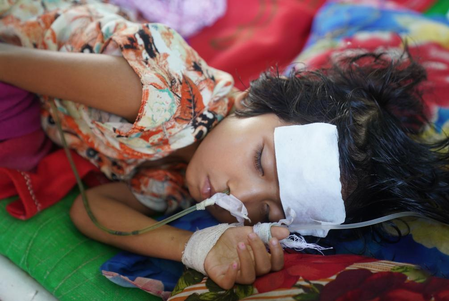
National Response Teams Mobilized as Chandipura Virus Outbreak Escalates in Western India
In a decisive move to curb the rising toll of the Chandipura Virus (CHPV) disease, the Union Health and Family Welfare Ministry has deployed a National Joint Outbreak Response Team (NJORT) to Gujarat and Rajasthan. The intervention comes as Gujarat grapples with a concerning surge in infections, reporting 35 laboratory-confirmed cases and 22 tragic fatalities among children during the current monsoon season. This multi-institutional deployment signals an intensive, high-level effort to stabilize the situation and prevent further transmission in affected rural and semi-urban communities.
The NJORT, a multidisciplinary task force, integrates expertise from the National Centre for Disease Control (NCDC), the Indian Council of Medical Research (ICMR), and the Department of Animal Husbandry and Dairying (DAHD). By bridging the gap between human clinical care, vector control, and animal health, the ministry is adopting a comprehensive 'One Health' approach. The team is currently tasked with conducting rigorous epidemiological assessments, refining clinical management protocols, and overseeing widespread vector surveillance to identify the precise drivers of the outbreak.
Scientific Investigation: Unraveling the Transmission Cycle
At the heart of the government’s response is one of the most extensive scientific investigations into the Chandipura virus in recent years. While it is historically established that the virus is primarily transmitted by sandflies, current investigations are leaving no stone unturned. Researchers are actively exploring the potential roles of other vectors, including mosquitoes, ticks, and mites, which could be contributing to the spread in the current ecological landscape.
The investigation is supported by a consortium of elite research institutions, including the ICMR-National Institute of Virology (NIV) in Pune and the ICAR-National Institute of Veterinary Epidemiology and Disease Informatics in Bengaluru. Beyond vector studies, the team is conducting community-based serosurveys to gauge the extent of asymptomatic infections—a critical step in understanding the true prevalence of the virus. Furthermore, laboratory teams are performing whole-genome sequencing at the Gujarat Biotechnology Research Centre to detect any genetic mutations in the circulating strain that might be influencing its virulence or transmission dynamics.
Animal surveillance has also been significantly ramped up. Recognizing that domestic livestock may act as potential reservoirs for the virus, experts have collected blood and milk samples from cattle, buffaloes, and goats in the affected regions. By testing these samples alongside environmental vector samples, scientists aim to map the full transmission cycle, ensuring that interventions are based on empirical evidence rather than conjecture.
What This Means for Farmers
For the farming communities in Gujarat and Rajasthan, the current outbreak presents both a public health challenge and a need for heightened vigilance regarding livestock management. While the primary concern remains the protection of children and vulnerable populations from acute febrile illness, the involvement of the Department of Animal Husbandry highlights the potential intersection between farm operations and disease transmission.
- Maintain Environmental Sanitation: Farmers are advised to prioritize cleanliness in and around cattle sheds. Reducing breeding grounds for potential vectors—such as clearing stagnant water, managing manure heaps, and keeping animal housing areas dry—is essential.
- Monitor Livestock Health: While no conclusive link between animal health and the current outbreak has been established, farmers should report any unusual illness or sudden mortality among their livestock to local veterinary officers immediately.
- Prioritize Personal Protection: Given that the virus is transmitted by vectors, the use of mosquito nets, protective clothing during dawn and dusk (peak activity times for many vectors), and insect repellents remains the most effective form of individual defense for families living in rural areas.
- Early Symptom Recognition: Parents must remain vigilant for signs of Acute Febrile Illness (AFI) or symptoms of encephalitis in children, such as high fever, altered mental state, or seizures. Seeking immediate medical attention at the first sign of these symptoms is critical for improving survival rates.
- Avoid Speculation: The Union Health Ministry has cautioned against drawing conclusions before laboratory investigations are complete. Farmers should rely on official advisories provided by local health departments and district administration rather than unverified information circulating in the community.
By adhering to these precautionary measures and cooperating with the surveillance teams currently operating in the field, farming families can play a vital role in assisting the national efforts to contain the Chandipura virus and safeguard their communities.