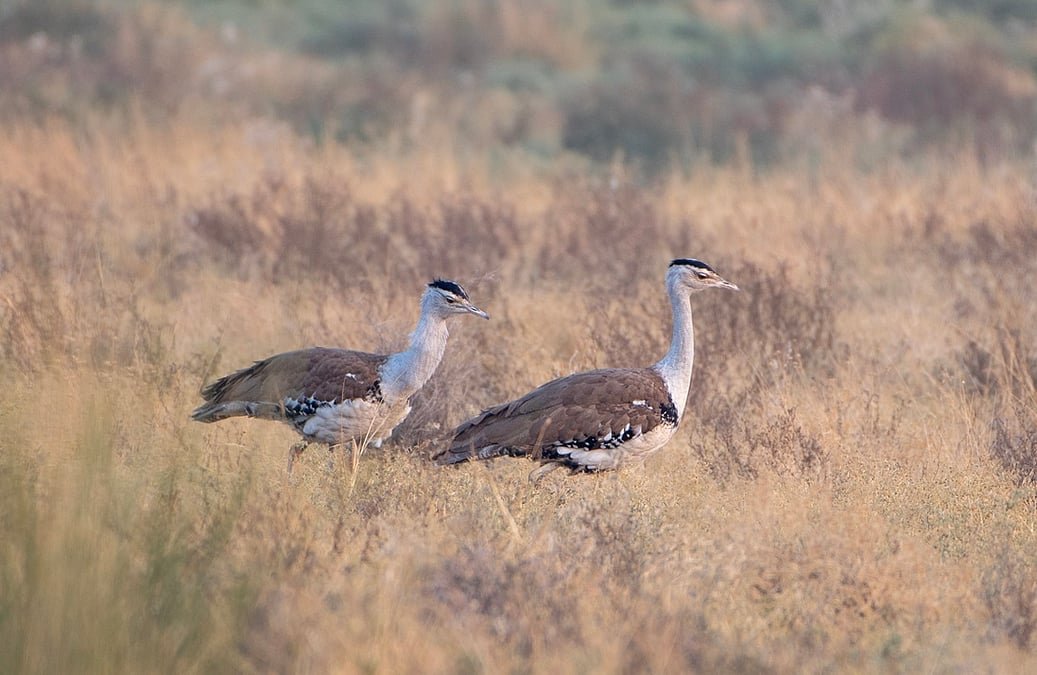
Can the Great Indian Bustard Recover in the Deccan?
The Great Indian Bustard, a species currently listed as critically endangered, may have a viable path toward recovery within its historical range in the Deccan region. According to a recent study published in the journal PLOS One, the potential for the bird to reclaim parts of its former habitat is linked directly to the revival of traditional, low-intensity agricultural practices.
While the species faces significant threats, the research offers a structured approach to conservation by pinpointing specific areas that could support the bird’s return. By identifying both the limitations of the current landscape and the opportunities for intervention, the study provides a roadmap for future conservation efforts.
Key Findings of the PLOS One Study
The research highlights that the survival and reintroduction of the Great Indian Bustard are not merely about protecting isolated patches of land, but about the nature of the landscape itself. The study’s primary findings include:
- Habitat Suitability: Only 6.6% of the total landscape examined in the study is currently considered suitable habitat for the Great Indian Bustard.
- Priority Sites: The researchers have identified 16 specific priority conservation sites that are deemed essential for the reintroduction and recovery of the species.
- The Role of Agriculture: The study concludes that the reclamation of the Deccan range is contingent upon the promotion and revival of traditional, low-intensity agriculture.
Understanding the Habitat Requirements
The identification of only 6.6% of the landscape as suitable habitat underscores the challenges facing the Great Indian Bustard. In conservation biology, "suitable habitat" refers to areas that provide the necessary resources—such as food, nesting grounds, and protection from predators—required for a species to survive and reproduce.
The emphasis placed by the study on low-intensity agriculture suggests that the bird is well-adapted to landscapes where human activity is present but not overly disruptive. Traditional farming methods, which typically involve fewer chemical inputs and less mechanized disturbance compared to intensive industrial agriculture, appear to create a mosaic of land use that the Great Indian Bustard can navigate and utilize.
Prioritizing Conservation Efforts
With the identification of 16 priority conservation sites, the study provides a focused strategy for conservationists and policymakers. Rather than attempting to manage vast areas with limited resources, these sites represent the most promising locations for reintroduction programs.
By concentrating efforts on these specific 16 locations, stakeholders may be able to maximize the effectiveness of their interventions. The study suggests that these sites are not just random points on a map but are areas where the ecological conditions, when combined with traditional farming practices, offer the best chance for the Great Indian Bustard to establish stable populations.
The Path Forward for Recovery
The findings published in PLOS One shift the conversation from general preservation to a more targeted, landscape-based approach. The recovery of the Great Indian Bustard in the Deccan is described as a possibility that relies on active cooperation between conservation initiatives and the agricultural practices maintained in these regions.
As the study indicates, the future of this critically endangered bird is deeply connected to how land is managed. By focusing on the 16 identified priority sites and advocating for the maintenance of low-intensity, traditional farming, there is a clear, evidence-based pathway to assist the Great Indian Bustard in reclaiming a portion of its ancestral territory.