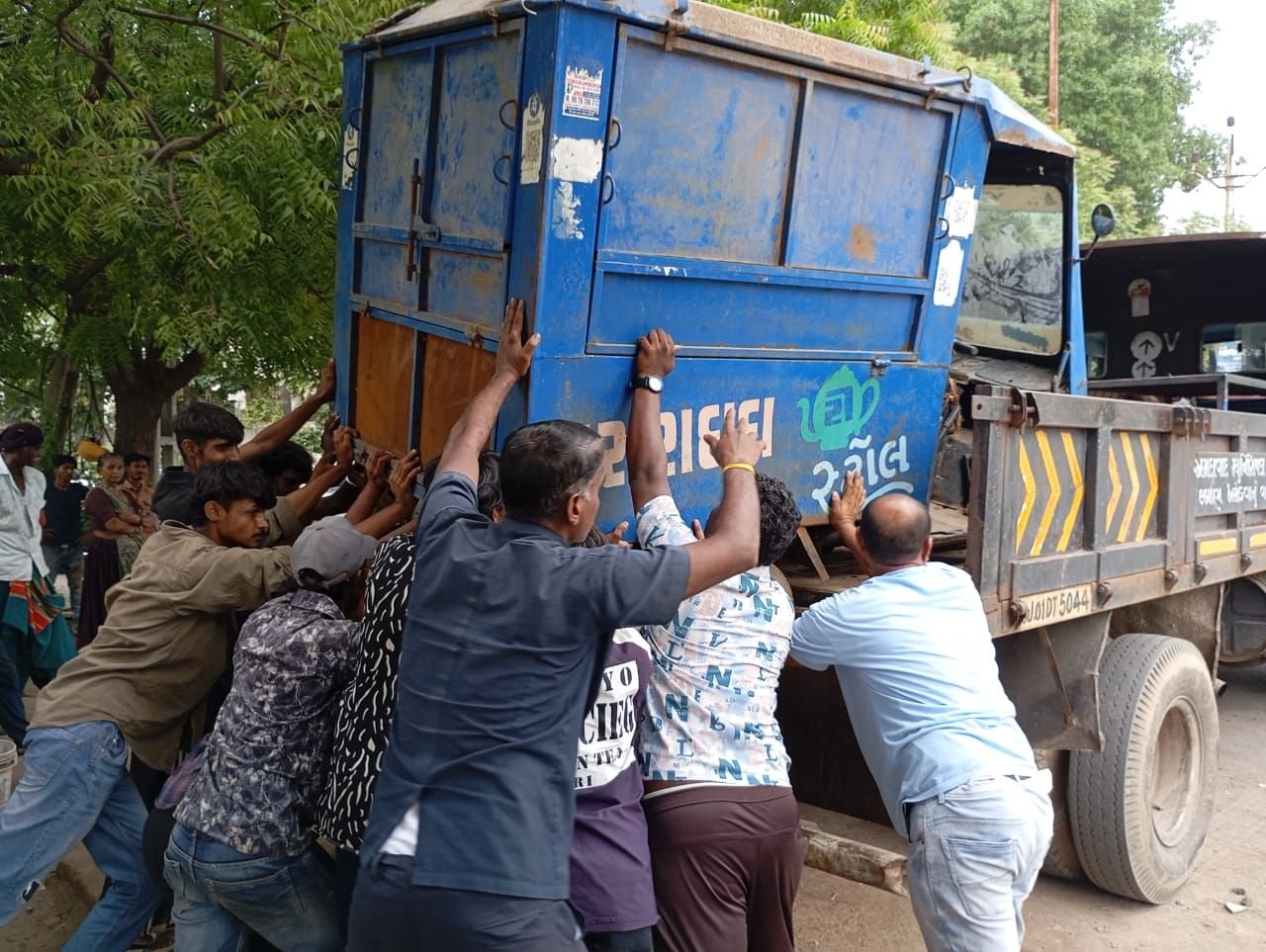
Urban Infrastructure Push: Ahmedabad Municipal Corporation Clears Major Encroachments
In a decisive move to reclaim public spaces and streamline urban transit, the Ahmedabad Municipal Corporation (AMC) has concluded a rigorous 15-day anti-encroachment drive. The operation, which spanned the city’s major arterial roads, highways, and high-traffic pedestrian zones, resulted in the removal of 708 handcarts and stalls. Beyond these specific mobile units, municipal teams dismantled thousands of unauthorized structures that had encroached upon public pathways, marking one of the most significant efforts in recent years to restore order to the city’s logistical corridors.
The campaign was designed to address the increasing congestion plaguing Ahmedabad’s infrastructure. By targeting temporary stalls and permanent illegal extensions that often spill over from commercial zones into public thoroughfares, the AMC aims to improve traffic flow and pedestrian safety. For a city that serves as a critical commercial hub, the persistent presence of unregulated vending on the roadside has long been a point of contention between urban planners, who prioritize clear transit, and the informal economy that relies on these high-traffic locations for daily revenue.
Restoring Transit Efficiency and Public Safety
The primary focus of this intensive drive was the mitigation of "bottleneck" conditions that frequently slow down the movement of goods and people. In many instances, the proliferation of handcarts and makeshift stalls along highways and main roads forces heavy vehicles and daily commuters into narrower lanes, significantly increasing the risk of accidents and gridlock. By clearing these obstructions, the municipal body intends to optimize the capacity of existing road networks without requiring immediate, costly capital expansion projects.
Beyond the logistical benefits, the AMC emphasized the importance of public sanitation and safety. Many of the removed encroachments were situated in areas where pedestrian footpaths had been completely subsumed by commercial activity, forcing commuters to walk on busy streets. The removal of these barriers is part of a broader mandate to ensure that public infrastructure is utilized for its intended purpose: the safe and efficient transit of the city's population. Municipal officials have indicated that this drive is not a one-time event but rather a component of a continuous maintenance strategy aimed at keeping Ahmedabad’s public spaces accessible and orderly.
Balancing Urban Development and Informal Trade
The removal of 708 handcarts highlights the complex tension inherent in modern urban development, particularly in cities with robust informal economies. While the AMC’s actions are focused on legal compliance and infrastructure management, they directly impact the livelihoods of small-scale vendors who often lack the capital to secure formal retail spaces. The city’s challenge lies in maintaining this balance between enforcing zoning regulations and providing alternative avenues for small-scale entrepreneurs to operate legally and safely.
Moving forward, the municipal corporation is expected to coordinate with local urban planning departments to ensure that areas cleared of encroachments remain clear. This typically involves increased patrols, the installation of physical deterrents such as bollards or specialized curbing, and stricter enforcement of licensing for street vendors. The success of this 15-day drive will ultimately be measured by the city's ability to sustain these gains and prevent the gradual re-encroachment that often follows such enforcement actions.
What This Means for Farmers
While the AMC’s drive is an urban-focused initiative, the consequences for the agricultural supply chain are significant. Ahmedabad serves as a major terminal market for produce coming from rural hinterlands. The efficiency of urban transit directly correlates to the speed at which perishable goods move from the city's periphery to local markets.
1. Improved Logistics and Reduced Transit Times: For farmers and transporters moving fresh produce into the city, the clearing of major bottlenecks means reduced travel times and less time spent idling in traffic. Reduced congestion lowers fuel consumption and helps maintain the cold chain integrity of perishable goods, ensuring that produce reaches wholesalers and retail points in better condition.
2. Market Accessibility: Farmers who supply directly to local markets or street vendors should anticipate a shift in established trade patterns. As the AMC streamlines street vending, the traditional "curbside" distribution model may transition toward more regulated zones. Producers should monitor these changes to identify new, designated market hubs where their goods can be sold without the legal risks associated with unauthorized encroachment zones.
3. Demand for Formal Retail Channels: As informal vending spaces are restricted, there is a likely increase in demand for organized retail, including APMC (Agricultural Produce Market Committee) yards and modern retail chains. Farmers and cooperatives are advised to strengthen their connections with formal procurement channels, as these entities are better positioned to weather urban enforcement drives and provide a more stable, albeit regulated, outlet for their harvest.
4. Long-term Stability: While enforcement drives can cause short-term disruption, the long-term goal of an organized urban environment is beneficial for agricultural trade. A predictable, well-managed transport network reduces the "hidden tax" of congestion, ultimately helping to stabilize the cost of logistics across the entire supply chain.