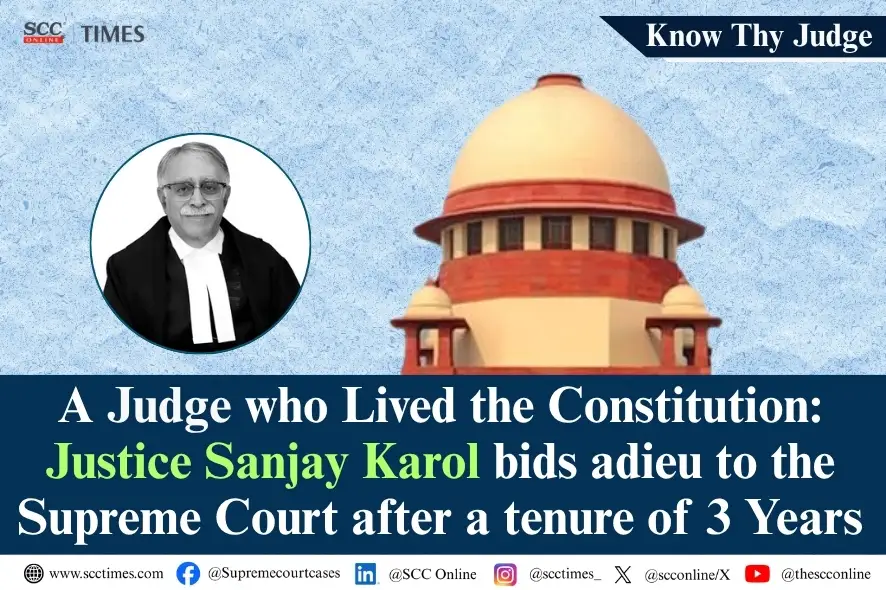
Justice Sanjay Karol Concludes Tenure at the Supreme Court of India
Justice Sanjay Karol has officially concluded his term as a Judge of the Supreme Court of India. His departure marks the end of a judicial career characterized by significant leadership roles across various high courts in the country. According to a report by SCC Times, Justice Karol’s tenure at the apex court followed a distinguished period of service as a Chief Justice in multiple states.
Early Roots and Professional Background
Justice Sanjay Karol’s journey in the legal profession is rooted in his background from Garli, which holds the distinction of being India’s first heritage village. His elevation to the Supreme Court of India took place on 6 February 2023, marking a significant milestone in his career.
Prior to his appointment to the Supreme Court, Justice Karol held several high-ranking judicial positions. His professional trajectory included serving in the following capacities:
- Acting Chief Justice of his parent court, the High Court of Himachal Pradesh.
- Chief Justice of the High Court of Tripura.
- Chief Justice of the High Court of Patna.
Judicial Career Timeline
The progression of Justice Karol’s career highlights his extensive experience in the Indian judiciary before his elevation to the national level. By serving as the Chief Justice in both Tripura and Patna, and acting as the head of the Himachal Pradesh High Court, he gained diverse experience in the administration of justice across different regions of India.
His transition to the Supreme Court on 6 February 2023 was the culmination of these regional leadership roles. Throughout his career, he has been recognized for his commitment to the principles of the Constitution, a sentiment reflected in the title of the report from SCC Times, which describes him as "A Judge who Lived the Constitution."
Understanding the Role of a Supreme Court Judge
In the Indian judicial system, an elevation to the Supreme Court of India represents the highest level of judicial service. Judges at this level are responsible for interpreting the Constitution, settling disputes between states, and serving as the final court of appeal for cases originating from high courts across the country.
Justice Karol’s background as a Chief Justice of multiple high courts provided him with substantial experience in managing judicial administration, bench strength, and the application of law across different jurisdictions. Such roles are critical for ensuring that the legal process remains efficient and accessible within the state-level judiciary before matters escalate to the Supreme Court.
Summary of Service
The departure of Justice Sanjay Karol from the Supreme Court concludes a period of service that spanned several years, including his time at the apex court starting in early 2023. His career path—moving from his roots in the heritage village of Garli to the highest judicial office in the land—serves as a notable chapter in the history of the Indian legal system. As noted by SCC Times, his retirement concludes a tenure marked by his ongoing involvement in the constitutional framework of the nation.