Tensions Escalate in Delhi as Protests Target Education Ministry Leadership
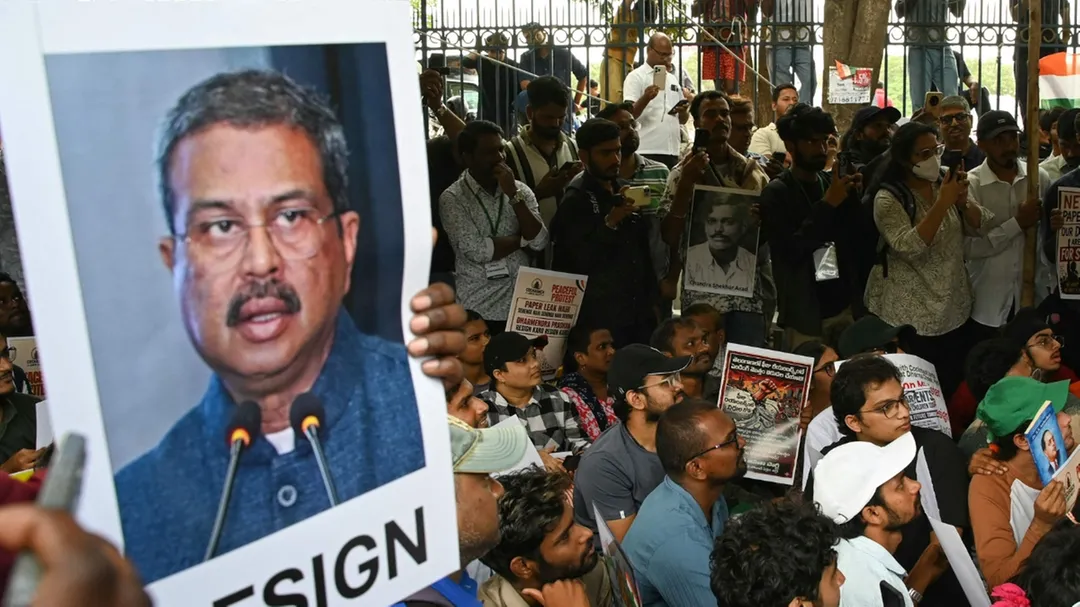
The political climate in New Delhi has intensified significantly following a series of widespread demonstrations demanding the resignation of Union Education Minister Dharmendra Pradhan. The unrest, fueled by allegations of systematic irregularities in national-level examinations, culminated in a high-stakes meeting between Minister Pradhan and Union Home Minister Amit Shah. As thousands of protesters converged on the capital, the situation escalated into a confrontational standoff, with security forces resorting to the use of tear gas and mass detentions to maintain order near the Parliament complex.
The ongoing controversy centers on the integrity of competitive testing processes that serve as the gateway for millions of students seeking professional and academic advancement. For the agricultural sector and rural families, these examinations are critical; they represent a primary pathway for upward mobility, allowing youth from agrarian backgrounds to transition into specialized roles in technology, medicine, and engineering. The perceived failure of the examination infrastructure has not only sparked a student-led movement but has also raised broader questions regarding the administrative oversight and governance of national institutions.
Administrative Scrutiny and the Political Fallout
The meeting between Minister Pradhan and Home Minister Amit Shah is widely viewed by political analysts as a critical juncture for the current administration. As the face of the Ministry of Education, Pradhan has been at the epicenter of public outcry, with opposition parties and student unions calling for immediate accountability. The allegations of paper leaks and logistical mismanagement have created a crisis of confidence, challenging the government's ability to maintain the sanctity of high-stakes testing.
While government representatives maintain that investigations are underway to identify technical lapses and potential criminal activity, the optics of the situation remain challenging. The deployment of heavy police barricades and the subsequent use of crowd-control measures near the seat of power indicate the severity of the administration's concern regarding the potential for the protests to broaden. For the agricultural community, which often relies on stable governance to ensure that rural development and educational support programs remain functional, the focus on this administrative crisis highlights a potential distraction from long-term policy implementation.
The Structural Challenges Facing National Testing
At the heart of the protests lies a fundamental demand for transparency and a complete overhaul of the current examination framework. Critics argue that the current system is plagued by outdated security protocols, inadequate digital infrastructure, and a lack of centralized oversight. These vulnerabilities, according to educational experts, have allowed for systemic breaches that undermine the efforts of students who invest years of preparation into these examinations.
Beyond the immediate calls for resignation, there is a growing discourse regarding the decentralization of test administration and the necessity for robust, tamper-proof digital solutions. If the ministry fails to address these technical vulnerabilities, the resulting instability could lead to a protracted period of uncertainty. For the millions of students—many of whom travel from remote farming villages to urban centers for coaching—the disruption of the exam calendar represents a significant financial and emotional loss that could impact their career trajectory for years to come.
What This Means for Farmers
While the protests are centered in urban administrative hubs, the implications for the agricultural community are significant. Farmers and rural families are disproportionately affected by the breakdown of meritocratic pathways, as these exams are often the only bridge available for rural youth to enter the formal, high-growth economy. The current volatility carries several key impacts:
- Economic Strain: Many rural families invest their limited savings—often derived from crop sales or livestock—into coaching and preparation for these exams. Delays and cancellations result in a direct loss of these investments, placing additional financial strain on agrarian households.
- Policy Distraction: When national ministries are preoccupied with managing political fallout and public unrest, the focus on agricultural education, extension services, and rural infrastructure development often wanes. Farmers should remain vigilant regarding potential shifts in government spending or policy prioritization as the administration attempts to stabilize its position.
- Advocacy and Representation: The current crisis serves as a reminder of the importance of rural representation in national policy-making. Ensuring that educational systems remain robust is an essential component of protecting the future of the next generation of rural talent. Farmers are encouraged to monitor local political discussions, as the resolution of these protests will likely dictate the future direction of the Ministry of Education and, by extension, the support systems available to rural students.