Governor’s Administrative Scrutiny Sparks Debate Over Uttar Pradesh Governance Standards
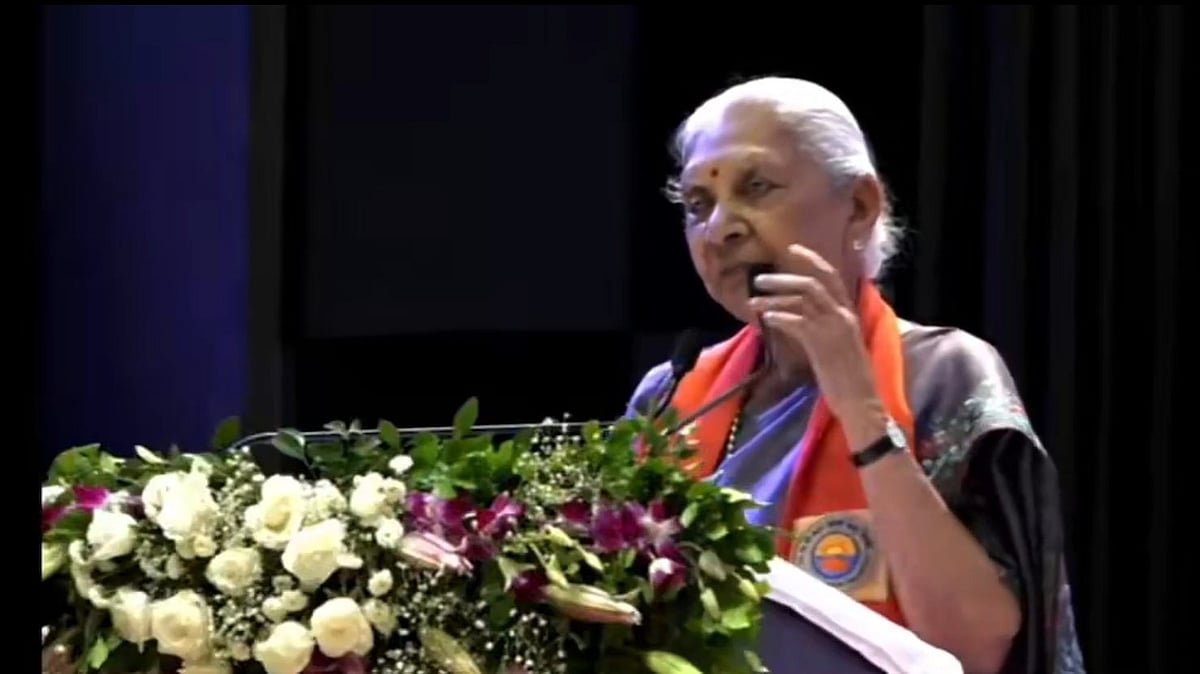
In a series of recent public appearances at state-run universities and academic institutions, Uttar Pradesh Governor Anandiben Patel has adopted a posture of rigorous administrative oversight, frequently highlighting deficiencies in infrastructure and service delivery. Her candid remarks regarding the state of hostel facilities, the quality of nutritional provisions, and persistent bureaucratic bottlenecks have moved beyond routine academic inspections, effectively placing the governance performance of the Chief Minister Yogi Adityanath-led administration under a public microscope.
These interventions, occurring as the state approaches the critical 2027 Assembly election cycle, have shifted the political discourse. While the Governor’s office maintains that these observations are part of her constitutional mandate to ensure the efficacy of state-funded institutions, opposition parties have been quick to interpret these critiques as a sign of internal friction and a broader failure in administrative accountability. As these reports surface in both traditional media and digital video analysis, stakeholders—including students, faculty, and the agrarian community—are closely watching how these tensions between the Raj Bhavan and the state secretariat might influence policy implementation in the coming years.
Infrastructure and Accountability: The Core of the Critique
The Governor’s recent commentary has focused heavily on the physical and logistical standards of public institutions. Reports from her visits indicate a consistent emphasis on the quality of life for students residing in state-funded hostels, with specific criticisms directed at sanitation standards and the nutritional value of meals provided. By highlighting these specific operational failures, Governor Patel has inadvertently cast doubt on the effectiveness of the state’s monitoring mechanisms.
From an administrative perspective, the Governor’s insistence on addressing these "micro-level" issues suggests a perceived disconnect between government directives and ground-level execution. In the context of large-scale public service delivery, such observations are often viewed as a litmus test for the state’s bureaucratic health. When a constitutional head publicly calls out delays in administrative processes, it signals to the broader public that the machinery of governance—whether in education, health, or rural development—is not functioning at the required capacity. For the ruling administration, this creates a challenging narrative, as they must balance the need for rapid development with the reality of persistent structural inefficiencies.
Political Repercussions and the Road to 2027
The timing of these critiques is particularly significant given the proximity to the 2027 Assembly elections. In Uttar Pradesh, where political discourse is often defined by the performance of welfare schemes and the efficiency of the state apparatus, any sign of friction between the Governor and the Chief Minister’s office is amplified by the opposition. The narrative of "governance failure" is a powerful tool in political campaigning, and the Governor’s public remarks provide a ready-made platform for opposition leaders to question the state’s development claims.
Political analysts suggest that while the BJP government has maintained a strong hold on the state’s political landscape, the persistence of these public critiques could signal a shift in how institutional oversight is perceived. If the Governor’s interventions continue to focus on the shortcomings of state institutions, it may force the government into a defensive posture. This could lead to a sudden push for accelerated administrative reforms as the government attempts to address these gaps before the next election cycle begins in earnest. For the state cabinet, the challenge lies in rectifying these issues without appearing to be under the constant pressure of the Raj Bhavan.
What This Means for Farmers
While the Governor’s remarks have primarily centered on educational and urban infrastructure, the implications for the agricultural sector—the backbone of Uttar Pradesh’s economy—are substantial. The administrative delays identified by the Governor are rarely confined to a single department; they often reflect systemic issues that plague rural service delivery as well.
1. Scrutiny of Supply Chains: If the Governor’s critique regarding the quality of food and sanitation in hostels leads to a broader audit of government procurement, farmers may see a shift in how state-run agencies handle agricultural produce. Increased oversight could lead to more stringent, albeit bureaucratic, quality checks for commodities supplied to government schemes.
2. Institutional Responsiveness: Agricultural universities and research stations, which fall under the Governor’s purview, are essential for the dissemination of new farming technologies and seeds. If these institutions are under heavy administrative pressure due to the Governor’s recent focus, it may result in a "clean-up" of these facilities. Farmers should monitor whether this leads to improved services—such as better seed distribution or more accessible soil testing—or if it results in administrative paralysis due to fear of scrutiny.
3. Political Prioritization: As the government faces increased pressure to prove its efficiency, they are likely to prioritize high-visibility, short-term success stories in rural areas to counter the narrative of administrative failure. Farmers should expect a surge in government outreach programs and subsidy distributions as the 2027 elections approach, as the administration will be eager to solidify its base by demonstrating tangible results on the ground.
In summary, the current tensions serve as a warning: administrative efficiency is now a central pillar of the pre-election discourse. Farmers and rural stakeholders should remain vigilant, ensuring that the push for "governance standards" translates into actual improvements in rural infrastructure and support services, rather than just political optics.