Geological Phenomenon: Oscillating Well Water Stuns Gujarat Farming Community
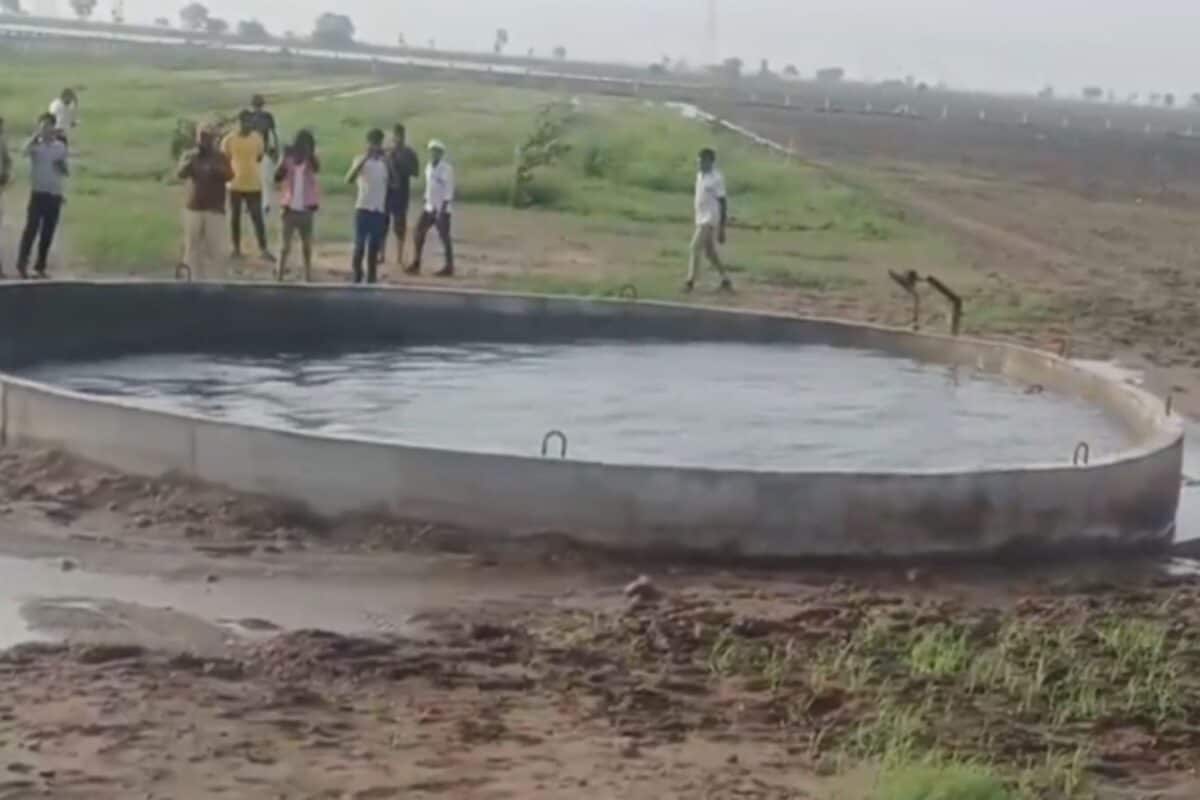
A rural community in the Morbi district of Gujarat has become the unlikely center of national attention this week following the emergence of viral footage depicting highly unusual behavior in a local agricultural well. As heavy monsoon rains continue to saturate the region, farmers and local residents have documented the water within a standard irrigation well oscillating rhythmically, creating a phenomenon that has left observers baffled and the internet speculating on its origin.
The footage, which has circulated rapidly across social media platforms, shows the water surface within the well casing rising and falling in a steady, pulsing motion. While such events are rare in the context of daily agricultural operations, experts suggest that the occurrence is likely tied to the unique hydrogeological conditions of the Saurashtra region, rather than any supernatural interference. As the district reels from the impact of intense seasonal precipitation, the incident serves as a stark reminder of the complex and often invisible relationship between subterranean water tables and surface-level weather events.
Understanding the Hydrogeological Mechanics
From an agronomic and geological perspective, the oscillation of well water is rarely a sign of an "unwell" aquifer in the sense of contamination or structural failure, but rather a reaction to rapid changes in hydrostatic pressure. The Morbi district is characterized by specific rock formations that interact dynamically with the water table. When monsoon rains are exceptionally heavy, the rapid recharge of groundwater can lead to localized pressure differentials within the aquifer.
Geologists suggest that the "pulsing" effect may be the result of trapped air or gas pockets being displaced by the rapid influx of rainwater. As the water table rises, air trapped in the fissures and conduits of the underlying basaltic or sedimentary rock must escape. If the path of least resistance for that air happens to be the well shaft, it can cause the water column to move in a rhythmic, oscillating fashion. Additionally, seismic micro-tremors—often imperceptible to humans but significant enough to affect fluid dynamics—can sometimes cause water in narrow, deep shafts to slosh or oscillate due to the resonant frequency of the well structure itself.
While the visual of the water moving independently is striking, it is generally considered a temporary mechanical response to the saturation of the soil profile. The phenomenon typically subsides once the groundwater levels stabilize and the atmospheric pressure within the subterranean conduits reaches equilibrium with the surrounding soil moisture levels.
Environmental Factors and Monsoon Impacts
The intensity of this year’s monsoon has brought significant challenges to farmers across Gujarat, ranging from soil erosion to the management of excessive moisture. The viral nature of this well-water incident highlights the heightened state of alert among the farming community, who are acutely aware of how weather patterns dictate their livelihoods. When sub-surface water behaves unpredictably, it is natural for producers to harbor concerns regarding the safety of their irrigation sources and the stability of the land.
Heavy rainfall events of this magnitude can alter the flow paths of subterranean streams and recharge zones. For farmers, this means that wells which have been reliable for decades might suddenly experience shifts in water quality or flow rate. Monitoring these changes is essential, as the sudden movement of groundwater can sometimes stir up sediment or minerals, temporarily clouding the water. However, in the vast majority of these cases, the water remains suitable for standard agricultural use once the sediment settles.
What This Means for Farmers
For those managing agricultural properties in regions prone to heavy monsoon activity, the recent events in Morbi offer several practical takeaways regarding water management and infrastructure safety:
- Monitor for Water Quality: Sudden changes in groundwater flow can lead to an increase in turbidity. Farmers should allow water to settle in storage tanks before use to ensure that sediment does not clog drip irrigation emitters or sensitive pumping equipment.
- Assess Structural Integrity: While the oscillation itself is likely a pressure-related phenomenon, it is prudent to inspect the well casing and surrounding concrete apron for cracks. Intense saturation can lead to ground shifting, which may compromise the structural stability of the wellhead.
- Maintain Records: Keep a log of unusual well behavior, including dates, the intensity of recent rainfall, and any changes in water clarity. This documentation is invaluable if you need to consult with local agricultural extension services or geological experts.
- Prioritize Safety: If a well exhibits unexplained behavior, avoid leaning over or placing equipment into the shaft until the water levels have stabilized. Rapid fluctuations in water pressure can sometimes be accompanied by the release of trapped gases, which should be treated with caution.
- Consult Local Authorities: If the oscillation is accompanied by loud sounds, sulfurous odors, or persistent structural damage to the surrounding soil, contact the local district agricultural or irrigation department. They have the resources to conduct professional testing to ensure that the aquifer remains stable and safe for ongoing irrigation needs.
Ultimately, while the viral video has provided fodder for internet speculation, the event is a testament to the dynamic nature of our groundwater systems. By remaining vigilant and relying on sound agronomic principles, farmers can navigate these geological quirks without compromising their seasonal harvests.