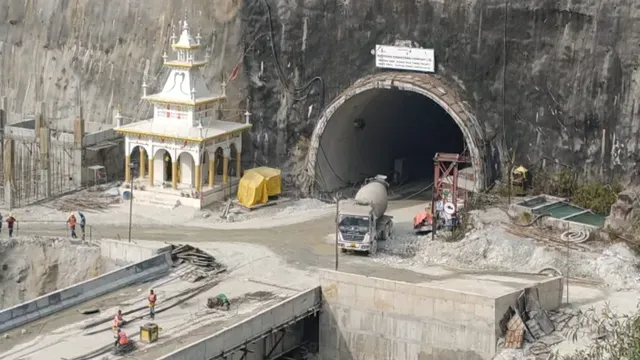
Tragedy Strikes Silkyara Tunnel: Worker Fatality Prompts Urgent Safety Review
A fatal workplace accident has cast a somber shadow over infrastructure operations in Uttarkashi after a section of shotcrete lining collapsed inside the Silkyara Tunnel late Wednesday night. The incident, which resulted in the loss of a worker’s life, has triggered an immediate response from local authorities. District Magistrate Prashant Arya has confirmed that a formal investigation is underway to determine the structural and procedural failures that led to the collapse, while simultaneously mandating a comprehensive audit of all safety protocols currently in place at the site.
The Silkyara Tunnel, a critical component of regional connectivity efforts, has become the focal point of intense scrutiny following the collapse. Shotcrete—a mixture of cement, sand, and aggregate projected pneumatically at high velocity—is a standard stabilization technique used in tunneling to provide immediate support to excavated rock faces. While this method is widely considered essential for preventing wall instability, the sudden failure of such a lining underscores the inherent risks associated with subterranean engineering in complex geological terrains.
Geological Challenges and Structural Integrity
Engineers and safety experts often point to the unpredictable nature of mountainous excavation, where shifting strata and water ingress can compromise the integrity of support structures. When a shotcrete lining fails, it typically signals either a localized geological shift exceeding the design load of the support system or a deficiency in the application process—such as improper curing, insufficient thickness, or inadequate bonding to the rock surface.
In the wake of the incident, officials are expected to examine whether the current stabilization measures were appropriately calibrated for the specific rock mass rating (RMR) of the tunnel segment in question. The investigative team appointed by the District Magistrate will likely focus on three critical areas: the geotechnical monitoring data recorded in the hours leading up to the collapse, the adherence to established engineering specifications during the shotcrete application process, and the rigor of the site’s existing safety evacuation and hazard detection protocols.
Regulatory Oversight and Safety Compliance
The directive issued by District Magistrate Prashant Arya signals a shift toward stricter regulatory oversight for infrastructure projects in the region. Beyond the immediate forensic analysis of the collapsed section, the administration has signaled that this tragedy will serve as a catalyst for a broader review of workplace safety standards. This audit is expected to encompass not only the technical engineering aspects of the tunnel construction but also the human-centric elements of the operation, including training, personal protective equipment (PPE) compliance, and emergency response readiness.
Infrastructure development in mountainous regions inherently carries significant risk, necessitating a culture of safety that prioritizes the lives of the labor force above project timelines. By ordering an immediate review, the local administration seeks to ensure that contractors and project managers are strictly adhering to the national safety codes that govern subterranean construction. Failure to do so not only jeopardizes the lives of the workers but also undermines the long-term viability of the infrastructure itself.
What This Means for Farmers
While the collapse occurred in a tunnel construction zone, the incident holds significant implications for the broader agricultural community and rural development stakeholders in the Himalayan belt:
- Disruption of Supply Chains: Projects like the Silkyara Tunnel are designed to improve market access for farmers by shortening transit times for perishable produce. Delays caused by safety investigations and necessary remedial work may prolong the reliance on older, more arduous transport routes, potentially increasing post-harvest losses and logistics costs.
- Land and Infrastructure Sensitivity: The incident highlights the vulnerability of the local landscape to large-scale engineering works. Farmers whose land lies in the vicinity of such tunnels should remain vigilant regarding changes in water tables, soil stability, and natural drainage patterns, as large-scale structural failures can sometimes indicate broader geological shifts affecting the surrounding environment.
- Advocacy for Safe Development: This tragedy serves as a stark reminder of the importance of rigorous oversight in public works. Agricultural cooperatives and farmer unions are encouraged to stay informed about infrastructure projects affecting their districts. Demanding transparency and strictly enforced safety standards for regional development projects is essential to ensure that progress does not come at an unacceptable human or environmental cost.
- Economic Resilience: For farmers, infrastructure development is a double-edged sword. While it promises better integration into national markets, it also requires that the land remains stable and accessible. Ensuring that regional planning remains grounded in sound geotechnical science is a matter of long-term economic security for the entire agricultural sector in Uttarkashi.