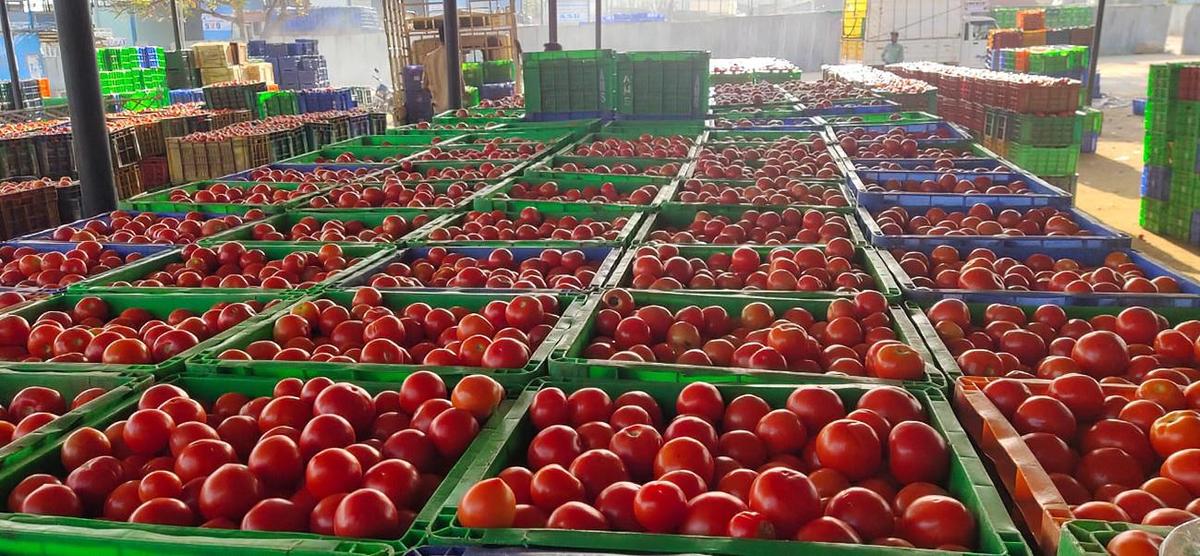
Market Volatility Hits Kolar Tomato Growers as Prices Plummet
Farmers in the Mulbagal taluk of the Kolar district, a region long considered the heart of tomato production in Karnataka, are facing a severe economic crisis this month. Following a period of relative stability, market prices for tomatoes at the Agricultural Produce Market Committee (APMC) mandis have experienced a sharp and sudden decline. Growers report that prices, which had been holding steady at approximately ₹500 to ₹550 per crate, have plummeted to a range of ₹150 to ₹200 as of late July. This drastic contraction in market value has left producers struggling to cover the rising costs of cultivation, transport, and labor.
The Mechanics of the Price Collapse
The current downturn in tomato pricing is largely attributed to a confluence of supply-chain factors and seasonal harvest cycles. In many agricultural hubs, the arrival of peak harvest periods often results in a supply glut at the local mandis. When the volume of arrivals exceeds the immediate processing and consumer demand capacity of the market, the auction price naturally softens. However, the speed and magnitude of this recent drop have caught many producers off guard.
Agricultural economists note that tomato farming is a high-input, high-risk venture. Farmers must invest heavily in hybrid seeds, chemical fertilizers, pesticides, and consistent irrigation systems. When market prices fall below the breakeven point—the threshold at which the revenue from the harvest covers the cost of production—the impact is immediate and devastating. For smallholder farmers in Mulbagal, who often rely on credit to fund their seasonal inputs, a price drop of this scale threatens their ability to repay loans and secure capital for the upcoming planting cycle.
Demands for Policy Intervention and Support Prices
In response to the fiscal instability, a growing chorus of farmers is calling upon the state government to intervene. The primary demand currently circulating among producer collectives is the implementation of a government-backed support price. By establishing a minimum floor price for tomatoes during periods of extreme market volatility, farmers argue that the government could provide a vital safety net that prevents the total erosion of their livelihood.
Advocates for the farming community suggest that the government should look beyond direct cash subsidies and consider broader structural changes. These include the strengthening of cold-chain infrastructure to allow farmers to withhold produce from the market during gluts, as well as the promotion of tomato processing industries—such as paste and ketchup manufacturing—within the Kolar district. These value-added initiatives would create a secondary market for farmers, ensuring that surplus produce does not simply rot in the fields or sell for a loss when wholesale market prices are suppressed.
What This Means for Farmers
The current market situation serves as a stark reminder of the risks inherent in specialized cash-crop farming. For farmers in Kolar and surrounding regions, the immediate economic consequences are significant. To navigate this period of instability, producers should consider the following practical steps:
- Diversification of Crops: While tomatoes offer high potential returns, relying solely on a single commodity leaves farmers vulnerable to extreme price fluctuations. Integrating secondary crops can help buffer income against the volatility of the tomato market.
- Collective Bargaining: By forming or joining Farmer Producer Organizations (FPOs), growers can pool their resources to negotiate better transport rates and gain access to more distant, stable markets, reducing their dependence on local APMC price fluctuations.
- Enhanced Post-Harvest Management: Farmers are encouraged to explore low-cost, on-farm storage solutions to avoid the "panic selling" that occurs when farmers rush to clear their harvests during a market glut.
- Financial Literacy and Credit Management: Engaging with local agricultural extension offices to better understand market trends and credit insurance products can provide farmers with a more robust strategy for managing debt during poor yield or low-price cycles.
As the situation in Mulbagal continues to develop, the focus remains on whether state agricultural authorities will respond to the calls for a support price mechanism. For now, the farmers of Kolar are left to manage the fallout of a market that has once again highlighted the precarious nature of the agricultural economy.