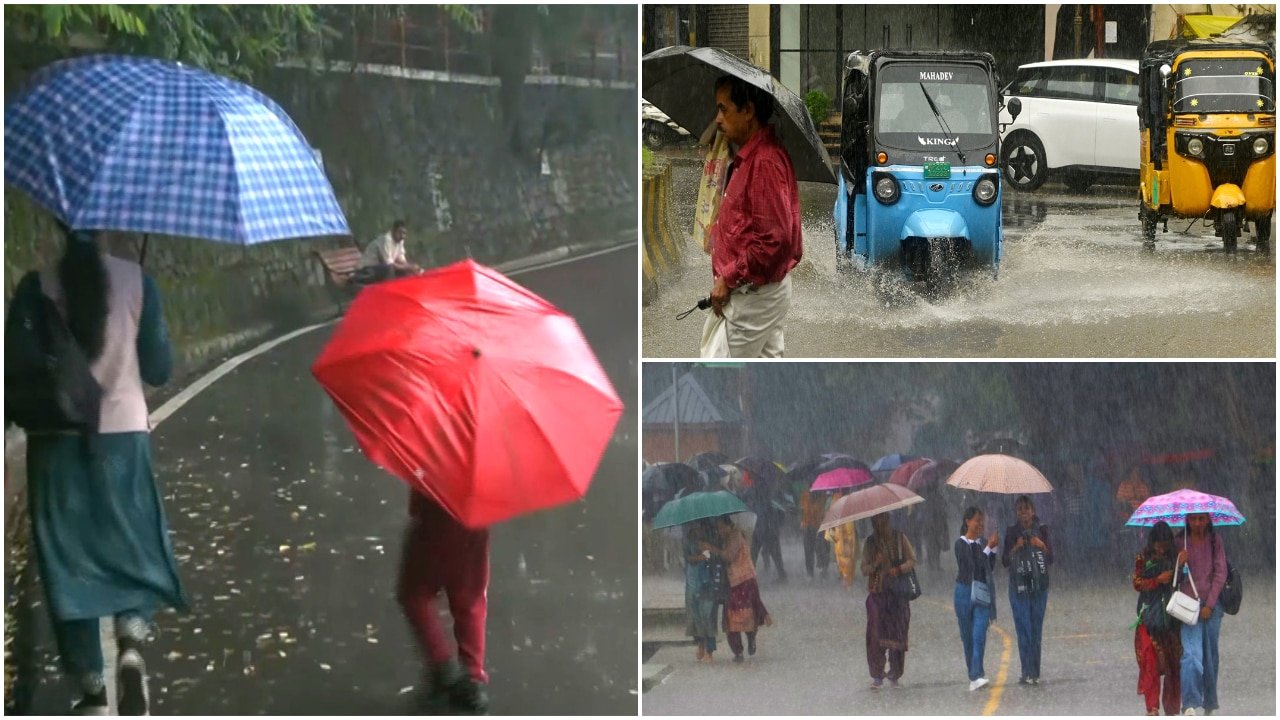
Regional Weather Alerts and Civil Disruptions Prompt School Closures Across India
As the monsoon season reaches a peak intensity across several Indian states, educational institutions are facing significant operational challenges. For August 13, 2026, administrators and local government officials are closely monitoring meteorological forecasts and civil conditions to determine the viability of keeping schools and colleges open. While the central government has not issued a nationwide mandate for school closures, a decentralized approach has been adopted, empowering district magistrates and local authorities to prioritize student safety in the face of heavy rainfall and logistical disruptions.
The situation is particularly complex due to a convergence of environmental hazards and planned civil actions. In states such as Karnataka, Maharashtra, and Uttarakhand, the combination of torrential downpours and scheduled public protests has created a scenario where student transit could be severely compromised. Parents and students are being urged to exercise caution and rely exclusively on official announcements from local district administrations rather than speculative reports circulating on social media.
The Impact of Severe Monsoon Activity on Academic Continuity
The primary driver for the current wave of closures remains the India Meteorological Department’s (IMD) recent warnings regarding heavy to very heavy rainfall. In regions like Uttarakhand and parts of Maharashtra, the topography makes schools particularly vulnerable to waterlogging, flash floods, and landslides. Education departments are operating under a "safety-first" protocol, which dictates that if the risk to students commuting—or the structural integrity of school buildings—reaches a critical threshold, immediate suspension of in-person classes is warranted.
Beyond the weather, the upcoming Karnataka bandh on August 13, 2026, adds another layer of complexity. Civil protests often lead to the suspension of public transportation services, including buses and metro lines, which are essential for the daily commute of millions of students and faculty members. Even in instances where school buildings remain physically accessible, the inability of staff and students to reach campus safely is forcing many private and public institutions to declare a localized holiday or shift to temporary remote learning models where infrastructure allows.
Navigating Uncertainty: Communication Protocols for Parents and Students
In the absence of a uniform national directive, the responsibility for disseminating information has fallen to individual school boards and district collectors. Authorities are emphasizing that there is no singular list of closures for the entire country; instead, decisions are being made on a city-by-city and district-by-district basis. This localized decision-making process is designed to ensure that schools in unaffected areas can continue their academic calendars without unnecessary interruption, while those in high-risk zones can take preventative measures.
To stay informed, stakeholders are advised to monitor the official websites of their respective state education departments and local district administration portals. Most schools have activated their emergency notification systems—including SMS alerts and parent-teacher association (PTA) messaging groups—to communicate status updates. Students are encouraged to wait for these verified communications before assuming that their specific institution will be closed.
What This Means for Farmers
While the focus on school closures is centered on student safety and transportation, the underlying conditions driving these disruptions have significant implications for the agricultural sector. The heavy rainfall currently impacting these regions is a double-edged sword for the farming community.
1. Managing Crop Stress and Waterlogging: For farmers in Karnataka, Maharashtra, and Uttarakhand, the excessive rainfall poses an immediate threat to standing kharif crops. High saturation levels in soil can lead to root rot and nutrient leaching. Farmers are advised to ensure that field drainage systems are clear and operational to prevent standing water from damaging delicate root systems. Where possible, avoid chemical applications during these heavy downpours, as runoff will render them ineffective and potentially contaminate local water sources.
2. Supply Chain and Logistics Constraints: The same logistical disruptions impacting school buses—road closures, bridge safety concerns, and potential bandh-related transport halts—will directly affect the movement of agricultural produce. Farmers planning to transport perishables to local mandis (wholesale markets) on August 13 should anticipate significant delays. It is advisable to coordinate with local cooperative societies or transport aggregators to adjust pick-up schedules and minimize post-harvest losses caused by transit stagnation.
3. Prioritizing Safety During Field Operations: Agriculture is inherently outdoor work, but during periods of extreme weather, the risk of accidents increases substantially. Farmers should defer non-essential field work and ensure that livestock are moved to higher, sheltered ground. Monitoring local weather bulletins is not just an academic exercise for students; it is a critical part of risk management for farm owners looking to protect their assets from the volatility of the monsoon season.