Disparity in Financial Support for Gujarat’s Women-Led Cooperatives
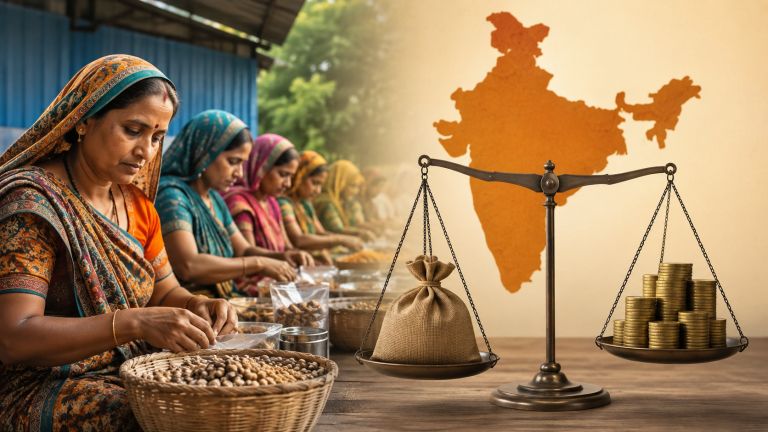
Gujarat holds a distinguished reputation for its robust cooperative movement, an ecosystem where women play a pivotal role in driving progress across various sectors, including dairy, agriculture, handicrafts, food processing, and rural enterprises. Despite this active participation, a significant gap has emerged regarding the allocation of central financial assistance. Recent data indicates that while the nationwide distribution of funds from the National Cooperative Development Corporation (NCDC) for women-led cooperatives has reached ₹4,926 crore, the share designated for Gujarat stands at only ₹1 crore.
Understanding the Role of the NCDC
The National Cooperative Development Corporation (NCDC) is a statutory corporation established under an Act of Parliament. Its primary objective is to plan, promote, and finance programs for the production, processing, marketing, storage, export, and import of agricultural produce and various other goods through cooperative societies. Financial assistance provided by the NCDC is intended to support the growth and sustainability of these organizations across the country.
In the context of women-led cooperatives, the NCDC provides funding aimed at empowering women entrepreneurs who participate in the cooperative sector. These cooperatives are essential for the economic advancement of women in rural and semi-urban areas, facilitating collective bargaining power and improved access to markets.
The Funding Gap: A Statistical Overview
According to data reported by Vibes Of India, the disparity in funding distribution has raised questions regarding how resources are allocated to states with historically strong cooperative frameworks. The key figures highlighted in the report include:
- National Total: ₹4,926 crore in financial assistance disbursed to women-led cooperatives across India.
- Gujarat’s Share: ₹1 crore, representing a remarkably small fraction of the total national allocation.
This data, which was recently placed before authorities, highlights a stark contrast between the strength of the cooperative movement in Gujarat and the level of financial support received from the central corporation.
Impact on Women-Led Cooperatives
Women in Gujarat are integral to several key economic sectors. Their involvement is particularly notable in:
- Dairy: Contributing to the state’s massive milk production network.
- Agriculture: Engaging in farming and post-harvest activities.
- Handicrafts: Preserving traditional arts while building commercial enterprises.
- Food Processing: Adding value to raw agricultural products.
- Rural Enterprises: Developing local businesses that support the rural economy.
Given the active role these women play in these sectors, the limited inflow of NCDC funds creates a discrepancy that stakeholders are beginning to examine. The report by Vibes Of India brings attention to this specific gap, prompting a closer look at the mechanisms governing the distribution of financial aid to state-level cooperative bodies.
Contextualizing the Cooperative Movement in Gujarat
Gujarat is widely recognized for its long-standing history of successful cooperative models. These organizations have often served as a blueprint for development in other parts of India. However, the current data suggests that the success of these local initiatives has not necessarily translated into higher levels of central financial support under the current NCDC funding parameters.
As the conversation around this financial data continues, the primary focus remains on the reasons behind the low allocation for Gujarat compared to the nationwide figure of ₹4,926 crore. The report underscores the importance of monitoring how central funds are distributed to ensure that states with high levels of cooperative activity receive commensurate support for their women-led initiatives.