Global PFAS Testing Market Poised for Significant Expansion Through 2034
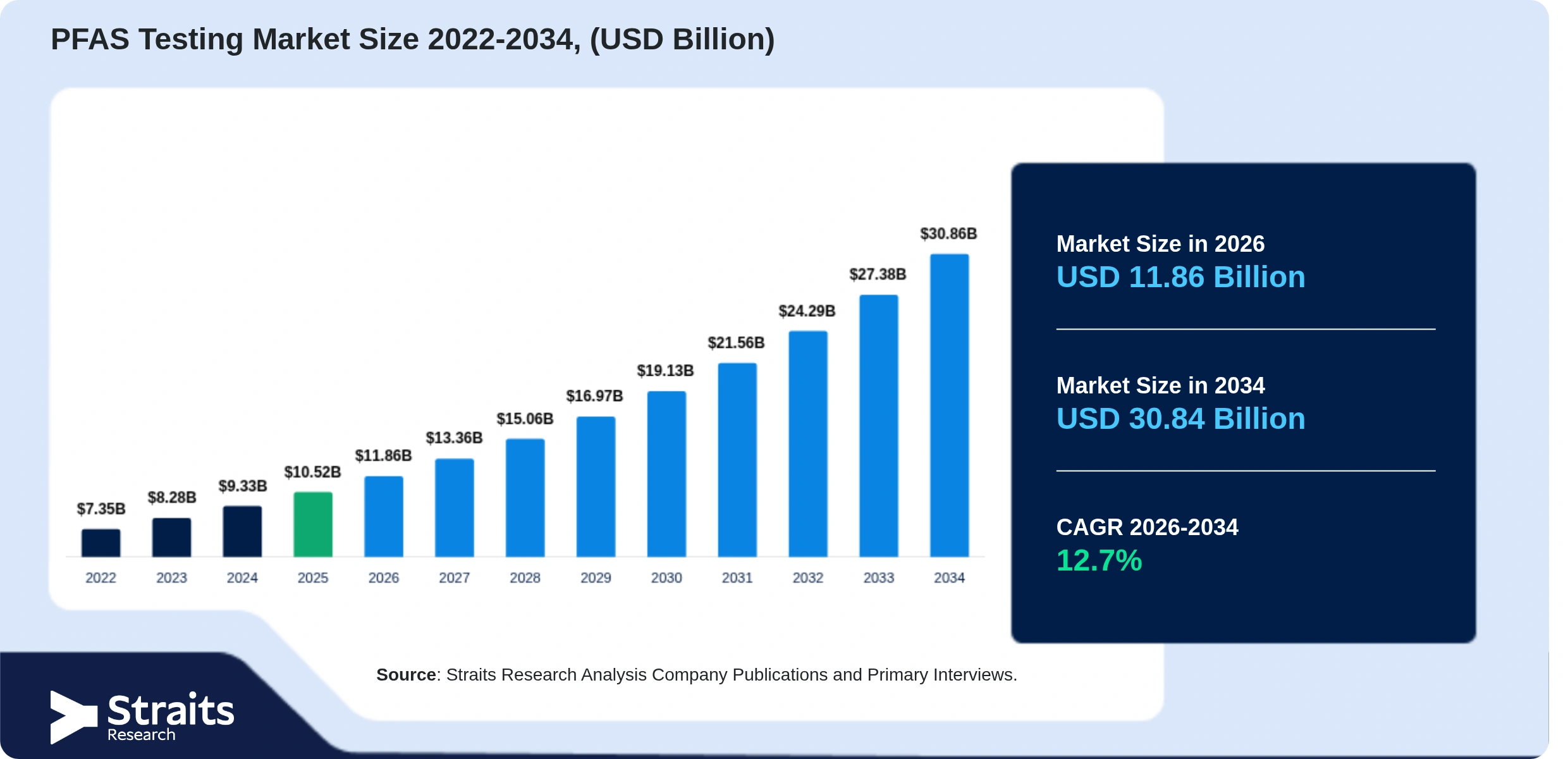
The global agricultural and environmental sectors are bracing for a period of rapid transformation as the market for per- and polyfluoroalkyl substances (PFAS) testing prepares for unprecedented growth. According to industry projections, the PFAS testing market is expected to surge from a valuation of $11.86 billion in 2026 to an estimated $30.86 billion by 2034. This trajectory, representing a compound annual growth rate (CAGR) of 12.7%, underscores the rising urgency surrounding the detection and mitigation of these "forever chemicals" within the food supply chain and broader environmental ecosystems.
Drivers Behind the Surge in PFAS Analytical Demand
The projected expansion of the PFAS testing market is largely fueled by a tightening regulatory environment and an increasing emphasis on food safety transparency. As agricultural authorities worldwide begin to establish stricter maximum residue limits (MRLs) for PFAS in soil, water, and livestock products, the demand for high-precision analytical testing has moved from a niche requirement to a standard operating procedure for large-scale farming operations and food processors.
Technological advancements in mass spectrometry and chromatography are playing a pivotal role in this growth. Modern laboratories are now capable of detecting PFAS compounds at parts-per-trillion levels, providing the granularity needed to identify contamination sources—such as irrigation water, biosolid fertilizers, or industrial runoff—before they permeate the food chain. As testing methodologies become more efficient and accessible, the barrier to entry for routine monitoring continues to lower, encouraging widespread adoption across the agricultural value chain.
The Intersection of Environmental Stewardship and Market Compliance
Beyond regulatory compliance, the surge in testing demand is being driven by a shift in consumer expectations. Farmers and food brands are increasingly utilizing environmental testing as a proactive risk management tool to protect their brand equity. The ability to verify the safety of agricultural land and inputs is becoming a critical component of supply chain due diligence, particularly for exporters looking to access markets with stringent environmental health standards.
The market growth is also supported by the increasing professionalization of environmental monitoring on working farms. As the agricultural sector faces greater scrutiny regarding the use of historical fertilizers and chemical applications, growers are turning to comprehensive soil and water analysis to ensure long-term land productivity. By integrating PFAS testing into routine agronomic surveys, producers are better positioned to navigate the complex landscape of environmental liability and land valuation.
What This Means for Farmers
For the average producer, the rapid growth of the PFAS testing market signals a new era of operational accountability. While the initial costs of testing may represent an additional line item in the annual budget, the long-term economic consequences of ignoring potential contamination are significantly higher. Farmers should consider the following practical steps as the industry moves toward 2034:
- Baseline Assessments: Producers are encouraged to conduct baseline testing of their primary water sources and soil profiles to identify potential legacy contamination risks before they become a regulatory or market-access issue.
- Supply Chain Transparency: As testing becomes standard, farmers should prepare to provide documentation regarding the safety of their inputs, including composts and biosolids, to downstream buyers and processors.
- Risk Mitigation Strategy: Integrating PFAS monitoring into existing farm management plans can help producers proactively address contamination issues, potentially avoiding the catastrophic financial impact of a crop rejection or land-use restriction.
- Investment in Expertise: As analytical services expand, farmers should seek partnerships with accredited laboratories that offer not only testing data but also professional consultation on interpreting results and implementing remediation or mitigation techniques.
Ultimately, while the rising costs of testing present a challenge, the growing market ecosystem offers farmers the tools necessary to ensure the safety and longevity of their operations. By embracing a data-driven approach to environmental health, the agricultural community can effectively navigate the transition into an era defined by stricter chemical oversight and higher standards for food security.