Haryana’s Fiscal Balancing Act: Navigating Welfare Spending and Debt Sustainability
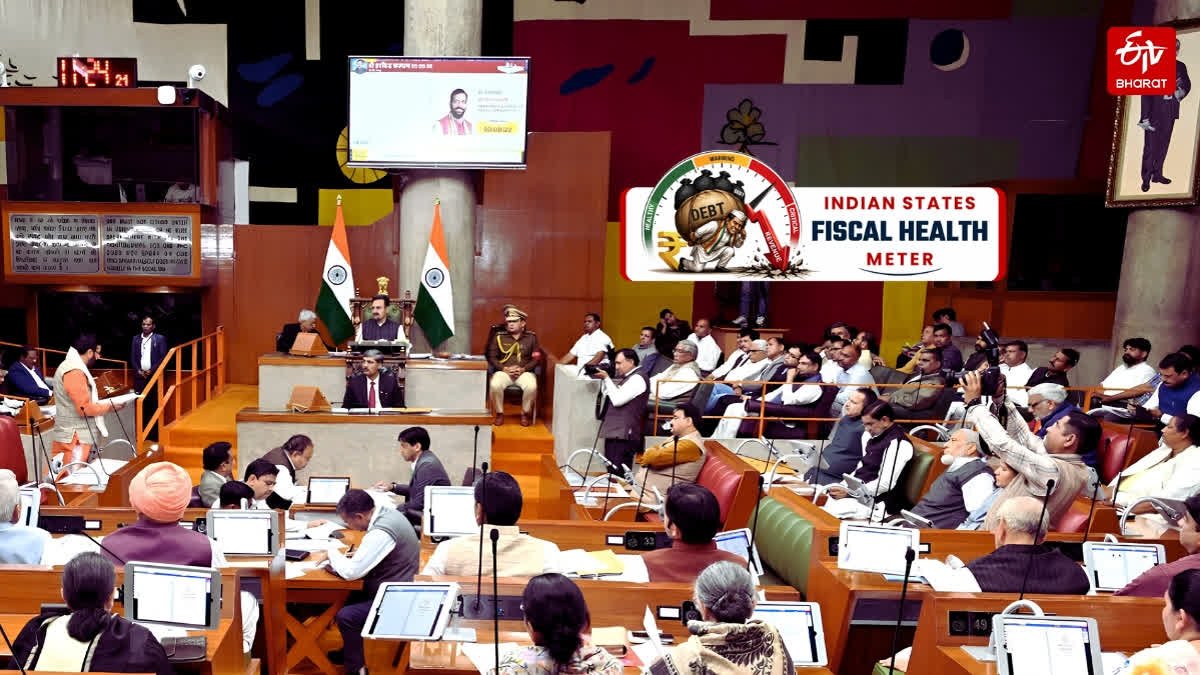
The state of Haryana, a cornerstone of India’s agricultural output and a significant contributor to the national economy, is currently navigating a complex fiscal landscape. As the state government continues to prioritize extensive welfare programs and social support initiatives, financial analysts and policy experts are closely monitoring the state’s debt servicing obligations. While the commitment to social welfare remains a primary pillar of the current administration’s policy framework, the reliance on consistent sectoral growth to maintain compliance with the Fiscal Responsibility and Budget Management (FRBM) Act has become a focal point of intense economic debate.
The challenge lies in the delicate interplay between high-expenditure social schemes—which are essential for rural and urban livelihoods—and the long-term sustainability of the state’s exchequer. As debt servicing costs rise, the administration must maintain a robust growth trajectory to ensure that the state’s fiscal deficit remains within the statutory limits mandated by the FRBM framework.
The Engine of Growth: Sustaining Compliance Through Sectoral Performance
The primary mechanism allowing Haryana to manage its fiscal burden while sustaining its welfare commitments is its resilient sectoral growth. Historically, the state has leveraged its dual strength in intensive agriculture and a rapidly expanding industrial and services sector to generate the tax revenue required to service existing debt. By maintaining an average sectoral growth rate of approximately 6 percent, the state has managed to keep its debt-to-GSDP (Gross State Domestic Product) ratio from spiraling beyond manageable thresholds, even as borrowing requirements for welfare schemes grow.
However, economists warn that this reliance on growth as a fiscal buffer is inherently sensitive to market volatility. In the agricultural sector, which remains the backbone of the state's economy, fluctuations in input costs, shifting weather patterns, and the volatility of global commodity prices can directly impact state revenues. If the growth rate dips below the 6 percent threshold, the margin for error in the state budget narrows significantly, leaving less room for the government to maneuver between debt repayment and the continued funding of social welfare programs.
The Pressure of Welfare Schemes on Capital Expenditure
A recurring concern for fiscal hawks is the "crowding out" effect, where significant portions of the state budget are diverted toward revenue expenditure—specifically welfare schemes and subsidies—at the expense of capital expenditure. While welfare schemes are crucial for poverty alleviation and social equity, they are often non-productive in terms of direct economic returns compared to infrastructure investments like irrigation modernization, rural logistics, or agricultural research and development.
The mounting debt servicing costs act as a fixed liability that must be paid regardless of economic performance. As these obligations grow, the state is forced to prioritize these payments over long-term developmental projects. For a state like Haryana, which is currently seeking to modernize its agricultural value chains and bolster its manufacturing base, a prolonged period of high debt servicing risks stalling the very structural growth required to keep the state’s fiscal metrics healthy. The challenge, therefore, is to ensure that welfare initiatives are not only socially impactful but also efficiently administered to prevent unnecessary fiscal drain.
What This Means for Farmers
For the farming community in Haryana, the state’s fiscal health is not merely a matter of macroeconomic policy—it has direct, tangible consequences on the ground. Farmers should be aware of several key implications:
- Input Subsidy Stability: As the state balances its budget, there is a risk that subsidies on fertilizers, power, and seeds could be subject to restructuring. Farmers should prepare for potential shifts in the delivery or scope of these subsidies as the government seeks to optimize fiscal efficiency.
- Infrastructure Investment Lag: If the state prioritizes debt servicing over capital expenditure, investments in essential rural infrastructure—such as cold storage chains, market yard upgrades, and irrigation efficiency projects—may face delays. This could impact the post-harvest value realization for seasonal crops.
- Credit Availability: A state government under fiscal strain may find it more difficult to provide guarantees for agricultural credit or to sustain state-led loan waiver programs. Farmers are advised to maintain robust financial records and explore diversified credit sources to mitigate the risk of reduced state-backed financial support.
- Focus on Diversification: With the fiscal environment tightening, the state is increasingly likely to promote high-value, low-water-intensive crops to boost sectoral growth. Aligning farm production with these government-backed diversification initiatives may offer farmers better access to state incentives and market support in the coming years.
Ultimately, while Haryana’s 6 percent growth rate provides a vital safety net, the state is entering a period where fiscal discipline will be paramount. Farmers and stakeholders in the agricultural sector are encouraged to remain informed about state budgetary developments, as these will dictate the availability of resources and the regulatory environment for years to come.