Parliamentary Shifts and Procedural Disruptions Mark Monsoon Session Opening
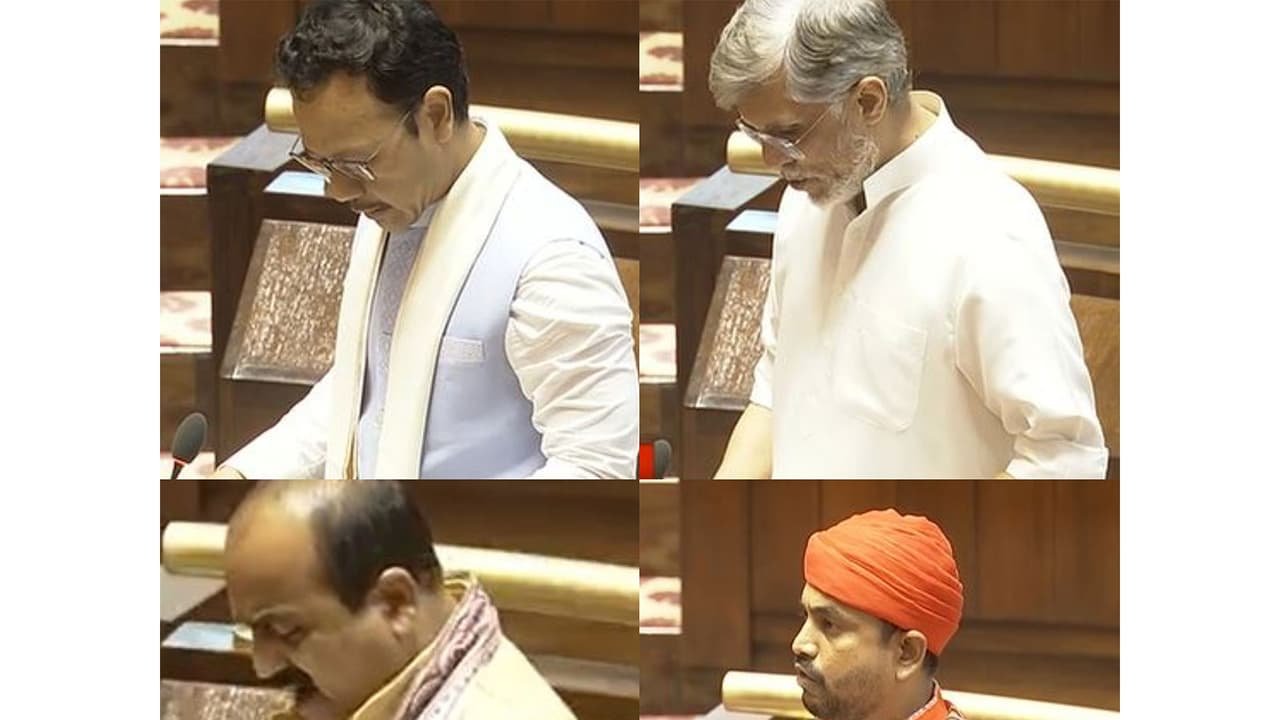
The Monsoon Session of the Indian Parliament commenced this week under a cloud of political intensity, characterized by both the induction of new legislative voices and significant procedural friction. As the Upper House, the Rajya Sabha, welcomed a fresh cohort of members taking their oaths of office, the Lower House, the Lok Sabha, faced immediate disruptions, signaling a turbulent start to the legislative calendar. Among the notable figures entering the Rajya Sabha was senior Congress leader Pawan Khera, whose swearing-in marks a transition from organizational politics to a more direct role in the upper legislative chamber.
The ceremony in the Rajya Sabha served as a brief moment of constitutional formality amidst a broader national debate. For many of the newly inducted members, the transition to the Upper House represents a strategic shift in their party’s parliamentary approach, particularly as the Monsoon Session is expected to tackle a wide array of policy issues, ranging from economic reforms to social welfare initiatives. However, the atmosphere inside the Parliament complex remained heavy with the weight of ongoing national controversies that have dominated the headlines in recent weeks.
Legislative Standoffs: NEET and Allocation Concerns
While the Rajya Sabha proceeded with the induction of new members, the Lok Sabha experienced swift and repeated adjournments. Opposition members utilized the floor to voice sharp criticism regarding the handling of the NEET (National Eligibility-cum-Entrance Test) controversy. The concerns raised by the Opposition centered on systemic issues regarding the transparency and integrity of national testing processes, which have sparked widespread student protests across the country. The demand for a detailed discussion on the matter reflects a growing pressure on the government to address accountability within national examination boards.
Beyond the education sector, the proceedings were further complicated by protests surrounding the management and donation protocols of the Ram Mandir. Opposition leaders questioned the financial oversight and the institutional framework governing donations to the temple trust, leading to heated exchanges with treasury bench members. These two issues—one focusing on the academic future of the nation’s youth and the other on significant cultural and religious institutional governance—have converged to create a formidable wall of opposition, effectively stalling the legislative agenda for the opening days of the session.
The Impact of Political Volatility on Policy
The frequent adjournments and the focus on adversarial politics raise questions about the efficiency of the current parliamentary session. When the legislative process is stalled by protests, the timeline for introducing and debating critical bills—including those related to agriculture, trade, and rural development—is often compressed. For the agricultural sector, which relies on timely legislative action for support schemes, infrastructure funding, and market regulation, a gridlocked Parliament can lead to delays in policy implementation and administrative uncertainty.
Furthermore, the entry of experienced political strategists like Pawan Khera into the Rajya Sabha suggests that the Opposition is recalibrating its approach to highlight government shortcomings. By bringing these controversies to the forefront of the legislative floor, the Opposition is aiming to exert pressure on the executive branch to provide transparency on issues that have significant public resonance. For the ruling coalition, the challenge lies in managing these disruptions while ensuring that essential business is conducted, particularly as the nation nears critical fiscal and seasonal agricultural deadlines.
What This Means for Farmers
For the farming community, the ongoing political volatility in New Delhi serves as a critical indicator of the legislative environment for the coming months. Farmers should note the following practical and economic consequences:
- Delayed Policy Implementation: When Parliament is adjourned frequently, the passage of crucial bills—such as those related to Minimum Support Price (MSP) frameworks, fertilizer subsidies, or agricultural export-import policies—often faces significant backlogs. Farmers should anticipate potential delays in the announcement of new government-backed programs until the session stabilizes.
- Increased Focus on Agrarian Accountability: The current trend of Opposition scrutiny suggests that agricultural issues, particularly those concerning crop insurance payouts and input cost inflation, are likely to be raised with greater intensity. Farmers can expect the political climate to remain focused on "accountability," which may force the government to provide more detailed reports on the distribution of subsidies and the efficacy of rural development funds.
- Market Uncertainty: Persistent political friction can influence market sentiment. When legislative stability is perceived to be low, commodities markets often react with volatility. Producers are advised to monitor government announcements closely, as shifts in trade policy or import/export duties are often tied to the parliamentary approval of finance-related bills.
- Advocacy Opportunities: The current atmosphere of protest indicates that the government is under pressure to address public grievances. For farmer unions and agricultural organizations, this period provides a high-visibility window to keep issues such as irrigation infrastructure, loan waivers, and climate-resilient farming support on the national agenda by leveraging the current focus on parliamentary transparency.