Escalating Tensions in New Delhi: Clashes Mar “Chalo Sansad” Protest
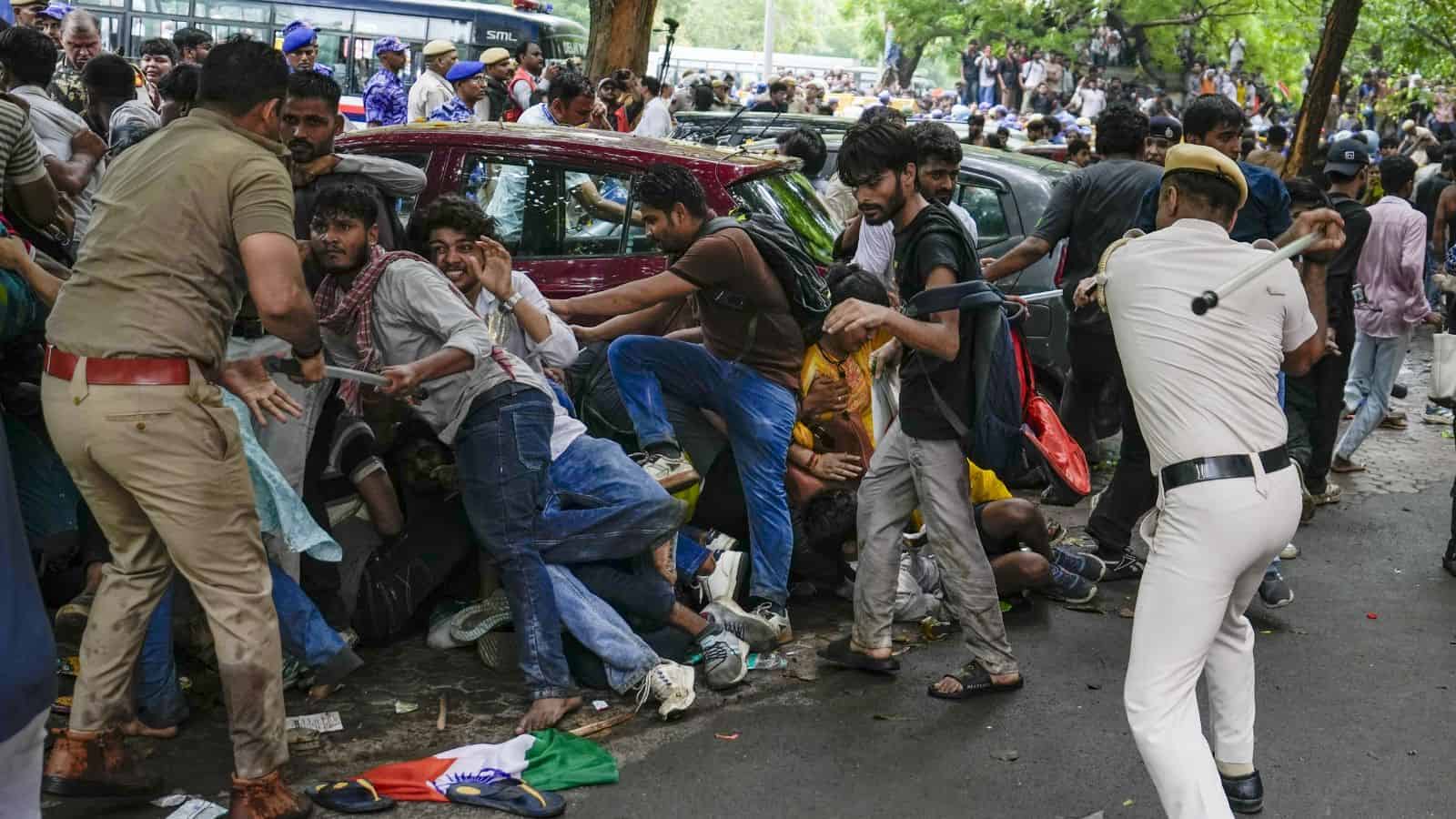
The political atmosphere in New Delhi reached a boiling point this Monday, July 20, as a large-scale demonstration organized by the Cockroach Janata Party (CJP) descended into chaos. The “Chalo Sansad” march, intended as a peaceful mobilization toward the capital’s legislative center, saw significant violence erupt between demonstrators and security forces. By the close of the day, authorities confirmed that over 50 police personnel and at least 50 protesters had sustained injuries, marking one of the most volatile confrontations in the city’s recent history.
The unrest began in the afternoon when security cordons were breached by a surging crowd of CJP supporters. According to preliminary reports from law enforcement agencies, the situation deteriorated rapidly after protesters allegedly began pelting stones at police lines. In response, security personnel utilized a lathi-charge to disperse the crowd, leading to a prolonged standoff that paralyzed traffic and disrupted commercial activity across the district. As the evening progressed, CJP leadership continued to hold their ground, maintaining a sit-in protest despite the heavy police presence and the threat of further administrative action.
Security Protocols and the Dynamics of Civil Unrest
The intensity of Monday’s clashes highlights the mounting friction between political advocacy groups and urban security protocols. The “Chalo Sansad” march was designed to draw national attention to the CJP’s platform, yet the event quickly became a case study in the challenges of crowd control within densely populated metropolitan areas. The sheer scale of the injury toll on both sides underscores the breakdown of communication between protest organizers and local authorities.
Security analysts note that the use of force—specifically the lathi-charge—is often a last resort intended to prevent the total collapse of order. However, the subsequent escalation suggests that such measures may serve to harden the resolve of demonstrators rather than quell their dissent. As the CJP maintains its sit-in, the focus has shifted toward the sustainability of such protests and the potential for a negotiated resolution. The presence of armored vehicles and reinforced barricades remains a constant, indicating that local law enforcement is preparing for the possibility of prolonged instability.
The Impact of Political Volatility on Urban Infrastructure
Beyond the immediate human cost, the ongoing sit-in poses significant challenges to the logistical and economic heartbeat of the district. New Delhi, as a center of commerce and administration, relies on the seamless movement of goods and labor. When major thoroughfares are blocked and public safety is compromised, the broader regional economy feels the ripple effects. Logistics firms, retail outlets, and small-scale service providers are often the first to report losses, as employees are unable to reach their workplaces and supply chains face sudden, unpredictable delays.
Furthermore, the uncertainty surrounding the protest duration creates a climate of caution among local businesses. The suspension of normal activity during such high-profile political events forces stakeholders to re-evaluate their risk management strategies, often leading to temporary closures that exacerbate the economic impact. For the local administration, the objective remains twofold: maintaining public order while ensuring that the infrastructure remains resilient against the pressures of sustained civil unrest.
What This Means for Farmers
While the CJP protest is fundamentally a political movement, the implications for the agricultural community and rural stakeholders are significant. For farmers engaged in the supply chain, particularly those transporting perishables into urban markets, such unrest acts as a major bottleneck. When main arterial roads are blocked or restricted, transport times increase, leading to potential spoilage of fresh produce and increased fuel costs for logistics operators.
Farmers are advised to consider the following impacts and precautions:
- Supply Chain Disruption: Anticipate potential delays in the delivery of inputs (fertilizers, seeds) and the movement of harvest to wholesale markets. Monitor local news reports closely to reroute shipments if necessary.
- Market Price Volatility: Prolonged protests in capital hubs often cause short-term fluctuations in commodity prices. Farmers should maintain direct communication with their local buyers and co-operatives to stay informed about shifts in demand or supply-side constraints.
- Risk Management: For those planning to transport goods through or near the protest-affected zones, it is highly recommended to coordinate with local agricultural extension offices or transport unions to identify clear transit windows.
- Economic Resilience: As political volatility can lead to unpredictable market conditions, farmers should focus on diversifying their market outlets where possible, ensuring that they are not exclusively dependent on a single transit route or urban delivery point that may be prone to civil disruptions.