The Lesser Florican: India’s Leaping Grassland Jewel
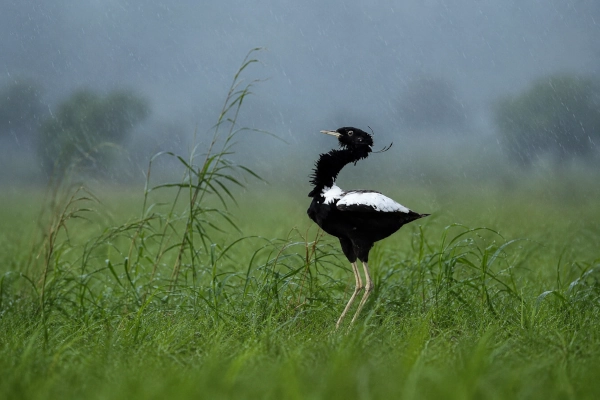
Across the vast, undulating grasslands of Western India, the arrival of the monsoon brings more than just the promise of a bountiful harvest. It signals the commencement of one of the most spectacular avian displays in the natural world. The Lesser Florican (Sypheotides indicus), a bird of extraordinary agility and aesthetic grace, emerges from the tall grasses of Gujarat and Rajasthan to perform a courtship ritual that has captured the imagination of naturalists and local communities for generations. Known regionally as Kharmor, Khamor, or the "grass peacock," this elusive species serves as a vital indicator of the health of India’s unique grassland ecosystems.
A Master of the Monsoon Display
Belonging to the Otididae family—a prestigious lineage that includes the critically endangered Great Indian Bustard and the elusive Bengal Florican—the Lesser Florican is a testament to the evolutionary specialization required to survive in open, arid landscapes. The male of the species is particularly notable for its dramatic transformation during the breeding season. As the rains hydrate the plains, the male develops a striking black-and-white plumage, complete with a distinctive crest of feathers.
The "leaping" behavior that gives the bird its renown is a highly energetic courtship display. Males launch themselves vertically into the air, reaching heights of several feet, while emitting a low, croaking call to attract potential mates hidden within the dense vegetation. This aerial performance is not merely a display of vigor; it is a complex social signal that relies heavily on the presence of undisturbed, high-quality grassland habitats. Because the birds are highly sensitive to their environment, their presence is often viewed by conservationists as a metric for the ecological integrity of the savannah-like tracts they inhabit.
The Fragile Equilibrium of Grassland Ecosystems
The Lesser Florican’s existence is inextricably linked to the preservation of native grasslands, often referred to by ecologists as "wastelands." This misnomer has historically led to the conversion of these vital habitats into intensive agricultural zones or industrial sites. Unlike forests, which receive significant legislative protection, grasslands have often been overlooked in land-use planning, leaving species like the Kharmor vulnerable to habitat fragmentation.
The bird’s life cycle is synchronized with the seasonal growth of grasses. It requires specific heights and densities of cover to nest and perform its displays. When these grasslands are overgrazed or cleared for cash crops, the birds lose both their breeding grounds and their primary sources of food, which consist largely of insects, small reptiles, and seeds. The decline of the Lesser Florican is a clear signal that the delicate balance between sustainable land use and biodiversity is being tested, necessitating a more nuanced approach to rural land management.
What This Means for Farmers
For the farming communities of Gujarat and Rajasthan, the presence of the Lesser Florican is more than just a matter of biodiversity; it is a reflection of the health of the local landscape. Understanding the needs of this bird can offer farmers several practical and economic advantages:
- Integrated Pest Management: The Lesser Florican is an insectivore. By maintaining small patches of native grassland or "field buffers" around agricultural land, farmers can encourage the presence of these birds, which naturally help control pest populations that might otherwise threaten crops.
- Soil and Water Conservation: Grasslands act as natural sponges, preventing soil erosion and promoting groundwater recharge. Protecting these areas—rather than clearing them—helps maintain the overall water-holding capacity of the land, which is essential for rain-fed agriculture in arid regions.
- Sustainable Grazing Practices: The bird’s decline is often linked to overgrazing. By adopting rotational grazing patterns, farmers can ensure that their livestock have consistent forage while leaving enough standing cover for the Lesser Florican to nest during the monsoon, creating a symbiotic relationship between livestock rearing and wildlife conservation.
- Ecotourism Potential: As awareness of India’s unique heritage grows, there is an increasing opportunity for local communities to benefit from responsible ecotourism. Landscapes that support the "grass peacock" are high-value destinations for birdwatchers and researchers, potentially providing a supplementary income stream for rural households that participate in conservation-based tourism initiatives.
Ultimately, the survival of the Lesser Florican depends on the stewardship of the farmers who work the land. By viewing these grasslands not as empty spaces to be cleared, but as dynamic, productive ecosystems, agricultural communities can play a decisive role in ensuring that the "grass peacock" continues to leap across the Indian plains for generations to come.