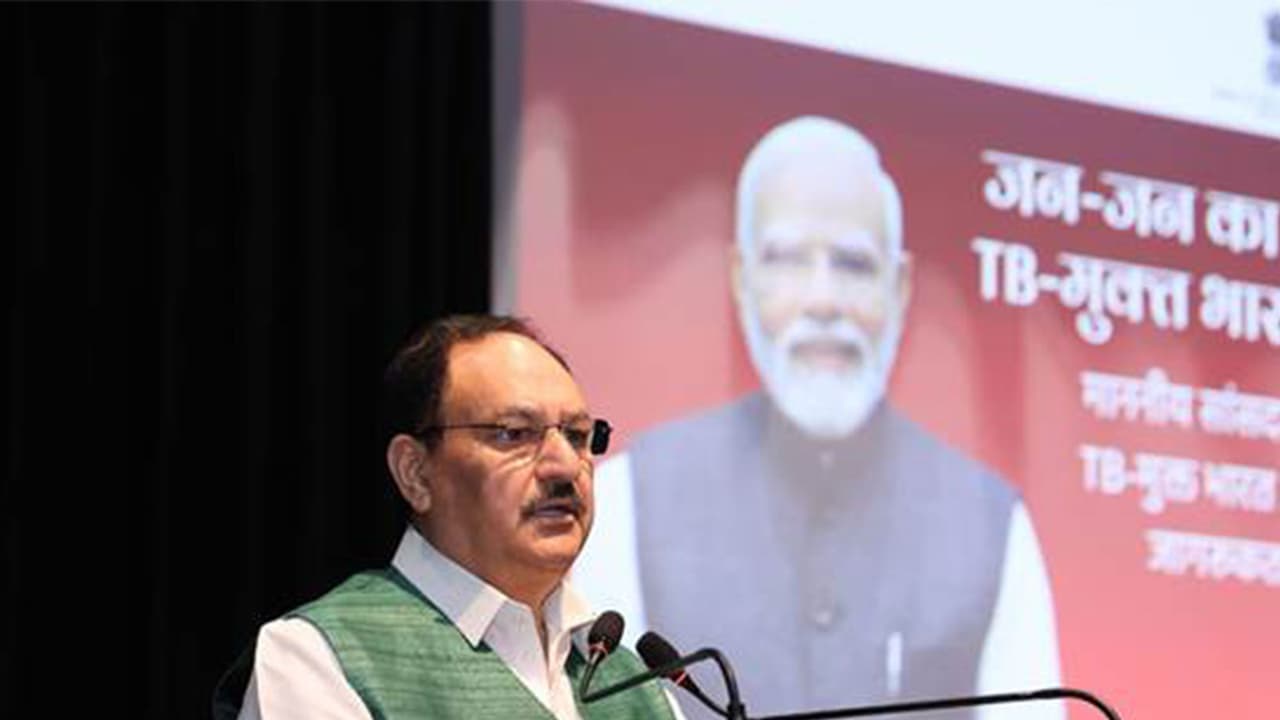
Union Health Minister Calls for Enhanced Parliamentary Leadership to Eliminate Tuberculosis by 2025
In a significant push to accelerate India’s public health agenda, Union Health Minister JP Nadda recently convened a strategic meeting with Members of Parliament (MPs) from West Bengal to revitalize the 'TB Mukt Bharat' (Tuberculosis-Free India) campaign. The high-level discussion focused on mobilizing political influence to bridge the gap in diagnostic coverage and treatment adherence, aiming to meet the ambitious national goal of eliminating tuberculosis by 2025—five years ahead of the global Sustainable Development Goal target.
During the session, Minister Nadda emphasized that while India has made commendable strides in public health, the fight against tuberculosis requires a decentralized, grassroots approach. By engaging lawmakers directly, the Ministry of Health aims to transform the campaign from a clinical mandate into a mass movement, leveraging local leadership to overcome social stigmas and improve health-seeking behavior in rural and semi-urban communities.
National Progress and the Challenge of Eradication
The Ministry of Health reported a notable 21% decline in TB incidence across India, a statistic that underscores the effectiveness of current diagnostic and therapeutic protocols. This reduction has been largely attributed to the expansion of rapid molecular testing, the digitalization of patient monitoring through the Ni-kshay portal, and the widespread distribution of nutritional support schemes for patients undergoing treatment.
Despite these gains, the Minister highlighted that the final stretch toward elimination remains the most challenging. Factors such as multi-drug resistant (MDR) strains, hidden pockets of infection in remote regions, and the socio-economic barriers faced by vulnerable populations continue to impede progress. The meeting served as a platform to discuss how MPs can act as catalysts for change in their respective constituencies, ensuring that healthcare infrastructure—such as primary health centers and community diagnostic hubs—is adequately equipped and that patients are receiving their prescribed nutritional supplements regularly.
Strengthening Grassroots Healthcare Infrastructure
A core theme of the meeting was the integration of political advocacy with local health governance. Minister Nadda underscored that the 'TB Mukt Bharat' initiative is not merely a medical intervention but a developmental priority. MPs were encouraged to oversee the implementation of the Nikshay Mitra initiative, which allows individuals and organizations to adopt TB patients and provide them with essential nutritional and emotional support.
By fostering community-level participation, the Ministry hopes to reduce the "drop-out" rates of patients who frequently discontinue treatment due to financial constraints or a lack of localized support systems. The discussion also touched upon the importance of awareness campaigns designed to strip away the stigma associated with the disease, which often prevents early detection and leads to the further spread of the infection within households and agricultural labor communities.
What This Means for Farmers
For the farming community and rural workers, the 'TB Mukt Bharat' mission carries profound economic and social implications. Tuberculosis is a disease that disproportionately impacts the productivity of rural households, often forcing breadwinners to take extended leaves of absence during the critical sowing and harvesting seasons. The mission’s success directly correlates to the health and sustained labor capacity of the agricultural workforce.
- Economic Stability: By prioritizing early detection and adherence to treatment, families can avoid the catastrophic out-of-pocket health expenditures that often lead to debt cycles and the sale of agricultural assets.
- Improved Labor Capacity: A healthier workforce ensures that farm operations remain consistent. Access to free diagnostic services and nutritional support (Ni-kshay Poshan Yojana) means that laborers are better equipped to recover quickly and return to productive work.
- Community Awareness: Farmers and local leaders are encouraged to collaborate with their local MPs and District Health Officers to ensure that TB screening camps are organized in their villages. Proactive participation in these camps can help identify latent infections before they become active, protecting the wider community.
- Nutritional Advocacy: Since nutrition is a cornerstone of TB recovery, the agricultural sector plays a dual role. Ensuring that protein-rich and micronutrient-dense crops are accessible in local markets supports not only general community health but also the specific recovery needs of those undergoing treatment.
Ultimately, the call for political leadership in this health mission is a signal that public health is now viewed as an essential pillar of rural development. By championing this cause, MPs and local representatives are working to ensure that the agricultural heartland is not just productive, but also resilient against the health crises that threaten its long-term prosperity.