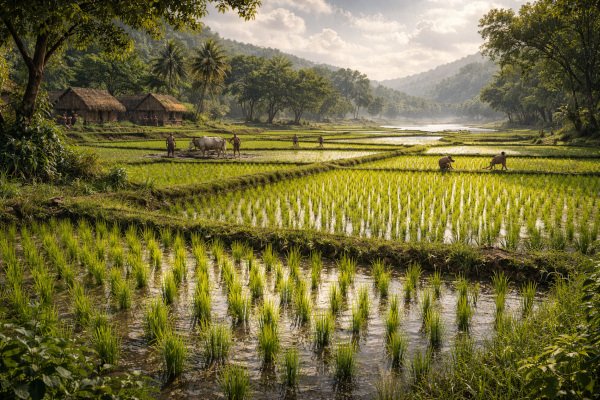
Kharif Sowing Update: Total Acreage Hits 1,016.57 Lakh Hectares
According to data reported by Dharmakshethra - India Unabridged, the total area covered under Kharif sowing across the country has reached 1,016.57 lakh hectares. This mid-season assessment offers a snapshot of current planting trends across major agricultural states. While these figures provide a significant indicator of the season's progress, it is important to note that acreage totals are subject to change as the sowing cycle continues to unfold.
Analysis of Crop Acreage Trends
The latest data indicates an overall decline in total sown area when compared to the previous year. This downward trend in land utilization is primarily attributed to a reduction in the planting of rice, which remains a major component of the Kharif season. In addition to rice, there have been smaller, incremental decreases in the acreage dedicated to several other key crops.
The report highlights the following shifts in crop distribution:
- Rice: Representing the primary driver of the overall decline in acreage.
- Coarse Cereals, Cotton, and Oilseeds: These categories have also experienced smaller reductions in their respective planting areas.
- Pulses: Sowing levels for pulses have remained broadly stable, showing little deviation from the figures recorded last year.
- Jute and Mesta: These crops have bucked the general downward trend, recording a modest increase in total acreage.
Understanding the Mid-Season Perspective
The figures released represent a mid-season status report. In agricultural monitoring, such data serves as a vital tool for stakeholders to gauge how planting patterns are evolving across different regions. Because the Kharif season involves complex variables related to weather and regional agricultural practices, the current standing of 1,016.57 lakh hectares should be viewed as a dynamic figure.
As noted by the source, the current metrics offer an important indication of planting patterns, but they are not final. Acreage can continue to adjust as sowing activities progress further in the coming weeks. This nuance is essential for those tracking the agricultural economy, as it highlights that the final footprint of the Kharif season remains a work in progress.
Context of the Kharif Season
The Kharif season is a critical period in the Indian agricultural calendar, typically corresponding with the monsoon months. The data provided by Dharmakshethra underscores the importance of monitoring these trends to understand the potential supply landscape for various commodities. By breaking down the performance by crop type, the report clarifies that while the majority of major crops have seen a contraction in land use, the stability of pulses and the growth in jute and mesta provide a more comprehensive picture of the season's diversity.
As the season moves toward its conclusion, further updates will be necessary to determine if these current trends in rice, oilseeds, and cotton persist or if late-season adjustments alter the final agricultural output for the year.