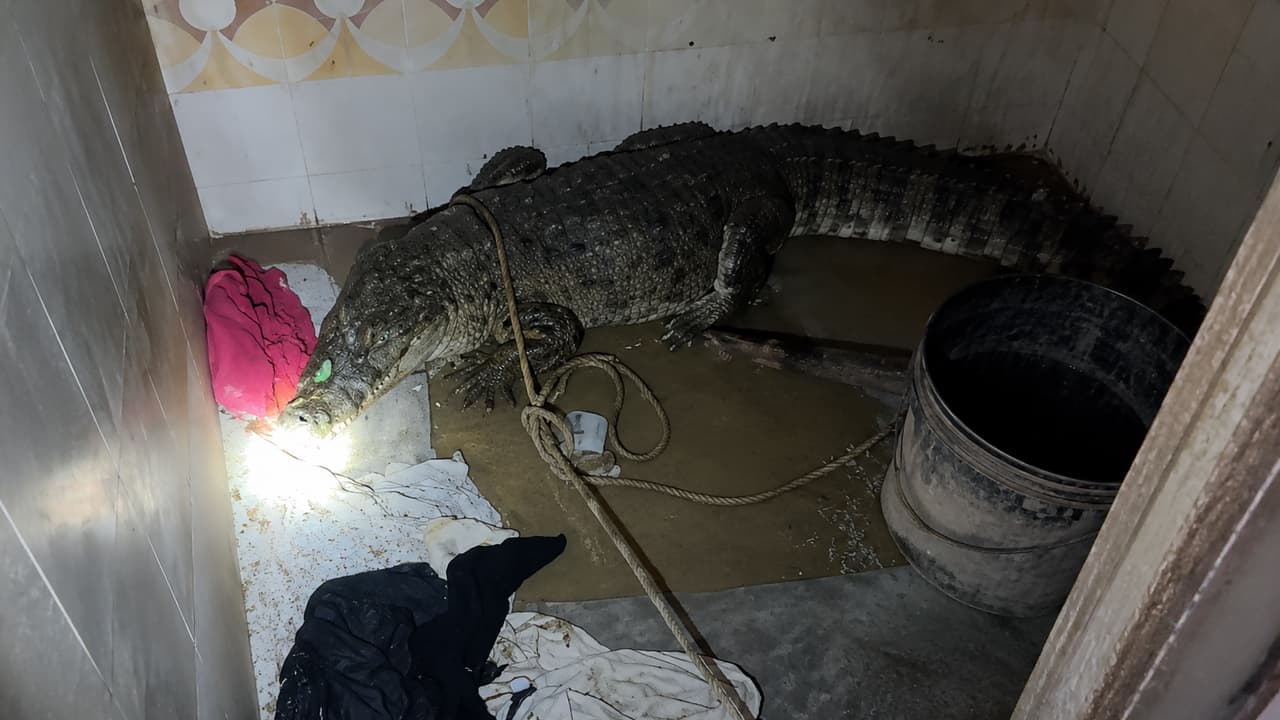
Terrifying Bathroom Encounter: Gujarat Family Finds Seven-Foot Crocodile
A routine morning in a rural Gujarat household took a harrowing turn this week when a family discovered an unexpected and dangerous intruder lurking in their bathroom. What began as a typical start to the day escalated into a high-stakes emergency after the family opened the bathroom door to find a seven-foot crocodile resting on the tile floor. The incident, which has since gone viral, provides a stark reminder of the complexities of human-wildlife coexistence in regions where agricultural landscapes intersect with the natural habitats of apex predators.
The reptile, identified as a mugger crocodile, had evidently navigated through the home’s plumbing or drainage infrastructure, finding its way into the confined space during the early hours of the morning. Upon discovering the massive predator, the household immediately retreated and alerted local authorities. The subsequent footage, which has circulated widely across social media platforms, captures the sheer scale of the animal and the tense atmosphere as the family awaited professional intervention.
A Complex Rescue Operation
The rescue effort, led by local forest department officials, was a delicate and high-pressure operation. Given the confined nature of the bathroom, rescuers were forced to navigate a narrow environment while managing a powerful, stressed animal capable of inflicting severe injury. The proximity of the crocodile to the family living area necessitated extreme caution, as the animal’s defensive instincts were heightened by the noise and presence of strangers.
Over the course of an hour, forest officials utilized specialized equipment to secure the crocodile. The operation required precise coordination to ensure both the safety of the household and the well-being of the animal. Once the crocodile was successfully restrained, it was carefully transported out of the home. According to environmental experts familiar with the region, such incidents, while rare, highlight the increasing pressure on local wildlife populations as natural water bodies are impacted by seasonal changes and agricultural development. The crocodile was later released into a secure, natural habitat far from human settlements.
Understanding the Human-Wildlife Interface
The incident in Gujarat serves as a sobering example of the risks associated with living in proximity to wetland ecosystems. In many rural areas, irrigation canals and drainage systems often serve as conduits for wildlife, inadvertently drawing animals closer to homes and livestock pens. While crocodiles are typically shy and avoid human contact, their movement patterns can change significantly during monsoon seasons or when their natural food sources are disrupted.
Agricultural communities are frequently on the front lines of these interactions. As farmers manage crops and livestock near riverbanks and irrigation networks, the potential for wildlife ingress remains a constant, albeit infrequent, concern. The viral nature of the video has sparked a broader conversation regarding wildlife management, the importance of maintaining distance from predators, and the necessity of rapid response protocols for rural families who may find themselves in similar, life-threatening situations.
What This Means for Farmers
For those living and working in areas known to harbor large reptiles or other dangerous fauna, this event provides several critical lessons in safety and risk mitigation:
- Infrastructure Vigilance: Farmers and rural residents should regularly inspect drainage outlets and piping systems. Ensuring that entry points are properly screened or secured can prevent animals from using human infrastructure as a path into the home.
- Immediate Containment: In the event of an encounter with a dangerous animal, the primary rule is to distance yourself immediately. Do not attempt to confront, corner, or photograph the animal. Close the door to the room, seal the gaps if possible, and evacuate the premises.
- Emergency Readiness: Keep the contact information for local forest departments, wildlife rescue organizations, and emergency services easily accessible. Professional responders are equipped with the specialized tools necessary to handle large predators safely.
- Environmental Awareness: Be particularly cautious during and immediately after heavy rainfall or flooding events. These periods often displace wildlife from their usual riverbeds and ponds, forcing them to seek shelter in higher, drier ground—which can sometimes include agricultural buildings or residential structures.
- Community Reporting: If you observe unusual wildlife movement near your property, report it to local agricultural extension offices or wildlife authorities early. Proactive monitoring can help identify patterns and prevent dangerous incidents before they occur.
While the family in Gujarat escaped the encounter without physical injury, the event serves as a powerful reminder that vigilance is essential. By respecting the boundaries between human activity and wildlife habitats, and by maintaining secure infrastructure, rural communities can better protect both their households and the local biodiversity.