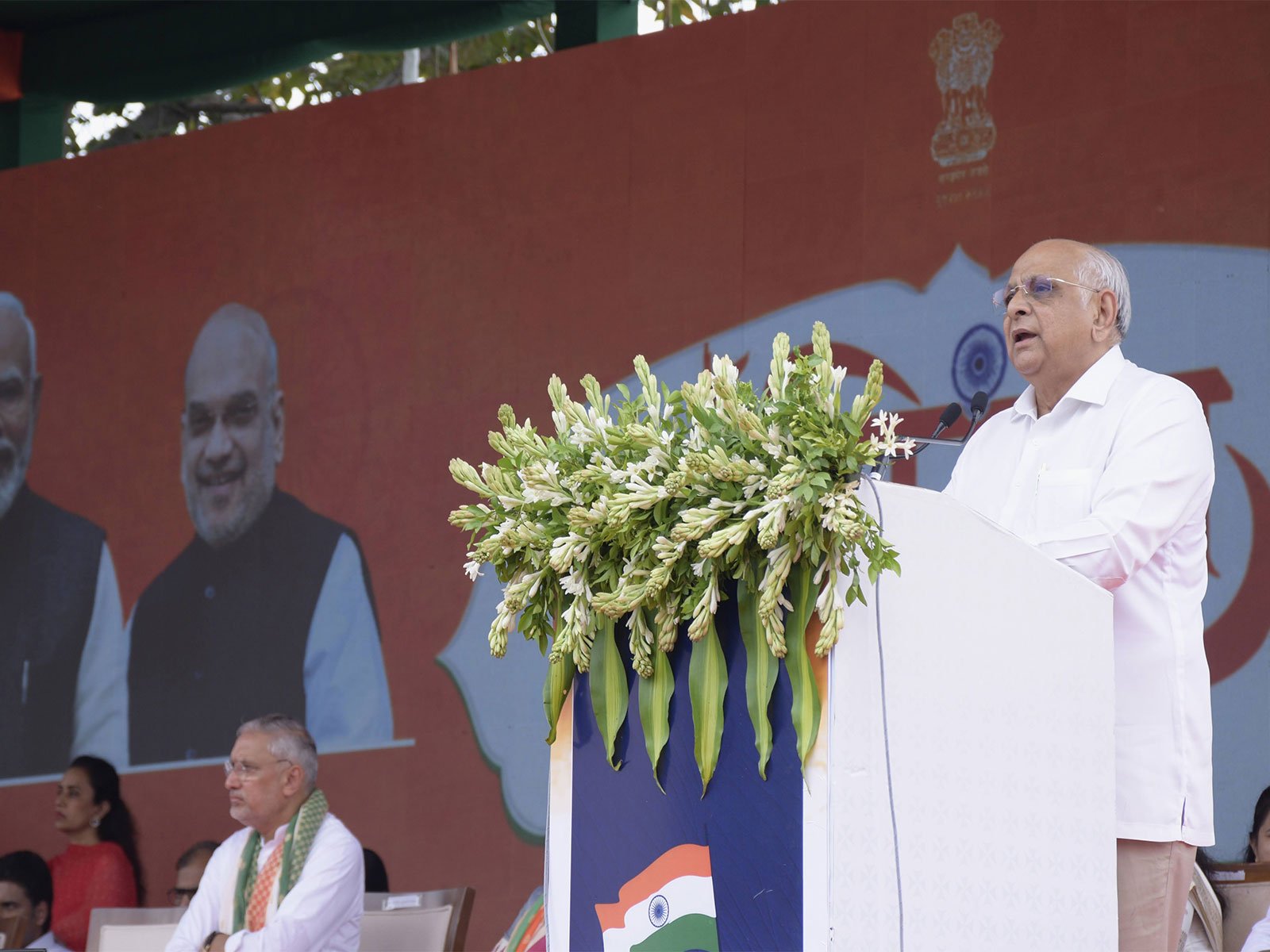
Gujarat Chief Minister Calls for Unified Vision to Drive State’s 2047 Growth Agenda
Gujarat Chief Minister Bhupendra Patel has issued a resonant call for collective action, urging stakeholders across the state to foster unity as the foundation for a "Developed Gujarat" (Viksit Gujarat) and, by extension, a "Developed India" (Viksit Bharat). In a series of recent policy addresses, the Chief Minister underscored that the path toward 2047 requires a multi-pronged approach that bridges the gap between traditional agricultural strengths and the rapid integration of modern industrial and technological frameworks.
The vision outlined by the state leadership emphasizes that long-term prosperity is not merely a product of capital investment but of social cohesion. By aligning the efforts of rural farming communities, urban industrial hubs, and the emerging tech sector, the government aims to position Gujarat as a primary engine for national economic growth over the next two decades.
Empowering the Pillars of Development: Women and Technology
Central to the Chief Minister’s roadmap is the strategic empowerment of women, who are increasingly recognized as the backbone of both the state’s agrarian economy and its burgeoning micro-enterprise sector. The administration has signaled a commitment to scaling up support for women-led self-help groups (SHGs), particularly those involved in value-added agricultural processing and rural cottage industries. By providing better access to credit, technical training, and market linkages, the state hopes to transition rural women from subsistence-based labor to active participants in the formal supply chain.
Parallel to this social initiative is an aggressive push for technological integration. The government’s blueprint for 2047 places heavy emphasis on "Agri-Tech" and "Industrial 4.0." The state aims to modernize irrigation management, promote the use of data-driven crop advisory services, and incentivize the adoption of precision farming tools. By digitizing agricultural records and improving connectivity in remote regions, the administration seeks to ensure that the benefits of the digital economy reach the grassroots level, reducing production costs and enhancing yields through technological efficiency.
Industrial Expansion and Sustainable Infrastructure
The vision for a "Developed Gujarat" is inextricably linked to the state’s industrial prowess. The Chief Minister emphasized that the state’s manufacturing and service sectors must remain competitive on a global scale. This involves not only attracting large-scale investments but also ensuring that industrial development does not come at the cost of environmental or social stability. Future infrastructure projects are expected to focus on climate-resilient designs, particularly in the coastal regions, and the integration of green energy sources to power the state’s industrial parks.
The administration’s focus remains on creating a seamless ecosystem where innovation is nurtured. By streamlining regulatory frameworks and encouraging public-private partnerships, the state government intends to create a climate where entrepreneurs can thrive. The objective is to foster a culture of local innovation that addresses regional challenges, such as water scarcity and soil health, while simultaneously building brands that can compete in international markets.
What This Means for Farmers
For the farming community, the call for unity and the pursuit of a "Viksit Gujarat" translates into several practical and economic shifts that will likely define the coming years:
- Transition to Value-Addition: Farmers are being encouraged to move beyond the sale of raw commodities. By leveraging government-supported micro-processing units, growers can capture a higher share of the final consumer price, turning farm-gate products into packaged, value-added goods.
- Technological Upskilling: The focus on technology means that "digital literacy" is becoming an essential skill in agriculture. Farmers should look to engage with government-led training programs for smart irrigation, soil health testing, and online market platforms to optimize input usage and secure better prices.
- Collective Bargaining: The emphasis on unity highlights the importance of Farmer Producer Organizations (FPOs). By aggregating land and resources, smallholder farmers can achieve better economies of scale, gain stronger bargaining power when procuring inputs, and negotiate more effectively with large-scale buyers and exporters.
- Climate Resilience: As the state pushes for long-term development, farmers will likely see increased subsidies and support for climate-smart practices, such as rainwater harvesting and the adoption of drought-resistant crop varieties. Investing in these sustainable methods now will be critical for maintaining long-term land productivity in an era of shifting environmental conditions.
Ultimately, the Chief Minister’s vision suggests that the future of Gujarat’s prosperity lies in the intersection of tradition and innovation. For the agricultural sector, this means moving toward a more professional, tech-enabled, and collaborative model that is better equipped to meet the challenges of the 21st century.