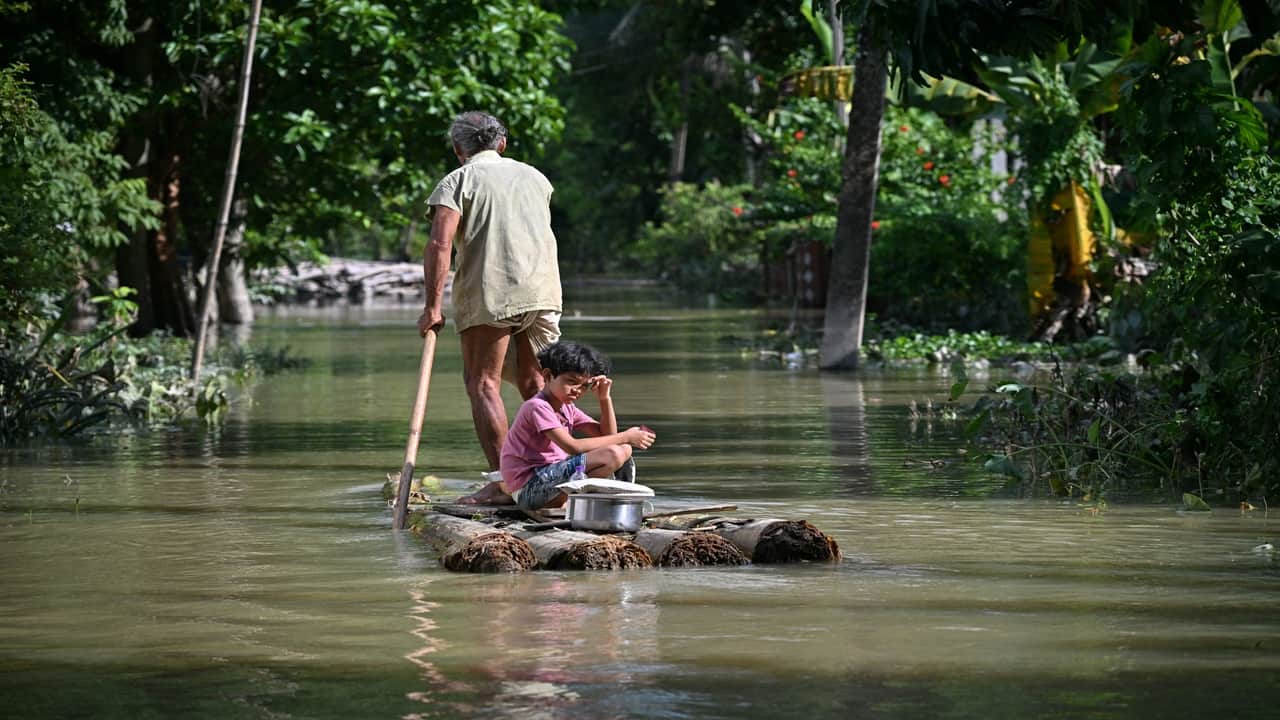
Gujarat Faces Unprecedented Flood Emergency as Displacement and Infrastructure Damage Mount
The state of Gujarat is currently grappling with a severe and escalating flood crisis, as relentless monsoon rainfall has transformed coastal and southern districts into disaster zones. What began as seasonal precipitation has intensified into a widespread emergency, forcing the evacuation of over 40,500 residents. The scale of the inundation, coupled with the rapid degradation of critical infrastructure, has triggered a massive state-led response effort to secure human life and mitigate the long-term impact on the region’s agricultural landscape.
The meteorological conditions driving this crisis have been persistent and unforgiving. Sustained heavy rainfall has saturated the soil, leading to rapid runoff that has overwhelmed local drainage systems and breached embankments. With several major rivers reaching or exceeding danger levels, low-lying areas—many of which are vital hubs for regional food production—have been completely submerged. The rising death toll highlights the severity of the situation, as emergency responders work around the clock to reach isolated communities cut off by washed-out roads and collapsed bridges.
Infrastructure Collapse and the Disruption of Rural Connectivity
The physical toll on Gujarat’s infrastructure is profound. In the most affected southern and coastal districts, the combination of flash flooding and waterlogging has paralyzed logistics networks. Essential supply chains, which are critical for the movement of agricultural inputs like fertilizers and seeds, as well as the transport of perishable harvest commodities, have been severely disrupted. The destruction of rural road networks not only hampers immediate rescue and relief operations but also threatens to isolate farming households from essential services.
Beyond the immediate human impact, the structural damage to irrigation canals, power grids, and storage facilities presents a secondary challenge. In many regions, the flooding has compromised electricity infrastructure, leaving pumping stations inoperable and hindering the ability of farmers to manage water levels in their fields. The loss of connectivity means that even as the waters begin to recede, the logistical barriers to restoring normal economic activity will remain for weeks, if not months.
Assessing the Impact on Agricultural Stability
For the agricultural sector, the timing and intensity of these floods are particularly damaging. Gujarat’s coastal and southern regions are significant contributors to the state’s output, encompassing diverse cropping systems that are now facing total saturation. Standing crops in low-lying areas are at extreme risk of root rot, nutrient leaching, and physical damage from debris. Furthermore, the standing water acts as a vector for various plant pathogens, raising concerns about disease outbreaks that could linger long after the floodwaters have drained.
Soil health is also a primary concern for agronomists monitoring the aftermath. The heavy flooding is expected to strip topsoil of essential nutrients, while the deposition of silt and potential contaminants from urban runoff could alter soil composition. For livestock farmers, the crisis has been equally devastating; the loss of stored fodder and the destruction of sheltered grazing areas have left animal populations vulnerable, necessitating emergency relocation efforts to higher ground.
What This Means for Farmers
The immediate priority for farmers in the affected regions must be the safety of human and animal life, followed by a systematic assessment of field conditions once the water recedes. The economic consequences of this event are significant, and producers should prepare for a challenging recovery period.
Practical Steps and Economic Considerations:
- Document Losses Immediately: Farmers should maintain detailed records and photographic evidence of crop damage, destroyed infrastructure, and livestock losses. This documentation is essential for future insurance claims and government relief applications.
- Prioritize Soil Rehabilitation: Once the water clears, avoid working the land while it is still overly saturated, as this causes severe soil compaction. Agronomists recommend a post-flood soil test to determine nutrient depletion levels before planning the next planting cycle.
- Monitor for Secondary Disease: Increased humidity and standing water create ideal environments for fungal pathogens. Keep a close watch on surviving crops for signs of blight or rot and consult with local extension services regarding safe, targeted fungicide application if necessary.
- Review Supply Chain Alternatives: With primary transport routes compromised, farmers should explore decentralized storage options or coordinate with local agricultural cooperatives to identify alternative logistics paths for essential goods.
- Financial Planning: Engage early with financial institutions regarding loan moratoriums or restructuring options. The economic impact of such large-scale events often necessitates a recalibration of short-term cash flow expectations to ensure the farm remains viable for the next season.
As the state continues to battle the elements, the resilience of Gujarat’s farming community will be tested. While the immediate focus remains on humanitarian relief, the path to agricultural recovery will require a coordinated effort between government agencies, local cooperatives, and individual producers to rebuild the infrastructure and soil productivity that underpins the state’s economy.